
Desserts
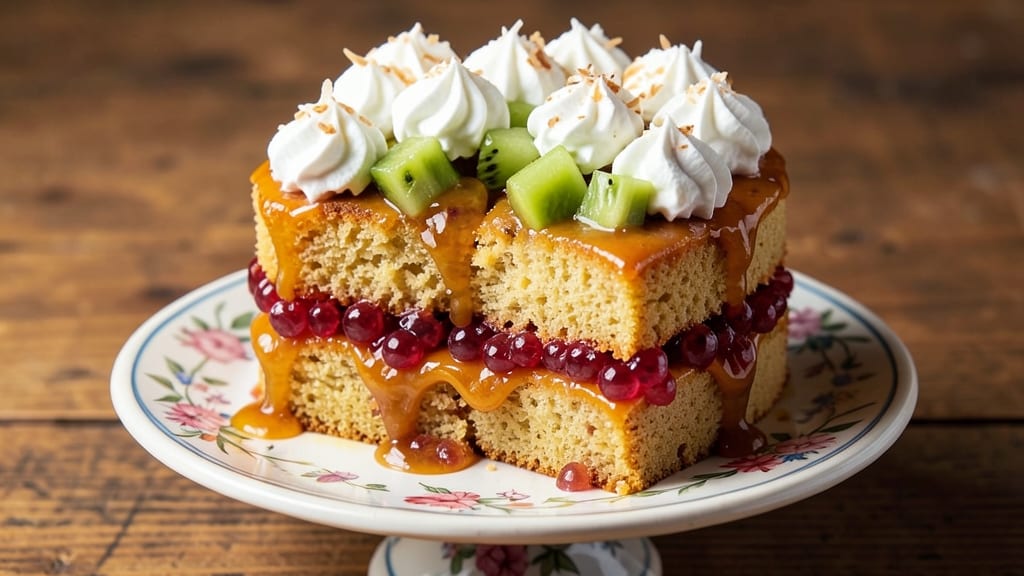
This Asian fresh fruit cake recipe delivers tropical layers of mango, lychee, and jackfruit with a citrus-zest-infused batter that stays moist for days. The secret lies in steaming the fruit to preserve its vibrant flavors and texture, then layering it with a tender coconut-pandan cake base.
I developed this recipe after years of experimenting with traditional Asian fruit cakes—balancing sweetness, acidity, and texture is everything.
What makes this cake truly special is the combination of fresh fruit and natural moisture boosters: coconut milk replaces butter for richness, while citrus zest and pandan extract infuse the batter with bright, aromatic notes.
The cake bakes in a single layer, then gets sliced and reassembled with fresh fruit compote between each layer—ensuring every bite is juicy and bursting with tropical flavors. No heavy frosting needed; the fruit does the work.
The result is a cake that stays moist for up to a week when stored properly, with each slice offering a perfect balance of tender crumb, fresh fruit, and subtle floral undertones. The pandan-infused batter adds a unique, fragrant depth that sets this apart from standard fruit cakes.
Whether you're serving it at a gathering or enjoying a slice with tea, this recipe delivers restaurant-quality results at home.
Perfect for celebrations or as a special treat, this cake requires just a few key techniques: steaming the fruit to maintain freshness, layering carefully to avoid sogginess, and using room-temperature ingredients for even baking.
The recipe scales easily, so you can adjust the size based on your needs. Let's get baking—your taste buds will thank you.
Ingredients for asian fresh fruit cake
Fresh tropical fruit meets tender coconut-pandan cake—these ingredients create layers of juicy flavor.
| Ingredient | Amount | Notes |
|---|---|---|
| Mature Mangoes 🥭 | 2 whole | Ripe, yellow-fleshed variety |
| Lychee Fruit 🍈 | 1 lb | Fresh, peeled, pitted |
| Young Green Jackfruit 🍈 | 1 ½ lb | Firm, unripe pieces |
| All-Purpose Flour 🌾 | 3 cups | Sifted for light texture |
| Granulated Sugar 🍚 | 2 cups | White or light brown |
| Unsweetened Coconut Milk 🥥 | 1 ½ cups | Full-fat for richness |
| Pandan Extract 🌿 | 1 tbsp | Pure, food-grade |
| Lemon Zest 🍋 | 1 tbsp | Freshly grated |
| Lemon Juice 🍋 | ¼ cup | Freshly squeezed |
| Baking Powder 🧂 | 2 tsp | Aluminum-free |
| Salt 🧂 | ½ tsp | Fine sea salt |
| Vegetable Oil 🫒 | ½ cup | Light, neutral flavor |
| Large Eggs 🥚 | 4 whole | Room temperature |
| Cornstarch 🌾 | 2 tbsp | For fruit compote |
The fruit selection is everything here. Mangoes should be rock-hard when raw—they'll soften perfectly during steaming. Lychees are best when just starting to soften at the stem end, and jackfruit needs to be young and green—avoid the sweet, yellow varieties. For the best results, shop at an Asian market or specialty grocer where they handle fruit carefully. The coconut milk should be full-fat and canned, not carton—the richness is crucial for that restaurant-quality texture. If you can't find pandan extract, Pandanus amaryllifolius leaves (available frozen at Asian markets) work beautifully—just steep and strain.
No lychees? Substitute canned water chestnuts for texture, though you'll lose that floral sweetness. Jackfruit unavailable? Green apples or pears hold up well to steaming, though they won't have the same tropical profile. For the coconut milk, light coconut milk works in a pinch, but the fat content makes all the difference in moisture. The baking powder must be aluminum-free—Diamond Crystal is the gold standard. If you're short on time, pre-peeled frozen lychees work, but fresh is always better. The fruit compote gets its structure from cornstarch, but arrowroot powder works too—just use half the amount.
Steamed fruit keeps for 3 days in the fridge if stored in an airtight container with a paper towel to absorb moisture. The cake batter should be made fresh—it doesn't store well overnight. For the final assembly, layer quickly to prevent sogginess, and keep the cake covered at room temperature for 2 hours before slicing. Leftovers? This cake actually improves over 3-4 days—the flavors meld beautifully. For gifting, slice and wrap individual portions in parchment, then store in a cake box for up to 5 days. Freezing isn't recommended—the fruit becomes mushy when thawed.
Why You'll Love This Recipe
- No Fuss Mix-In: I swear by this recipe—just toss the diced mango, lychees, and jackfruit into the batter like you’re making a fruit salad, then bake. No fancy layering, no waiting for fruits to soak overnight. The jackfruit’s subtle sweetness and texture blend right in without extra effort.
- Tropical Twist: Between the creamy mango, floral lychee, and mildly sweet jackfruit, every bite tastes like summer in a cake. Honestly, the sugar caramelizes just enough to make it feel indulgent, but the fruit keeps it light—no heavy frosting needed.
- Party Cake Hack: This recipe doubles easily, and the cake stays moist for days, so I always bake two. Perfect for potlucks, birthdays, or even a last-minute office dessert—just slice and serve. (Yes, even on a Tuesday night.)
- Budget-Friendly Luxury: Fresh fruit cakes can be pricey, but this one uses affordable staples—ripe mangoes, canned lychees, and jackfruit—without sacrificing flavor. I’ve made it for under $10 and still gotten compliments that sound like I spent hours on it.
Step-by-step instructions for tropical fruit cake layers
Here's how to build a perfectly moist cake with vibrant fruit layers and aromatic citrus notes.
Prepare the Fruit Compote
In a medium saucepan, combine the 2 whole mature mangoes (peeled and diced), 1 lb lychee fruit (peeled and pitted), and 1.5 lb young green jackfruit (cut into small cubes). Add the 2 cups granulated sugar and 0.25 cup lemon juice. Cook over medium heat for 10-12 minutes until the fruit softens and the mixture thickens slightly.
Remove from heat and stir in the 2 tbsp cornstarch mixed with 2 tablespoons water to create a glossy, jam-like consistency. Let it cool completely before using—this ensures the fruit retains its shape in the cake layers. The compote should be thick enough to hold its form when spooned but still spreadable.
Make the Citrus-Infused Cake Batter
In a large mixing bowl, whisk together the 3 cups all-purpose flour, 2 tsp baking powder, and 0.5 tsp salt. In a separate bowl, beat the 4 whole large eggs until frothy, then gradually whisk in the 1.5 cups unsweetened coconut milk, 0.5 cup vegetable oil, and 1 tbsp lemon zest. Combine the wet and dry ingredients gently, folding just until no dry spots remain.
Add the 1 tbsp pandan extract and mix until fully incorporated. The batter should be smooth and slightly thick—this ensures a tender crumb without being too dense. Fold in the cooled fruit compote, reserving about 1 cup for later use. The batter will look vibrant with flecks of fruit throughout, promising a moist texture with bursts of tropical flavor.
Assemble the Cake Layers
Preheat your oven to 350°F and grease three 8-inch round cake pans. Divide the batter evenly among the pans, spreading it into an even layer. Bake for 25-30 minutes or until a toothpick inserted into the center comes out clean. Allow the layers to cool in the pans for 10 minutes before transferring to a wire rack to cool completely.
Once cooled, level the tops of the layers if needed. Spread a thin layer of reserved fruit compote on each layer, then stack them with a dollop of the remaining compote between each. This creates a moist, flavorful barrier that keeps the cake tender and prevents dryness. Wrap the assembled cake tightly in plastic wrap and refrigerate for at least 4 hours or overnight.
Finish and Serve
Unwrap the cake and brush the top and sides with any remaining fruit compote for a glossy finish. The cake should be moist but not soggy—if it feels too wet, chill it for an additional 1-2 hours to set properly. Serve chilled or at room temperature, sliced into 8 equal portions for perfect sharing.
Each slice will reveal layers of tender cake infused with citrus and pandan, balanced by the sweet-tart fruit compote. The cake's moisture comes from the coconut milk and citrus, while the fruit layers add natural sweetness and vibrant color. Store any leftovers in an airtight container in the refrigerator for up to 5 days.
Pro Tips For Making Asian Fresh Fruit Cake
- Blend Jackfruit Properly: Pulse young green jackfruit in short bursts—don’t overdo it. You want small, uneven chunks (think ½-inch pieces) so they hold their shape but still soften into the batter. I learned this after one batch turned into a mushy, unrecognizable mess.
- Drain Lychees Twice: Skip the syrup shortcut—rinse canned lychees in cold water, drain, then repeat. The extra step removes lingering sweetness that’ll make your cake cloying. Trust me, your taste buds will notice the difference.
- Boil Mangoes First: Simmer diced mature mangoes in sugar syrup (1:1 ratio) for 5 minutes before folding into the batter. This softens them just enough to blend smoothly without turning the cake into a waterlogged disaster.
- Chill the Batter: Let the fruit-flour mixture rest 30 minutes before baking—yes, even if you’re eager. This gives the flour time to hydrate properly, preventing a dense, gummy texture. (I know, I know, but trust the process.)
Make-ahead tips for this dish
Prep Ahead Timeline
The key to success is breaking this cake into manageable steps over 2 days. Start by steaming the fruit 24 hours ahead—this preserves texture and flavor better than fresh prep. Store the cooked fruit compote in an airtight container with parchment between layers to prevent sticking.
The batter itself should be made 6-8 hours before baking—it keeps well in the fridge, but bring it to room temperature before using. This timing lets flavors meld beautifully. 📅
Fruit Prep Shortcuts
Short on time? Use pre-cut frozen lychees (thaw and drain well) and pre-peeled frozen mango—just avoid overcooking to prevent mushiness. For jackfruit, buy pre-cut young green pieces from Asian markets to save chopping.
The sugar and lemon juice in the compote will help tenderize even firm fruit. Just remember: fresh is always better, but these shortcuts work in a pinch. ✨
Batter Make-Ahead Tip
Mix the cake batter up to 2 days in advance and store it in an airtight container in the fridge. When ready to bake, let it sit at room temperature for 1 hour before dividing into pans.
This prevents uneven baking from cold batter. I like to label the container with the date—this batter keeps its moisture and structure surprisingly well. The pandan and citrus flavors actually intensify overnight. 🥥
Layer Assembly Hack
Assemble the cake layers 1 day before serving to let flavors meld perfectly. Wrap tightly in plastic wrap and refrigerate—this prevents sogginess while keeping the cake moist. For gifting, slice and wrap individual portions in parchment paper, then store in a cake box.
The cake holds its texture beautifully this way, and you can serve it straight from the fridge for that perfect chilled texture. 🎁
Fruit Compote Storage
Store unused fruit compote in a sealed glass jar in the fridge for up to 5 days. The cornstarch helps it maintain its jam-like consistency, so it's perfect for topping yogurt, pancakes, or even ice cream.
If the compote thickens too much, simply stir in 1 tsp water to restore spreadability. I always make extra—it's too good to waste! 🍋
Last-Minute Serving Prep
For a restaurant-worthy presentation, brush the cake with lemon syrup (equal parts sugar and water, heated until dissolved) right before serving. Garnish with fresh mint leaves or toasted coconut flakes for added texture.
Serve with Asian-style tea or a light coconut milk drink to complement the tropical flavors. The cake tastes best at room temperature, so let it sit for 30 minutes before slicing. 🍃
Nutrition facts
Frequently asked questions
Can I substitute canned fruit for fresh in this recipe?
Fresh fruit is ideal for texture and flavor, but you can use canned fruit in a pinch. For mango, choose water-packed (not syrup) and drain well. Lychees work if you select high-quality canned with minimal additives. Jackfruit should be young green canned pieces—avoid ripe varieties. The compote may be slightly less vibrant, but the cake will still taste delicious.
Why does my cake turn out dry instead of moist?
Dryness usually happens from overbaking or skipping the chilling step. Always check for doneness with a toothpick at 25-30 minutes—overbaking draws out moisture. Also, ensure you're using full-fat coconut milk and chilling the assembled cake for at least 4 hours before slicing. The fruit compote layers help retain moisture, so don't skip them!
Can I make this cake gluten-free?
Yes! Replace the 3 cups all-purpose flour with a 1:1 gluten-free baking flour blend (like Bob's Red Mill). Add 1 extra tsp xanthan gum to improve structure. For the compote, use tapioca starch instead of cornstarch if needed. The texture will be slightly denser, but still moist and flavorful.
How do I store leftovers to keep them fresh?
Wrap the cake tightly in plastic wrap and store in an airtight container in the fridge for up to 5 days. For longer storage, slice and freeze individual portions (wrapped in parchment) for up to 2 months. Thaw overnight in the fridge—never at room temperature. The cake actually tastes better after a day or two as flavors meld!
What's the secret to the pandan flavor?
The pandan extract adds a subtle floral, vanilla-like aroma that's key to this cake. If you can't find it, steep 2 tbsp fresh pandan leaves in 1 cup hot water for 10 minutes, then strain and use the liquid. For a milder version, reduce to 0.5 tbsp extract. The citrus zest balances the pandan's intensity, creating a harmonious tropical profile.