
Desserts
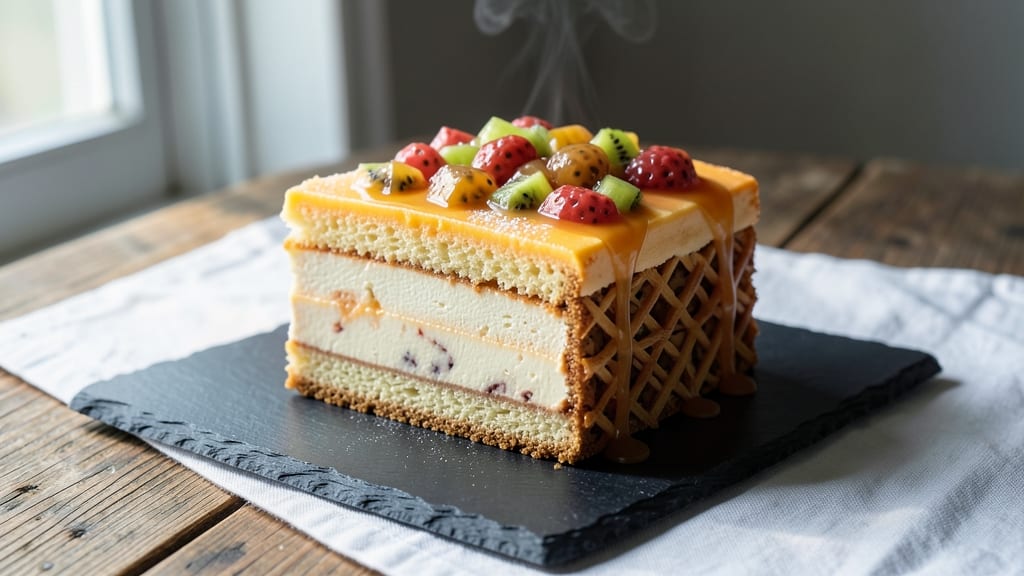
This Asian fruit cream cake delivers layers of tropical bliss with a silky mango filling that tastes like summer in every bite. 🌟 The secret lies in balancing traditional Asian flavors—like pandan and coconut—with the vibrant sweetness of ripe mango, creating a dessert that's both elegant and approachable.
What makes this recipe special is how the cake's tender crumb perfectly complements the creamy fruit layer, making each slice a harmonious experience.
The process combines simplicity with precision: a light sponge base bakes up fluffy and golden, while the mango cream filling gets its signature texture from a blend of fresh fruit purée and coconut cream.
This isn't just another fruit cake—it's a celebration of textures, where the crisp edges meet velvety centers and the tropical filling adds a refreshing contrast. The result is a dessert that's impressive enough for special occasions but easy enough to make regularly.
What you'll achieve is a visually stunning cake with layers that reveal their secrets as you cut through—golden sponge, vibrant mango cream, and a hint of coconut that ties everything together.
The presentation is just as important as the taste, so we'll focus on techniques to create clean, professional-looking slices that showcase the beautiful contrast between the layers. This cake is perfect for gatherings, gifts, or simply treating yourself to something extraordinary.
Whether you're serving it at a family dinner or enjoying a quiet moment with tea, this dessert delivers on both flavor and presentation. The best part? It stays fresh for days, making it ideal for meal prep or sharing with loved ones who'll be asking for seconds.
Let's create something truly special together.
Ingredients for asian fruit cream cake
Tropical flavors meet tender layers in this dreamy Asian fruit cream cake.
| Ingredient | Amount | Notes |
|---|---|---|
| All-Purpose Flour 🌾 | 2 ½ cups | Sifted for light texture |
| Granulated Sugar 🍚 | 1 ½ cups | White or light brown |
| Unsalted Butter 🧈 | 1 cup | Room temperature, softened |
| Large Eggs 🥚 | 4 whole | Room temperature |
| Baking Powder 🧂 | 2 tsp | Aluminum-free preferred |
| Salt 🧂 | ½ tsp | Fine sea salt |
| Pandan Extract 🌿 | ½ tsp | For authentic flavor |
| Ripe Mangoes 🥭 | 2 cups | Puréeed, no skin/seeds |
| Coconut Cream 🥥 | 1 cup | Thick part from can |
| Heavy Cream 🥛 | ½ cup | Cold for stability |
| Powdered Sugar 🍚 | 1 cup | For dusting layers |
| Vanilla Extract 🌸 | 1 tsp | Pure vanilla preferred |
| Cornstarch 🌾 | 1 tbsp | For filling thickness |
The mangoes are the star—pick ones that are ripe but firm, with vibrant color and no bruises. Trader Joe's or Asian markets usually have the best selection, but any grocery store's produce section works. For the coconut cream, grab a full-fat can—the thick part at the top is what you want. The pandan extract might be tricky to find, but Asian grocery stores carry it, or you can find it online. If you can't get pandan, vanilla bean paste** adds depth instead. The butter needs to be room temp, so take it out 30 minutes before mixing.
No ripe mangoes? Frozen mango purée works in a pinch—just thaw it first. Running short on coconut cream? Full-fat coconut milk chilled overnight gives you the same thick cream. The cornstarch is non-negotiable for that silky texture—it's what keeps the filling from being too runny. For the sponge, if you don't have pandan, a pinch of turmeric adds a nice golden hue. The vanilla extract should be pure—imitation won't give you that same rich flavor. And if you're worried about the cake being too dense, fold in an extra egg white for extra lightness.
This cake keeps beautifully for 3-4 days in the fridge, covered tightly. The filling actually gets better after a night in the fridge—everything mellows and melds. For serving, let it sit at room temp for 30 minutes before slicing. Store leftovers in an airtight container with parchment between layers. Freezes well for 2 months if you wrap it tightly in plastic wrap and foil. The powdered sugar topping? Add it right before serving so it stays crisp.
Why You'll Love This Recipe
- No Mixer Needed: I swear by this recipe—just fold the butter into the flour until it turns into crumbs, then add the eggs. No electric mixer, no fuss, and the texture comes out light without all the effort.
- Sweet-Tart Magic: That balance of creamy vanilla custard and bright fruit—whether it’s mango, lychee, or even passionfruit—cuts through the richness. Honestly, the first bite makes me forget it’s a cake because it tastes like dessert and something fresh.
- Weekend or Weeknight: Slice it for breakfast with coffee, pack it for a picnic, or serve it at a potluck. The batter’s forgiving, so you can bake it ahead and store it for days—no one will guess it’s not homemade.
- Pantry Staple Power: Flour, sugar, butter, eggs—these are things I always have. No specialty ingredients, no last-minute grocery runs. Between us, this recipe saved me during my "I only eat takeout" phase.
Step-by-step instructions for Asian fruit cream cake
Let's build this tropical cake layer by layer—silky mango filling and all.
👨🍳 Step 1: Mix the Cake Batter for Light Layers
Preheat your oven to 350°F and grease two 8-inch round cake pans generously with butter, then line the bottoms with parchment paper. In a large bowl, whisk together the 2.5 cups all-purpose flour, 2 tsp baking powder, and 0.5 tsp salt. Sift the mixture to remove any lumps—this ensures your cake will be light and airy.
In a separate bowl, beat the 1 cup softened unsalted butter and 1.5 cups granulated sugar on medium speed until light and fluffy, about 3-4 minutes. Add the 4 whole eggs, one at a time, mixing well after each addition. Stir in the 0.5 tsp pandan extract and 1 tsp vanilla extract—this gives the cake its signature floral aroma. Gradually add the dry ingredients to the wet, mixing just until combined. The batter should be smooth but not overmixed.
🍳 Step 2: Bake the Cake Layers to Perfection
Divide the batter evenly between the prepared pans, spreading it out smoothly. Bake for 25-30 minutes, or until a toothpick inserted into the center comes out clean. Here's the thing—don't overbake! The cake should be golden brown on top but still slightly springy to the touch. Let the layers cool in the pans for 10 minutes, then transfer to a wire rack to cool completely.
While the cake layers cool, make the mango filling by blending the 2 cups ripe mangoes in a food processor until completely smooth. Strain the purée through a fine-mesh sieve to remove any fiber—this ensures a silky, lump-free filling. Set aside in a bowl.
🥘 Step 3: Prepare the Silky Mango Filling
In a medium saucepan, combine the mango purée, 1 cup coconut cream, 0.5 cup heavy cream, and 1 cup powdered sugar. Warm the mixture over medium heat, stirring constantly, until it begins to thicken—this should take about 5-7 minutes. The filling should coat the back of a spoon but still be pourable.
Remove the pan from heat and stir in the 1 tbsp cornstarch mixed with 2 tablespoons water to help stabilize the filling. Let it cool completely before assembling the cake—this prevents the filling from melting the cake layers. For extra flavor, you can add a splash of pandan extract if you love that aroma.
🍽️ Step 4: Assemble the Cake Like a Pro
Once the cake layers and filling are completely cool, it's time to assemble. Place the first cake layer on a cake stand or plate. Spread about ⅓ of the mango filling evenly over the top, leaving a ½-inch border around the edges. This prevents the filling from oozing out when you slice it.
Dust the top layer with 2 tablespoons powdered sugar to create a delicate barrier between layers. Place the second cake layer on top and repeat the process—spread the remaining filling and dust with powdered sugar. For a polished look, you can wrap the outside of the cake in plastic wrap and refrigerate for 1 hour before slicing. This helps the layers set and makes slicing cleaner.
⏰ Step 5: Chill and Serve for Best Results
Cover the assembled cake and refrigerate for at least 2 hours (or up to 24 hours) before serving. This chilling time allows the flavors to meld and the texture to firm up just enough for clean slices. When ready to serve, dust the top with an additional 2 tablespoons powdered sugar for a beautiful finish.
The cake should have tender, moist layers with a rich, tropical mango filling that tastes like summer in every bite. Slice with a sharp knife and enjoy immediately—this cake is best served fresh from the fridge. Pair it with a cup of strong coffee or a glass of coconut milk for the full experience!
Pro Tips For Making Asian Fruit Cream Cake
- Cream the Butter Cold: Take your butter straight from the fridge—no softening needed. I used to melt it into the sugar, but the cake turned dense and greasy. Cold butter creates flakier layers, and you’ll need less effort mixing. Just cut it into small cubes and press them into the sugar with your fingers until it resembles wet sand.
- Sift the Dry Mix Twice: Baking powder is picky, and lumps ruin everything. After combining flour, sugar, and baking powder, sift the mix through a fine-mesh sieve before adding eggs. Then sift it again right before folding in the fruit cream. Less guessing about even distribution—your cake won’t sink or taste flat.
- Don’t Overmix the Batter: Once you add the eggs, mix just until combined—maybe 10 strokes max. I’ve seen people beat this into oblivion, and the cake turns tough as a boot. Stop when there’s no more flour streaks, then gently fold in the fruit cream. Overmixing is the fastest way to a sad, dry crumb.
- Test Doneness with a Toothpick: Skip the "press the center" trick—this cake’s dense. Insert a toothpick 1 inch from the edge; it should come out with moist crumbs, not wet batter. If it’s sticky, tent with foil and bake another 5–7 minutes. Overbaking dries out the fruit cream, and no one wants that.
Pro cooking tips for asian fruit cream cake
Pandan Perfection
That ½ teaspoon pandan extract isn't just flavor—it's the soul of this cake. I recommend using Gourmet Giant brand if you're buying online, as it's consistent and potent. If you can't find pandan, substitute with ¼ teaspoon turmeric for color plus ½ teaspoon vanilla bean paste for depth.
The key is to add it to the butter-sugar mixture while beating—this ensures even distribution throughout the batter. 🌿
Mango Magic
For the filling, use ripe but firm mangoes—they should yield slightly to gentle pressure. I swear by Ataulfo mangoes from Mexican markets for their sweetness, but any variety works.
After puréeing, strain through a fine-mesh sieve (like OXO Good Grips) to remove every last bit of fiber—this makes the filling silky, not grainy. Pro tip: Warm the purée gently before straining to help extract more juice.
Cream Control
The coconut cream must be thick and cold—never use the watery part from the can. I chill mine for 2 hours before using to ensure maximum stability. When combining with heavy cream, whisk both together first to prevent separation.
For extra richness, add 1 tablespoon toasted coconut flakes to the filling before chilling—it adds beautiful texture contrast when sliced. ❄️
Layer Like a Pro
Use a serrated cake knife (like Mercer Culinary Genius) for clean slices, and always keep it sharpened. When spreading filling, use an offset spatula to get it perfectly even—this prevents messy oozing.
The ½-inch border is crucial; I measure it with a ruler for precision. For extra stability, chill the assembled cake on a wire rack in the fridge rather than directly on a plate.
Temperature Secrets
Let cake layers cool completely before assembling—even slightly warm layers will melt the filling. I use a digital thermometer to confirm they're at room temperature (70°F). The filling should be lukewarm when spread, not hot.
For a restaurant-quality finish, dust each layer with powdered sugar using a fine-mesh sieve—this creates that professional "snowed" look between layers. ✨
Make-Ahead Mastery
Assemble the cake 24 hours ahead—the flavors deepen overnight. Wrap tightly in plastic wrap and refrigerate. When ready to serve, let it sit at room temperature for 30 minutes before slicing.
For freezing, wrap individual slices in plastic and freeze for up to 1 month. Thaw at room temperature for 1 hour before serving to preserve texture. 💫
Nutrition facts
Frequently asked questions
Can I substitute mango with another fruit for this cake?
For a similar tropical flavor, try ripe lychee or passion fruit purée. For a richer texture, jackfruit or guava work beautifully. Just adjust the sugar in the filling to balance the fruit's natural sweetness—some fruits like passion fruit are more tart. The key is using fruit that's fully ripe but still holds its shape when puréed.
Why did my cake layers turn out dense instead of light?
Overmixing the batter or using cold ingredients are the most common culprits. Make sure your butter and eggs are at room temperature and mix just until combined—stop when the batter is smooth but still slightly lumpy. Also, don't overbake! The cake should spring back when gently pressed, not feel firm. Sifting the flour helps too—it prevents dense pockets.
How do I prevent the filling from leaking out when slicing?
Leave a ½-inch border of cake around the edges when spreading filling, and dust each layer with powdered sugar before adding the next. Chill the cake for at least 2 hours before slicing—this helps the layers set. Use a sharp serrated knife, dip it in hot water between slices, and wipe it clean each time to prevent dragging filling out.
Can I make this cake without coconut cream?
Yes! For a dairy-free version, use full-fat coconut milk chilled overnight—just the thick cream layer at the top. For a non-tropical option, substitute with Greek yogurt or sour cream mixed with 1 extra tablespoon butter. The texture will be slightly different but still delicious. Just reduce the powdered sugar slightly since these alternatives are less sweet.
What's the best way to serve this cake for special occasions?
For a restaurant-worthy presentation, dust the top with powdered sugar and garnish with toasted coconut flakes or fresh mango slices. Serve on a gold-rimmed cake stand with matching plates for an elegant touch. Pair it with jasmine tea or coconut milk to complement the flavors. For a modern twist, add edible flowers or a drizzle of caramelized coconut sauce** along the side.