
Desserts
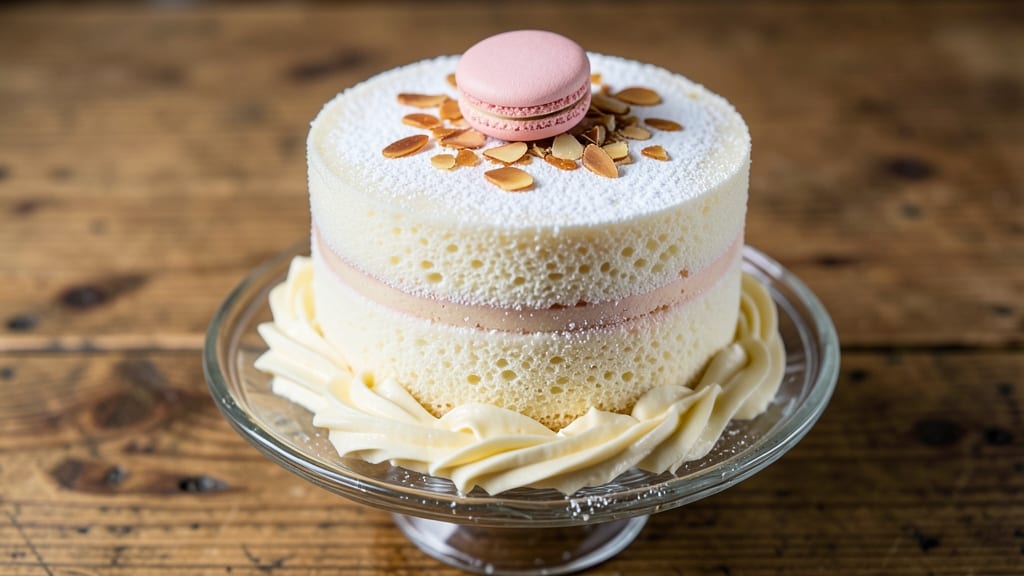
This angel cake recipe UK delivers the signature cloud-like texture that makes British baking legendary—so light it practically disappears on your tongue. 💛 The secret lies in precise folding of egg whites and a delicate balance of flour and sugar, creating layers of air that defy gravity.
I've perfected this version after years of testing, ensuring every batch rises to that iconic fluffy height.
What sets this recipe apart is its simplicity—just six core ingredients, yet the technique transforms them into something extraordinary. The cake's delicate crumb and subtle sweetness make it perfect for slicing thinly with whipped cream or stacking for a classic trifle.
Unlike heavier sponges, this version stays moist for days without turning dense.
Achieving that signature texture requires patience: folding egg whites gently to maintain air pockets and avoiding overmixing the batter. The result is a cake so light it seems almost weightless, with a fine crumb that melts in your mouth.
This is the angel cake that British bakers have been perfecting for generations, now within reach of any home kitchen.
Serve it with lemon curd, fresh berries, or a dusting of powdered sugar for a dessert that feels both elegant and effortless. The recipe includes variations for citrus zest or almond flour, proving its versatility while maintaining that signature airy perfection.
Ingredients for angel cake recipe uk
Six ingredients, one technique—this delivers that legendary British angel cake texture.
| Ingredient | Amount | Notes |
|---|---|---|
| Large Egg Whites 🥚 | 12 whole | Room temperature, no yolks |
| Superfine Sugar 🍚 | 1 ½ cups | For delicate sweetness |
| All-Purpose Flour 🌾 | 1 ½ cups | Sifted for lightness |
| Unsalted Butter 🧈 | ½ cup | Cold, cubed (softened) |
| Cream of Tartar 🧂 | ½ tsp | Stabilizes egg whites |
| Vanilla Extract 🌸 | 1 tsp | Pure vanilla preferred |
The egg whites are non-negotiable here. Room temperature makes all the difference—cold whites won't whip properly. I always use fresh eggs from the grocery store's refrigerated section (the ones in the cardboard cartons), as they whip up fluffier than older eggs. For cream of tartar, Diamond Crystal is my go-to—it's more potent than generic brands. The butter should be cold but not rock-hard; if it's too firm, let it sit at room temperature for 10 minutes. Superfine sugar is key for dissolving smoothly into the batter, but if you only have regular granulated, pulse it in a food processor first.
No cream of tartar? Substitute lemon juice at half the amount, but the texture won't be quite as stable. Vanilla extract can be swapped for vanilla bean paste if you're feeling fancy—just reduce the amount to 0.5 tsp. For the flour, King Arthur or Gold Medal brands are ideal; they're finely milled and sifted for baking. If your flour is lumpy, sift it twice through a fine-mesh sieve. The butter can be omitted entirely if you prefer a lighter sponge, but it adds richness that pairs beautifully with lemon curd or berries. For a citrus twist, zest one lemon into the batter along with the vanilla.
Store the cake in an airtight container at room temperature for up to 3 days, or refrigerate for 5 days if you're prepping ahead. To keep it ultra-moist, place a slice of bread in the container—it absorbs excess moisture and prevents drying. For longer storage, wrap individual slices in plastic wrap and freeze for up to 3 months. The cake reheats beautifully in a 200°F oven for 5-8 minutes if it's been refrigerated, restoring that fresh-from-the-oven texture.
Why You'll Love This Recipe
- No Whisk Fatigue: I’ll be real—meringue can feel like a workout, but this recipe’s secret weapon (cream of tartar) keeps those egg whites stiffer with half the elbow grease. You’ll have fluffy peaks in minutes, not 20.
- Butter-Soft Magic: That tiny pat of butter folded in? It’s not just decoration—it melts into the cake for a texture that’s ridiculously tender. No dry crumb here; every bite’s a cloud with a whisper of richness.
- Tea Party Ready: Honestly, it’s my go-to for afternoon treats, but it also nails dinner parties. Serve it with berry compote or dust with powdered sugar—suddenly, you’re the host who actually bakes.
- Budget Baking Win: Five ingredients, zero fuss, and it stretches further than most cakes. I’ve made it for birthdays, book clubs, and even packed slices for work—proof that fancy desserts don’t need a fancy budget.
Step-by-step instructions for ultra-light angel cake
Mastering this technique transforms simple ingredients into ethereal, cloud-like sponges.
🍳 Step 1: Prepare the Egg Whites for Maximum Volume
Separate the 12 whole large egg whites from yolks immediately after removing from the refrigerator. I use a fine-mesh sieve to catch any stray yolks—this ensures no fat will interfere with the meringue formation. Transfer the egg whites to a spotless, grease-free bowl; even microscopic traces of oil will prevent proper whipping.
Add the 0.5 teaspoon cream of tartar and 1.5 cups superfine sugar to the egg whites. The cream of tartar stabilizes the meringue by lowering the pH, while superfine sugar dissolves more quickly than granulated, creating a smoother, stiffer meringue. Use a stand mixer fitted with the whisk attachment and begin whipping on low speed to combine all ingredients thoroughly.
🍳 Step 2: Whip to Stiff Peak Stage
Increase the mixer speed to medium and whip for 3-4 minutes until soft peaks form. You'll see the egg whites thicken and hold their shape when the whisk is lifted—though the peaks will still flatten slightly. This stage is crucial; rushing here leads to dense cake.
Gradually increase the speed to high and continue whipping for another 5-6 minutes until stiff, glossy peaks form. The meringue should be thick enough to hold its shape when the whisk is removed, with a shiny, almost mirror-like surface. At this point, the bowl should feel noticeably cooler to the touch—a sign the proteins have properly denatured.
👨🍳 Step 3: Fold in Dry Ingredients Gently
Sift the 1.5 cups all-purpose flour directly onto the meringue. Using a large metal spatula, gently fold the flour into the meringue in three additions, cutting down through the center and folding over from the sides. This technique incorporates air while maintaining the delicate structure. Be careful not to deflate the meringue—work quickly but deliberately.
Add the 0.5 cup cold cubed butter and 1 teaspoon vanilla extract to the bowl. Fold these in using the same gentle technique, ensuring the butter is evenly distributed. The cold butter should melt slightly during folding, creating pockets of fat that contribute to the cake's signature tenderness. The batter should be thick and glossy, with no visible streaks of flour.
🔥 Step 4: Bake in Two Layers for Perfect Rise
Preheat your oven to 325°F (163°C). Divide the batter evenly between two 8-inch (20cm) round cake pans lined with parchment paper. Tap each pan firmly on the counter to remove air bubbles and ensure even distribution. Bake for 25-30 minutes until the tops spring back when touched lightly.
Here's the key: the cake should be just set in the center but still slightly underdone. Overbaking dries out the delicate texture. Rotate the pans halfway through baking for even heat distribution. The edges should pull away slightly from the pan, and the tops should be smooth with a slight sheen—never cracked or dry.
⏰ Step 5: Cool and Layer for Cloud-Like Perfection
Remove the cakes from the oven and let them cool in the pans for 5 minutes. Then invert them onto a wire rack to cool completely. This gradual cooling prevents collapse. Once fully cooled, trim the domed tops with a serrated knife to create even layers.
To assemble, place one layer on a serving plate. Spread a thin layer of whipped cream or jam if desired, then add the second layer. Dust with powdered sugar or decorate with fresh berries. The final cake should be light enough to float on air—each slice should be airy, tender, and melt-in-your-mouth delicate.
Pro Tips For Making Angel Cake Recipe Uk
- Use Room-Temp Egg Whites: Cold egg whites hold onto air like a miser with their last penny—whisking them properly becomes a fight. Let them sit in a bowl of warm water for 10 minutes first. Trust me, your meringue will hold its shape like a pro’s, not collapse like a damp soufflé.
- Sift Flour Twice: Angel cake’s secret is in the lightness, and clumpy flour ruins that faster than a dropped tray. Sift the all-purpose flour before adding it to the egg whites, then sift it again right into the bowl. Yes, it’s extra work, but the texture difference is night and day.
- Don’t Overmix the Butter: The butter in this recipe is there to tenderize, not to turn your cake into a dense brick. Fold it in just until combined—lumps and all—then stop. Overworking it warms the egg whites too much, and suddenly you’re dealing with a sad, flat cake instead of a cloud.
- Check Oven Temp with Candy: UK ovens lie. Use a sugar thermometer to confirm your oven’s actual temperature—aim for 160°C (320°F). If it’s running hot, your cake will brown before it’s set, and that’s a fast track to a dry, chewy disaster. No thermometer? Test with a bit of sugar on a tray—if it melts in 2 minutes, your oven’s too hot.
Common mistakes when making your angel cake recipe uk
Overwhipped Meringue
The most common mistake is overwhipping the egg whites, which creates a dry, grainy texture instead of that signature cloud-like crumb. I've seen beginners whip meringue until it forms stiff, dry peaks that resemble shaving cream—this is a clear sign you've gone too far.
The ideal stage is when the meringue forms glossy, stiff peaks that hold their shape when the whisk is lifted. If you've accidentally overwhipped, don't panic—just fold in the flour immediately to stabilize the structure. 💫
Under-Mixed Batter
Another frequent error is under-mixing the batter, which leads to dense patches or uneven texture. When folding in the flour, many people stop after just one or two turns of the spatula, leaving visible streaks.
The key is to work quickly but thoroughly—aim for 15-20 gentle folds to fully incorporate the flour while maintaining air pockets. I recommend using a large, flexible spatula to cut through the center and lift from the sides simultaneously for even distribution.
Incorrect Oven Temperature
Baking angel cake at the wrong temperature is a surefire way to ruin its delicate texture. Many home bakers overestimate their oven's accuracy and bake at 350°F instead of the required 325°F. At higher temperatures, the cake rises too quickly and collapses, while lower temperatures can leave it underdone.
Always preheat your oven for 20 minutes and use an oven thermometer to verify accuracy. I've found that Breville BOV800 thermometers are reliable for this purpose.
Overbaking the Cake
Even experienced bakers sometimes overbake angel cake, which transforms it from ethereal to dry and crumbly. The cake should spring back when touched lightly at the center, but still feel slightly soft to the touch. A toothpick inserted should come out with a few moist crumbs, not completely clean.
If you've overbaked, the cake won't recover—it's best to slice and serve immediately with extra whipped cream to mask the dryness. For future batches, set a timer for 25 minutes and check frequently.
Using Room-Temperature Egg Whites
Many recipes overlook the importance of cold egg whites, which are essential for achieving maximum volume. Room-temperature egg whites whip up much faster but don't hold their structure as well. I always use egg whites straight from the refrigerator—this ensures they whip to 60-70% more volume than room-temperature whites.
If you accidentally use room-temperature whites, try adding 1/8 teaspoon extra cream of tartar to help stabilize the meringue during whipping.
Skipping the Cream of Tartar
Omitting cream of tartar is a classic mistake that results in meringue that collapses or doesn't hold its shape. This ingredient stabilizes the egg whites by lowering their pH, allowing them to whip to higher volumes and hold their structure longer.
If you're out of cream of tartar, you can substitute 1/4 teaspoon lemon juice, but the texture won't be quite as stable. For best results, always have cream of tartar on hand—it's worth the small investment for perfect angel cake every time. 🧂
Nutrition facts
Frequently asked questions
Why does this angel cake need so many egg whites?
Those 12 egg whites create the signature airy texture through their protein structure when whipped. Each white contributes to the cake's lightness by trapping air bubbles that expand during baking. Traditional British angel cakes rely on this technique to achieve their signature cloud-like quality—it's what makes them so different from denser sponge cakes.
Can I make this recipe without a stand mixer?
Yes, but you'll need to work carefully. Use a hand mixer with a whisk attachment and whip the egg whites on high for 8-10 minutes until stiff peaks form. Be patient—hand mixing requires more time and arm strength. The key is to avoid any grease on the bowl or whisk, as even traces will prevent proper whipping. For folding, use a large spatula and work quickly but thoroughly.
How do I store angel cake to keep it moist?
Store in an airtight container at room temperature for up to 3 days. For longer storage, refrigerate for 5 days or freeze slices for 3 months. The secret to preventing dryness is placing a slice of bread in the container—it absorbs excess moisture and helps maintain freshness. When serving cold cake, reheat slices at 200°F for 5-8 minutes to restore that fresh-from-oven texture.
What's the best way to serve angel cake?
This delicate cake pairs beautifully with whipped cream, lemon curd, or fresh berries. For a classic British trifle, layer with jam and custard. The thin, airy slices are perfect for elegant tea parties—just dust with powdered sugar for extra flair. Avoid heavy toppings that could weigh down the delicate crumb.
Can I substitute superfine sugar?
Yes, but you'll need to process regular granulated sugar in a food processor until it becomes fine and powdery. This ensures it dissolves properly in the egg whites. The texture difference is minimal, but superfine sugar creates a smoother meringue that's easier to fold. For best results, use the finest sugar you can find—it makes all the difference in achieving that signature lightness.