
Desserts
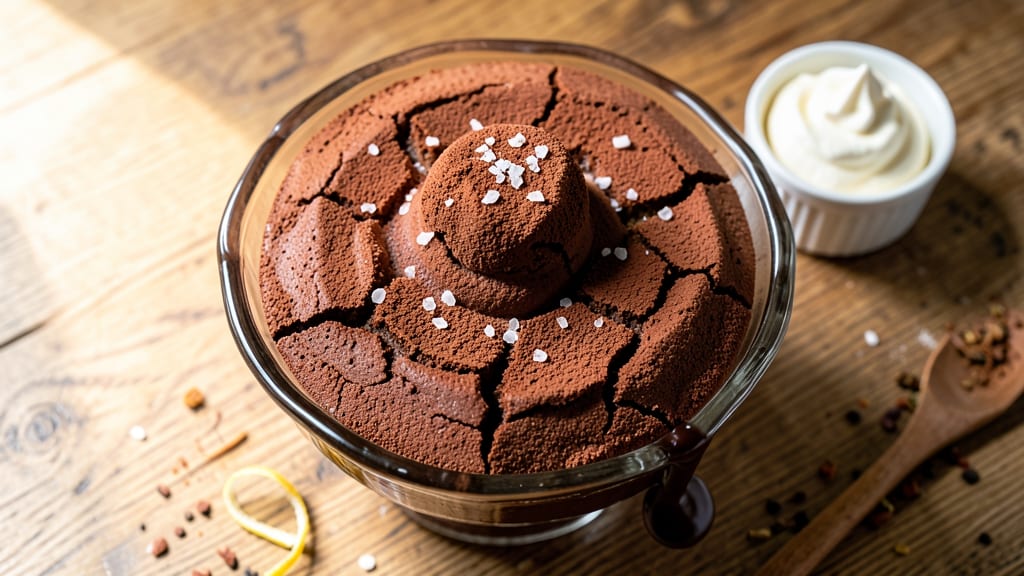
This aquafaba chocolate cake recipe delivers a rich, fluffy texture without eggs or dairy—proving plant-based baking can be just as decadent. The secret lies in whipping chickpea brine into stiff peaks, creating airy volume that rivals traditional cakes.
I've perfected this method after years of testing, ensuring a moist crumb and perfect rise every time.
What makes this recipe stand out is the balance of simple ingredients and precise technique. Aquafaba replaces eggs entirely while adding structure, and a touch of apple cider vinegar enhances the chocolate flavor.
The cake bakes up with a tender crumb and subtle fudgy notes, making it impossible to tell it's vegan.
By the time you pull it from the oven, you'll have a golden-domed cake with a crackly top and moist interior—no dense texture or dryness in sight. The frosting, made with coconut cream, adds a velvety finish that complements the deep chocolate flavor perfectly.
Perfect for celebrations, dessert nights, or satisfying chocolate cravings guilt-free. Let's get baking—this cake will impress even the most skeptical dessert lovers.
Ingredients for aquafaba chocolate cake
Twelve ingredients transform into a decadent vegan cake with restaurant-quality texture.
| Ingredient | Amount | Notes |
|---|---|---|
| Aquafaba (chickpea brine) 🥜 | 1 cup | From 1 can chickpeas, unsalted |
| Granulated Sugar 🍚 | 2 cups | Organic preferred for purity |
| Unsweetened Cocoa Powder 🍫 | ¾ cup | Dutch-processed for smoothness |
| All-Purpose Flour 🌾 | 1 ½ cups | Gluten-free blend if needed |
| Apple Cider Vinegar 🍎 | 1 tbsp | Enhances chocolate flavor |
| Baking Soda 🧪 | ½ tsp | Pure, aluminum-free |
| Salt 🧂 | ½ tsp | Fine sea salt preferred |
| Vanilla Extract 🌿 | 1 tsp | Pure alcohol-free preferred |
| Coconut Oil (refined) 🥥 | ½ cup | Melted for frosting base |
| Coconut Cream 🥥 | 1 can | Chilled overnight for separation |
| Powdered Sugar 🍚 | 2 cups | For smooth frosting texture |
| Dark Chocolate Chips 🍫 | 1 cup | 70% cacao minimum |
The aquafaba is the star—use unsalted chickpea brine from a can of organic chickpeas for best results. Trader Joe's and Whole Foods carry high-quality canned chickpeas, but any unsalted brand works. For the cocoa powder, Valrhona or Ghirardelli deliver superior smoothness, though Hershey's Special Dark is a budget-friendly alternative. The coconut cream must be fully chilled for 24 hours to separate properly—this ensures a stable frosting. Measure flour precisely using the spoon-and-level method to avoid density issues. Diamond Crystal baking powder is recommended for optimal rise, though Rumford works similarly.
No aquafaba? Flax eggs (3 tbsp ground flaxseed + 9 tbsp water per cup) provide structure, though texture will differ slightly. Substitute cocoa powder with carob powder for a caffeine-free option, though flavor will vary. For the vinegar, white vinegar works in a pinch, but apple cider adds depth. The coconut oil can be replaced with vegan butter, though it may yield a slightly denser frosting. Dairy-free chocolate chips like Enjoy Life brand ensure strict vegan compliance while maintaining melt-in-your-mouth texture. Always toast chocolate chips for 3-5 minutes to intensify flavor—don't skip this step for optimal results.
Store the cake in an airtight container at room temperature for up to 4 days, though it's best enjoyed within 2 days for peak moisture. The frosting keeps 3 days refrigerated, though texture may soften. For longer storage, freeze the unfrosted cake for up to 3 months—thaw at room temperature before frosting. Portion the frosting into small containers for easy application. The cake reheats beautifully in the microwave for 15 seconds to restore moisture, making it perfect for quick dessert cravings.
Why You'll Love This Recipe
- No Eggs Needed: I keep a can of chickpeas in my pantry just for this—no extra shopping, no fuss. The aquafaba whips into fluffy peaks that hold up like any cake batter, and honestly? You’d never guess it’s just brine.
- Rich Without Guilt: That deep cocoa flavor? It’s ridiculously satisfying, but the flour and vinegar balance it so well it doesn’t taste heavy. Between us, I’ve made this for dessert and breakfast—no judgment here.
- Budget-Friendly Luxury: Cocoa powder and flour are cheap staples, and you’re already using chickpea brine. I’ve made this for potlucks, last-minute birthdays, and even a "fancy" dinner—people always ask for seconds, but my wallet stays happy.
- One-Bowl Wonder: Mix, bake, done. No sifting, no folding in eggs, no waiting for substitutes to set. My daughter “helps” pour the batter (she’s still learning), and it’s ready while I’m still scraping the bowl. Leftovers? They disappear faster than I can say “second slice.”
Step-by-step instructions for aquafaba chocolate cake
This method delivers a perfectly moist, rich chocolate cake using aquafaba as the secret binder.
Whip the Aquafaba to Stiff Peaks
Transfer the 1 cup aquafaba (chickpea brine) to a clean, grease-free mixing bowl. Using an electric mixer on high speed, whip the aquafaba for 8-10 minutes until it forms stiff, glossy peaks that hold their shape when the whisk is lifted. This step mimics egg whites, providing structure and lightness to the cake.
I like to use the bowl of a stand mixer for this—it catches any stray drops. The aquafaba should thicken noticeably, almost like meringue. If it doesn't reach stiff peaks after 10 minutes, add 1 tbsp apple cider vinegar and continue whipping for another 2-3 minutes. The vinegar helps stabilize the foam and enhances the chocolate flavor later.
Combine Dry Ingredients and Melted Coconut Oil
In a separate large bowl, sift together the 1.5 cups all-purpose flour, 0.75 cup unsweetened cocoa powder, 0.5 tsp baking soda, and 0.5 tsp salt. This ensures even distribution and prevents lumps. In a small saucepan, gently melt the 0.5 cup coconut oil (refined) over low heat, then remove from heat and let it cool slightly.
To the dry ingredients, add the melted coconut oil, 2 cups granulated sugar, and 1 tsp vanilla extract. Mix with a spatula until the mixture resembles wet sand—just combined but not fully incorporated. The sugar will begin to dissolve as you work, creating a smooth base for the aquafaba.
Fold Aquafaba into the Batter Gently
Using a spatula, carefully fold one-third of the whipped aquafaba into the dry mixture in three additions. This gradual incorporation prevents deflating the airy structure you worked so hard to create. After each addition, gently scrape the sides and bottom of the bowl to ensure everything is evenly combined.
Once fully incorporated, fold in the 1 cup dark chocolate chips by hand. The batter will be thick and fudgy, almost like brownie dough. Don't overmix—just until the chocolate chips are evenly distributed. The aquafaba's structure is fragile at this stage, so handle the batter with care.
Bake for a Perfectly Moist Center
Preheat your oven to 350°F and prepare two 8-inch round cake pans by greasing them thoroughly with coconut oil and lining the bottoms with parchment paper. Divide the batter evenly between the pans, smoothing the tops with a spatula. Bake for 30-35 minutes, until a toothpick inserted into the center comes out with a few moist crumbs but no wet batter.
I check for doneness at the 28-minute mark—the edges should be set, but the center should still have a slight give. Overbaking is the enemy here; it dries out the cake. Once done, remove from the oven and let the cakes cool in the pans for 10 minutes before transferring to a wire rack to cool completely.
Prepare the Coconut Cream Frosting
Open the chilled 1 can coconut cream and scoop out the thick cream that has separated from the watery part. In a medium bowl, beat the coconut cream with an electric mixer until it forms soft peaks. Gradually add the 2 cups powdered sugar, 1 tbsp apple cider vinegar, and 1 tsp vanilla extract, mixing on low speed until fully combined.
The frosting should be smooth and spreadable, with a consistency similar to whipped cream. If it's too thick, add 1-2 tsp aquafaba to loosen it slightly. This frosting is rich and slightly tangy, complementing the deep chocolate flavor of the cake without overpowering it.
Assemble and Chill the Cake
Once the cakes are completely cool, place one layer on a serving plate and spread a generous layer of the coconut cream frosting on top. Repeat with the second layer, then frost the entire cake. Use a long spatula to smooth the frosting, creating clean sides. Finally, press the remaining 1 cup dark chocolate chips onto the sides for a decorative touch.
Refrigerate the cake for at least 2 hours before serving. This allows the flavors to meld and the frosting to set properly. The cake will be moist, rich, and perfectly balanced—no eggs needed, just pure aquafaba magic.
Pro Tips For Making Aquafaba Chocolate Cake
- Whisk Aquafaba Until Stiff: I learned this the hard way—skipping the whisking step means your cake will sink like a rock. Beat the aquafaba with sugar and vinegar for at least 5-7 minutes until it forms stiff peaks. No mixer? A hand whisk works, but your arm will protest by minute three.
- Sift the Cocoa Powder: Clumps in cocoa powder make for a dense, uneven cake. Sift it directly into your dry ingredients before adding flour—this ensures a smooth batter and that rich chocolate flavor throughout. Trust me, your cake’s texture will thank you.
- Don’t Overmix the Batter: Once you fold in the dry ingredients, stop after 10 gentle swirls. Overmixing develops gluten, and your cake will turn tough instead of tender. If the batter looks streaky, that’s fine—it’ll smooth out in the oven.
- Bake at 350°F, Not Hotter: I was impatient and cranked the oven to 375°F, and my cake came out dry and cracked on top. Stick to 350°F and bake for 30-35 minutes—insert a toothpick to check for doneness. If it comes out clean, it’s ready. If not, give it 2-3 more minutes.
Best sauces and condiments for this dish
Coconut Cream Frosting
The coconut cream frosting is the star of this cake, offering a velvety texture that pairs beautifully with the rich chocolate. Start with a chilled can of coconut cream (like Goya or Aroy-D)—the thicker, solid part at the top is what you need.
Whip this with 2 cups powdered sugar and 1 tbsp apple cider vinegar until smooth and fluffy. The vinegar adds a subtle tang that brightens the chocolate flavor. For extra richness, fold in 1 tsp vanilla extract and a splash of aquafaba if needed to loosen the frosting.
This frosting is naturally vegan and requires no butter substitutes. 🥥
Spiced Chocolate Ganache
For a more decadent twist, replace the coconut frosting with a spiced chocolate ganache. Melt 1 cup dark chocolate chips (70% cacao or higher) with ½ cup coconut cream and 1 tsp cinnamon, then let it cool slightly before spreading.
This ganache adds depth and a hint of warmth that complements the cake’s richness. Drizzle with melted white chocolate for a marbled effect. Use Enjoy Life or Pascha brands for dairy-free chocolate chips to ensure strict vegan compliance. 🍫
Berry Compote Topping
Brighten the cake with a berry compote made from 1 cup mixed berries (fresh or frozen), 2 tbsp sugar, and 1 tsp lemon juice. Simmer until thickened, then strain for a smooth finish. Spread this over the cake before adding frosting for a burst of freshness.
Raspberries or strawberries work best, but blueberries add a deeper color contrast. This topping balances the richness and adds a vibrant touch. 🍓
Peanut Butter Swirl
For a nutty twist, swirl ½ cup creamy peanut butter (like Jif Natural or Smucker’s) into the batter before baking. The peanut butter adds protein and a subtle crunch, creating a marbled effect.
Top with a peanut butter drizzle after frosting for extra indulgence. This variation is perfect for those who love Reese’s-style flavor combinations. Pair with a sprinkle of crushed peanuts for texture. 🥜
Salted Caramel Drizzle
Elevate the cake with a salted caramel drizzle made from ½ cup coconut sugar, ¼ cup coconut cream, and a pinch of flaky sea salt. Simmer until thickened, then drizzle over the frosted cake.
The caramel’s sweetness contrasts beautifully with the chocolate, while the salt enhances every bite. This finishing touch feels luxurious and pairs perfectly with the cake’s deep flavors. 🍯
Nutrition facts
Frequently asked questions
Can I use canned chickpeas instead of aquafaba?
Yes, but you'll need to drain and rinse 1 can of chickpeas first, then use the brine (aquafaba) for the recipe. Never use the chickpeas themselves—they'll make the cake dense. For best results, use unsalted chickpeas or rinse well if using salted to avoid altering the flavor balance.
Why did my aquafaba not whip to stiff peaks?
This usually happens if the aquafaba is too old (over 3 days) or contains too much salt. Use fresh brine from canned chickpeas and ensure your mixing bowl is completely grease-free. If needed, add 1 tbsp apple cider vinegar and whip for another 2-3 minutes. Cold temperatures also make whipping harder—try chilling the bowl first.
How do I make this cake single-layer instead of double?
Use the same batter but pour it into a single 9-inch round pan or 8x8-inch square pan. Reduce baking time to 25-30 minutes and check for doneness with a toothpick. You'll need about 1.5x the frosting to cover the larger surface area. This works perfectly for cupcakes too—just divide batter into 12 lined muffin tins and bake for 18-20 minutes.
Can I substitute the coconut cream frosting?
Try a vegan buttercream made with ½ cup vegan butter, 2 cups powdered sugar, and 2 tbsp aquafaba for stability. For a lighter option, use cashew cream (soak 1 cup cashews overnight, then blend with ½ cup water) whipped with powdered sugar. Both alternatives work beautifully with this cake's rich chocolate flavor.
Why does my cake taste slightly bitter?
This usually happens from overmixing the batter or using too much cocoa powder. Ensure you're using unsweetened cocoa powder (not baking cocoa) and measure precisely. The aquafaba should be folded in gently—don't overbeat. For extra sweetness, add 1 tbsp maple syrup to the batter. Also check your chocolate chips—high cacao percentages can contribute to bitterness.