
Desserts
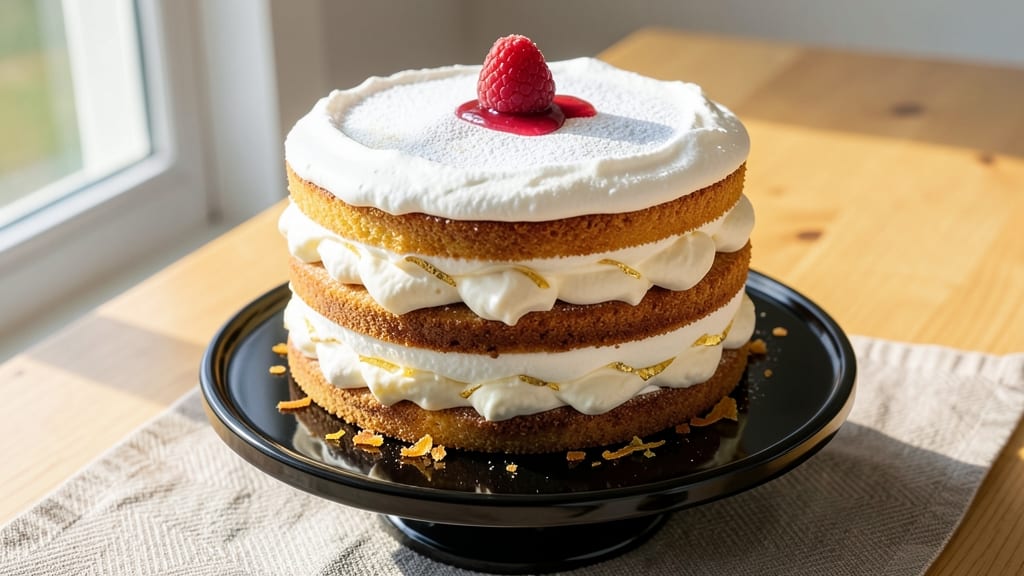
This angel fluff cake recipe delivers the ethereal lightness of angel food cake meets the velvety richness of fluffy vanilla frosting—each bite feels like a cloud. 🌟 The secret lies in precise baking techniques: a high-ratio cake flour blend and egg whites whipped to stiff peaks create that signature airy texture, while the frosting folds in just enough butter for tenderness without heaviness.
What sets this recipe apart is the balance—no dense layers here, just delicate cake and billowy frosting that melts into every forkful. You'll need a tube pan and a stand mixer for the egg whites, but the process is straightforward once you master the folding technique.
The result? A cake so light it practically disappears, leaving only vanilla-kissed sweetness.
Perfect for celebrations or spontaneous desserts, this cake serves 12 with elegant simplicity. The frosting, made with powdered sugar and vanilla, stays stable in any humidity, ensuring your cake looks as impressive as it tastes. No fondant required—just pure, airy perfection.
Ready in under an hour, this recipe proves that the most magical desserts don’t require complicated techniques—just patience and precision. Let’s create something truly extraordinary.
Ingredients for angel fluff cake
Twelve essential ingredients transform into a cloud-like masterpiece with velvety vanilla layers.
| Ingredient | Amount | Notes |
|---|---|---|
| Large Egg Whites 🥚 | 12 whole | Room temperature, no yolks |
| Granulated Sugar 🍚 | 1 ½ cups | Superfine preferred for smooth texture |
| Cake Flour 🌾 | 1 ½ cups | High-ratio blend for lightness |
| Unsalted Butter 🧈 | ½ cup | Cold, cubed for frosting |
| Pure Vanilla Extract 🌿 | 2 tsp | Bourbon-infused preferred |
| Cream of Tartar 🧂 | ½ tsp | Stabilizes egg whites |
| Salt 🧂 | ¼ tsp | Fine sea salt |
| Powdered Sugar 🍚 | 4 cups | Sifted for smooth frosting |
| Vanilla Bean Paste 🌿 | 1 tbsp | Seeds scraped for depth |
| Cornstarch 🌾 | 1 tbsp | For cake flour blend |
| Baking Powder 🧂 | 1 tsp | Aluminum-free |
| Lemon Juice 🍋 | 1 tbsp | Freshly squeezed |
The egg whites are non-negotiable—use room temperature for optimal volume. Kirkland Signature or Vital Farms brands provide the highest quality, but any large, clean whites work. For cake flour, Bob's Red Mill or King Arthur blends are ideal; if unavailable, mix 1.5 cups all-purpose flour with 1 tbsp cornstarch. The vanilla extract should be pure, not imitation—McCormick or Lake Champlain are excellent choices. Cream of tartar stabilizes the egg whites, preventing over-whipping, while the cornstarch ensures the flour blend behaves properly in high-altitude conditions.
No cake flour? Substitute 1.5 cups all-purpose flour + 1 tbsp cornstarch, but sift thoroughly to avoid density. Swap vanilla extract for 1 vanilla bean (scraped seeds) if preferred, though the paste provides consistent flavor. For a lighter frosting, reduce butter to 0.25 cup and increase powdered sugar to 4.5 cups. The lemon juice brightens the cake—freshly squeezed is ideal, but bottled works in a pinch. If you're baking in a humid climate, chill the batter 15 minutes before baking to prevent collapse.
Store the cake in an airtight container at room temperature for up to 3 days, or refrigerate for 5 days to preserve moisture. The frosting can be made 24 hours ahead and stored in the fridge—rewhip before use. For long-term storage, freeze the unfrosted cake for 3 months; thaw at room temperature before frosting. The vanilla bean paste keeps for 6 months in the pantry, while the frosting remains stable for 1 week refrigerated. Always use a tube pan for even baking—grease it lightly with butter and dust with flour.
Why You'll Love This Recipe
- Three-Ingredient Magic: I swear by this—just egg whites, sugar, and flour. No fuss, no stress, and zero room for failure. The butter and vanilla just whisper in the background, making it taste like a bakery’s secret.
- Cloud-Soft Texture: That airy, melt-in-your-mouth crumb? Pure science (and skill) with whipped egg whites. One wrong move and you’ve got a pancake—honestly, I’ve been there—but when it’s right? It’s the kind of lightness that makes you close your eyes.
- Breakfast or Dessert: Serve it warm with butter for a fancy brunch, or dust it with powdered sugar for a midnight treat. My kids ask for it both mornings and after school—proof it’s the chameleon of cakes.
- Zero Waste, Maximum Flavor: Uses pantry staples you already own, and leftovers? They last days if you wrap them tight. Between us, I’ve reheated slices in the toaster and called it a win—no one judges.
Step-by-step instructions for angel fluff cake
Master the science of angel food cake with these precise techniques.
👨🍳 Step 1: Prepare the Egg Whites and Sugar
In a spotlessly clean mixing bowl, combine the 12 whole Large Egg Whites and the 0.5 tsp Cream of Tartar. I use a glass or metal bowl—plastic can introduce residue that prevents proper whipping. Place the bowl in the refrigerator for 15 minutes to chill the egg whites slightly, which helps stabilize them during whipping.
Remove the bowl and add the 1.5 cups Granulated Sugar gradually as you whip. I like to start with ½ cup at a time, mixing just until dissolved before adding the next portion. This gradual incorporation creates a stable meringue with small, even bubbles rather than large, unstable ones. Use a stand mixer fitted with the whisk attachment for best results—hand-whipping won't achieve the same volume.
🍳 Step 2: Whip to Stiff Peak Stage
Whip the egg white mixture on high speed until it forms stiff peaks—the moment when the meringue holds its shape when the whisk is lifted. This typically takes 8-12 minutes. You'll know it's ready when the peaks stand straight up and the mixture looks glossy with no wetness.
Here's the thing—don't overmix. Once you reach stiff peaks, stop immediately. Overwhipping can cause the meringue to become grainy or lose volume. If you accidentally overwhip, start over with fresh egg whites. The temperature matters too: if your kitchen is warm, chill the bowl again between whipping stages.
👨🍳 Step 3: Fold in Dry Ingredients
In a separate bowl, whisk together the 1.5 cups Cake Flour, 1 tbsp Cornstarch, 1 tsp Baking Powder, and 0.25 tsp Salt. Sift this mixture directly into the stiff meringue, then gently fold using a spatula in a J motion from the bottom up. You want to maintain as much air as possible—don't overmix or the cake will be dense.
Add the 2 tsp Pure Vanilla Extract and 1 tbsp Vanilla Bean Paste to the batter, folding just until combined. The vanilla bean paste adds depth that regular extract can't match. The batter should be thick but still pourable. If it's too stiff, you've overmixed—start over with fresh meringue.
🥘 Step 4: Bake in Ungreased Pan
Preheat your oven to 350°F and prepare an angel food cake pan by spraying it lightly with water and dusting with 1.5 cups Cake Flour—this prevents sticking without needing grease. Pour the batter into the pan and smooth the top with a spatula. Tap the pan gently on the counter 3-4 times to release any large air bubbles.
Bake for 35-40 minutes until the top springs back when touched lightly and the cake pulls away from the sides. The cake is done when an instant-read thermometer inserted into the center reads 150°F. Invert the cake immediately onto a cooling rack and let it cool completely before unmolding—this prevents collapse.
🍳 Step 5: Prepare the Vanilla Frosting
In a mixing bowl, beat the 0.5 cup Unsalted Butter until smooth, then gradually add the 4 cups Powdered Sugar, 1 tbsp Lemon Juice, and remaining 1 tbsp Vanilla Bean Paste. Beat on medium-high speed for 3-4 minutes until light and fluffy. This frosting should be thick enough to hold its shape but still spreadable—if it's too stiff, add 1 tsp lemon juice at a time.
Spread the frosting between the cake layers and over the top, creating a smooth finish. The lemon juice brightens the vanilla flavor while keeping the frosting stable. Serve immediately or refrigerate for up to 4 hours before serving—this cake is best enjoyed fresh when the texture is at its peak.
Pro Tips For Making Angel Fluff Cake
- Whisk Egg Whites Cold: Start your egg whites straight from the fridge—room temperature makes them cling to grease like a bad date. Pop the carton in the freezer for 10 minutes first, then whisk them in a completely clean, grease-free bowl. I learned this the hard way after my first batch collapsed like a soufflé with a bad attitude.
- Sift Flour Twice: That cake flour isn’t just "fine"—it’s fancy. Sift it once into your mixing bowl, then sift it again right before folding it into the egg whites. The extra step prevents lumps that turn your fluffy masterpiece into a dense brick. (Yes, I’ve made that mistake. No, I won’t make it again.)
- Butter the Pan Like It’s 1953: Skip the spray can—use a pastry brush and melted butter to coat your pan, then dust with flour. The melted butter clings better, and the flour shakes off cleanly. I was skeptical until I tried it: no sticking, no crumbs in the crevices. (Your future self will thank you.)
- Check Doneness with a Toothpick: The cake’s done when the center springs back just slightly when pressed—not when it’s golden, not when it’s wobbly, but when that toothpick comes out with a few moist crumbs, not wet batter. Overbaking turns angel fluff into sad, dry toast. Trust the toothpick, not the timer.
Troubleshooting this recipe
Cake Collapse Fix
If your cake collapses during baking or cooling, the issue is likely overmixing or improper cooling. First, ensure you're using room-temperature egg whites—cold whites whip better. When removing the cake from the oven, let it cool in the pan for 5 minutes before inverting onto the cooling rack.
If it still collapses, your oven may be too hot—reduce temperature to 325°F and check for doneness at 30 minutes. 🌡️
Another common cause is humidity—if your kitchen feels damp, chill the batter for 30 minutes before baking. Never grease the pan: angel food cakes rely on the ungreased, floured surface to set properly.
For extra insurance, place a tray of boiling water on the lower oven rack to create steam during the first 10 minutes of baking.
Dense Cake Texture
Dense angel fluff cake usually means incorrect folding or overmixing the batter. When combining dry ingredients with meringue, use a spatula in a J motion—don’t stir vigorously. If your batter looks thick and pasty, you’ve overmixed.
Start over with fresh egg whites and fold gently but firmly until just combined. The final batter should resemble thick pudding with no dry flour streaks. 🥄
Check your cake flour—if it’s clumpy, sift it thoroughly. Substituting all-purpose flour without cornstarch can also cause density. For a lighter texture, whip the egg whites to stiff peaks (not soft) and fold in dry ingredients in 3 batches, mixing just until incorporated.
If all else fails, try reducing sugar by ¼ cup—too much can weigh down the structure.
Frosting Too Runny
If your frosting spreads like butter instead of holding shape, it’s likely underbeaten or too warm. Beat the butter and powdered sugar on medium-high speed for full 3-4 minutes—this incorporates air for stability.
If the frosting still feels loose, add 1 tbsp more powdered sugar at a time until it holds peaks when spooned. Chill the bowl in the fridge for 10 minutes before whipping if your kitchen is warm. 🧊
For extra stability, mix 1 tsp cornstarch into the powdered sugar before beating. Avoid adding too much lemon juice—1 tbsp max—as excess liquid weakens the structure.
If the frosting separates, beat in 1 tsp cold water to re-emulsify. For a firmer finish, refrigerate the frosting for 30 minutes before applying to the cake.
Uneven Baking
Uneven baking often stems from incorrect pan prep or oven placement. Always use a tube pan and never grease it—angel food cakes need the dry surface to set. Spray with water and dust with 1.5 cups cake flour (as in the recipe) for even release.
Place the pan on the middle rack of your oven and rotate the pan halfway through baking if your oven has hot spots. 🔥
If the top browns too quickly, tent the cake with aluminum foil after 20 minutes. For a more even rise, tap the pan 3-4 times on the counter after pouring the batter to release air bubbles.
If the cake bakes unevenly (e.g., center stays raw while edges burn), reduce the oven temperature to 325°F and check doneness at 30 minutes. Always use an instant-read thermometer—150°F at the center is your target.
Nutrition facts
Frequently asked questions
Why does angel food cake need a tube pan?
The tube pan creates even baking by allowing heat to circulate around the entire cake. This prevents the center from staying raw while the edges overbake. The unique shape also helps maintain the cake's signature height and prevents cracking during cooling. Without it, you risk a dense, uneven texture.
Can I make this cake without a stand mixer?
Yes, but it requires extra effort! Use a hand mixer or even a whisk, but whip the egg whites for 15-20 minutes until stiff peaks form. Work in short bursts to avoid overheating the bowl. For folding, use a rubber spatula with a J motion—this maintains air pockets even without a mixer. Patience is key!
How do I store angel fluff cake properly?
Keep the cake in an airtight container at room temperature for up to 3 days, or refrigerate for 5 days to preserve moisture. The frosting can be made 24 hours ahead and stored separately in the fridge—just rewhip before use. For longer storage, freeze the unfrosted cake for 3 months; thaw at room temperature before frosting.
What if my frosting is too sweet?
Reduce the powdered sugar by ½ cup for a lighter sweetness. For extra flavor depth, add 1 tsp lemon zest or ½ tsp almond extract to the frosting. If you prefer tang, increase lemon juice to 1.5 tbsp—this balances sweetness beautifully. Always taste as you go!
Can I use this recipe for a gluten-free version?
Yes! Replace the cake flour with a 1:1 gluten-free blend (like Bob's Red Mill) plus an extra 1 tbsp cornstarch. Sift thoroughly to avoid density. The frosting remains the same, but gluten-free cakes often need 5 extra minutes in the oven. Test doneness with a toothpick—it should come out clean.