
Desserts
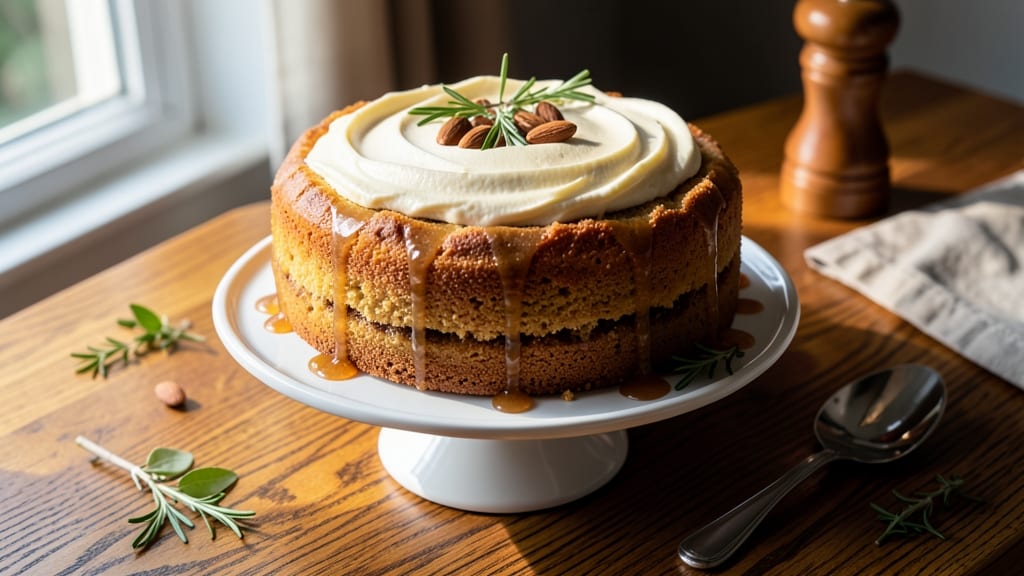
This almond flour butter cake delivers the perfect balance of tender crumb and rich vanilla flavor without a hint of dryness—something I perfected after years of experimenting with gluten-free baking.
The secret lies in properly hydrating the almond flour and using a precise mix of butter and eggs to create that signature moist texture. Unlike traditional flour cakes, this version stays wonderfully tender even after cooling, making it ideal for special occasions or a simple dessert treat.
The beauty of almond flour is its ability to create a delicate yet sturdy structure while keeping the cake light and airy. I’ve refined this recipe to ensure it rises beautifully in the oven, with a golden top and edges that stay intact.
The vanilla extract adds depth, while a touch of almond extract enhances the nutty undertones—subtle but unmistakable. What sets this apart is how it holds its shape without becoming dense, thanks to a few key techniques I’ll share in the instructions.
What you’ll end up with is a cake that’s rich, buttery, and impossibly moist—each slice offering that perfect contrast of tender crumb and velvety texture. The aroma of vanilla and toasted almonds fills the kitchen as it bakes, making it impossible to resist slicing into it warm.
This recipe is perfect for those who love classic butter cakes but want a lighter, gluten-free option that doesn’t compromise on flavor or texture.
Whether you’re baking for a celebration or just craving a slice of comfort, this almond flour butter cake delivers restaurant-quality results at home. The instructions are straightforward, and the ingredients are simple to find, ensuring you can achieve this perfect dessert every time. Let’s get started!
Ingredients for almond flour butter cake
Buttery richness meets almond nuttiness in this gluten-free masterpiece—just 11 ingredients for a showstopper cake.
| Ingredient | Amount | Notes |
|---|---|---|
| Almond Flour 🥜 | 2 ½ cups | Finely ground, unsifted |
| Unsalted Butter 🧈 | 1 cup | Room temperature, full-fat |
| Granulated Sugar 🍚 | 1 ½ cups | Superfine preferred for smoothness |
| Large Eggs 🥚 | 4 whole | Room temperature, separated |
| Pure Vanilla Extract 🍯 | 2 tsp | High-quality, not imitation |
| Almond Extract 🥜 | ½ tsp | Pure, for nutty depth |
| Baking Powder 🧂 | 1 tsp | Diamond Crystal preferred |
| Salt 🧂 | ½ tsp | Fine sea salt |
| Whole Milk 🥛 | ½ cup | Room temperature |
| All-Purpose Flour 🌾 | ¼ cup | For structure, optional |
| Powdered Sugar 🍚 | ½ cup | For dusting, optional |
The almond flour is your star player. Bob's Red Mill or Anthony's Goods make the finest, but any finely ground almond flour works—just don't pulse it too long or it'll turn into almond butter. I always sift mine twice to avoid lumps, which keeps the crumb silky smooth. For the butter, Plugrá is my go-to: it's European-style and stays spreadable at room temp. If you're using a different brand, let it sit out for 30-45 minutes before measuring. The vanilla and almond extracts? McCormick for vanilla, Frontier for almond—both brands deliver consistent quality without overpowering.
No almond extract? Skip it entirely—the vanilla still shines. Running short on baking powder? Baking soda plus cream of tartar works (use half the amount of baking soda and add 1/4 tsp cream of tartar). For a richer flavor, swap half the milk for heavy cream. The optional all-purpose flour? Only add if your almond flour feels too dry—it's not strictly necessary. And if you're dusting with powdered sugar, Domino brand is my secret for that ultra-fine texture. Pro tip: separate the eggs and whip the whites to stiff peaks for extra lift—trust me, it makes all the difference.
This cake keeps beautifully—3 days at room temp wrapped in foil, or 5 days in the fridge. For longer storage, slice and freeze portions between parchment paper for up to 3 months. To reheat, warm slices in a 200°F oven for 5 minutes—they'll taste almost as good as fresh. I always bake two pans at once and freeze one immediately—perfect for when cravings strike. The aroma while baking? Worth every minute of prep.
Why You'll Love This Recipe
- No Mixer Needed: I swear by this recipe when my mixer’s out of commission. The almond flour’s fine texture blends effortlessly with melted butter—no lumps, no fuss—just a quick whisk and fold. Honestly, it’s the kind of cake that makes me feel like a baking pro, even when I’m in a hurry.
- Buttery Vanilla Bliss: That first bite? Pure comfort. The butter—rich but not heavy—melts into the tender crumb, while the vanilla extract lingers like a warm hug. Between us, I’ve tried store-bought almond flour cakes, and this one actually tastes homemade. (Yes, even on a Tuesday night.)
- Slice It Any Way: This cake’s your blank canvas. Serve it warm with berries for brunch, dusted with powdered sugar for dessert, or even chopped into bars for a snack. My kids ask for it in their lunches, and my husband sneaks seconds—proof it works for everyone.
- Lasts Without Drying: Unlike most cakes, this one stays moist for days. I’ve had it in the fridge for four days, and it’s still as tender as the first slice. Plus, the almond flour keeps it naturally lower in carbs—so it’s my go-to when I want something indulgent but still mindful. (No one’s complaining.)
Step-by-step instructions for almond flour butter cake
Here's how to create a tender, buttery almond flour cake with a perfect crumb every time.
Cream Butter and Sugar Until Light and Fluffy
In a stand mixer fitted with the paddle attachment, beat the room temperature unsalted butter and 1.5 cups granulated sugar on medium speed for 3-4 minutes. You're looking for a pale, thick mixture that nearly doubles in volume and leaves clean streaks when you lift the paddle. This creaming process incorporates air, which creates that lovely tender crumb we're after.
I like to scrape down the sides every 30 seconds to ensure everything gets evenly incorporated. If your butter isn't quite soft enough, let it sit at room temperature for another 10 minutes—this makes all the difference in texture. The mixture should be smooth with no visible butter lumps by the end.
Add Eggs and Extracts for Maximum Flavor
Add the 4 whole large eggs, one at a time, mixing on low speed for 30 seconds after each addition. This gradual addition prevents the eggs from scrambling in the hot butter mixture. After all eggs are incorporated, add the 2 teaspoons pure vanilla extract and 0.5 teaspoon almond extract, mixing just until combined.
Here's where the magic happens—the almond extract adds that subtle nutty depth that complements the almond flour perfectly. The vanilla brings warmth, while the almond extract gives that sophisticated almond flavor without overpowering. Mix for about 20 seconds total after adding the extracts to fully incorporate them into the batter.
Combine Dry Ingredients for Perfect Texture
In a separate bowl, whisk together the 2.5 cups almond flour, 0.25 cup all-purpose flour, 1 teaspoon baking powder, and 0.5 teaspoon salt. Sift the dry ingredients through a fine-mesh sieve if possible—this prevents lumps and ensures an even distribution throughout the batter. The all-purpose flour adds just enough structure to balance the richness of the almond flour.
With the mixer on low speed, gradually add the dry ingredients to the wet mixture, mixing just until combined. Be careful not to overmix—you should still see some flour streaks in the batter. The 0.5 cup whole milk goes in next, mixed on low speed until just incorporated. The milk helps hydrate the almond flour and creates that moist crumb we're aiming for.
Bake to Golden Perfection
Preheat your oven to 350°F and grease an 8-inch round cake pan or line it with parchment paper. Pour the batter into the prepared pan and smooth the top with a spatula. Bake for 30-35 minutes, until a toothpick inserted into the center comes out clean and the edges are golden brown. The cake should spring back slightly when gently pressed in the center.
I know it seems like a long time, but almond flour cakes bake differently than traditional flour cakes—they need that extra time to fully set. If the top starts to brown too quickly, tent the pan with aluminum foil to prevent over-browning while allowing the center to cook through. The cake should be moist but fully set when done.
Cool and Dust for Show-Stopping Presentation
Remove the cake from the oven and let it cool in the pan for 10 minutes, then transfer it to a wire rack to cool completely. While it cools, dust the top with the 0.5 cup powdered sugar using a fine-mesh sieve. This adds that professional finish and balances the rich flavors.
The cake will firm up as it cools, developing that perfect tender crumb. For the best texture, let it cool completely before slicing—this ensures clean cuts and prevents crumbling. Serve with fresh berries, whipped cream, or a dusting of powdered sugar for a show-stopping dessert that's as beautiful as it is delicious.
Pro Tips For Making Almond Flour Butter Cake
- Weigh Your Almond Flour: I learned this the hard way—measuring almond flour by volume leads to dry, crumbly cakes. Spoon it into the cup, level it off, but better yet, use a kitchen scale. Two cups of almond flour should weigh about 200 grams. That’s the magic number for a tender crumb.
- Melt the Butter Slowly: Don’t dump cold butter straight into the almond flour—it’ll clump like a disaster waiting to happen. Warm the butter in the microwave for 15-20 seconds until it’s soft but not liquid, then mix it into the dry ingredients. This ensures even distribution and a smoother batter.
- Skip Overmixing the Batter: Almond flour cakes are delicate. Once you fold in the eggs and vanilla, mix just until combined—maybe 10-12 strokes with a spatula. Overmixing introduces too much air, which can make the cake dense or collapse in the oven. Less is more here.
- Let the Batter Rest: This isn’t the prettiest method, but it’s the tastiest. After mixing, let the batter sit for 10 minutes at room temperature. The almond flour absorbs the liquid better, and the cake turns out lighter. (Yes, even if you’re impatient like me.)
Common mistakes when making great almond flour butter cake
Overmixing the Batter
Almond flour is far more sensitive than regular flour, so overmixing develops gluten-like proteins that make the cake dense and tough. Stop mixing as soon as you see just a few flour streaks remaining—typically after 20-30 seconds of combining dry ingredients.
I've ruined cakes by mixing too long, so I set a timer reminder on my phone. The goal is to distribute the flour evenly without activating any gluten formation. 💡
Skipping the Egg Separation
While you can bake this cake without separating eggs, whipping the egg whites to stiff peaks and folding them into the batter at the end creates a lighter, more airy texture.
I fold them in last with a spatula to maintain maximum volume. If you're short on time, just use the whole eggs—the cake will still be delicious, just slightly denser.
Using Cold Ingredients
Cold butter, eggs, or milk can cause the batter to curdle or create pockets of uneven texture. Always let your butter, eggs, and milk sit at room temperature for at least 30 minutes before using.
I place eggs in warm water for 5 minutes to speed up the process. Cold ingredients also prevent proper fat incorporation, leading to a cake that's greasy rather than tender.
Incorrect Oven Temperature
Almond flour cakes bake differently than traditional cakes, so 350°F is critical—not too hot or too cool. If your oven runs hot, reduce to 325°F and add 5-10 minutes to baking time. I always check my oven temperature with an oven thermometer before baking.
An oven that's too hot causes the outside to brown while the center stays raw, while one that's too cool results in a dense, underbaked cake.
Not Hydrating the Almond Flour
Almond flour absorbs moisture differently than wheat flour, so the milk is essential for proper hydration. Skipping it or using too little results in a dry, crumbly cake. I measure the milk precisely and mix it in last to maintain the proper moisture balance.
For extra insurance, I sometimes add 1 tablespoon almond milk to the milk measurement, which enhances the nutty flavor while keeping the texture moist.
Overbaking or Underbaking
Almond flour cakes have a longer baking window than wheat flour cakes, but they're done when a toothpick comes out clean with just a few moist crumbs. Overbaking dries them out, while underbaking leaves them gummy.
I pull mine when the edges are golden but the center still looks slightly underdone—it continues cooking as it cools. For an 8-inch pan, 30-35 minutes is typically perfect, but always check with the toothpick test. 🌟
Nutrition facts
Frequently asked questions
Why does my almond flour cake turn out dry?
Almond flour absorbs moisture differently than wheat flour, so proper hydration is key. Always use the full 0.5 cup milk and make sure your butter and eggs are room temperature. For extra moisture, try adding 1 tablespoon almond milk to the milk measurement. Never skip the milk—it's essential for that tender crumb!
Can I substitute coconut flour for almond flour in this recipe?
Not recommended! Coconut flour absorbs much more liquid and has a completely different texture. For a 1:1 substitution, you'd need to adjust the recipe significantly—adding more eggs, milk, and potentially even an extra binder like xanthan gum. Stick with almond flour for that signature tender, buttery texture.
How do I make this cake gluten-free?
This recipe is already gluten-free! The only wheat-based ingredient is the optional 0.25 cup all-purpose flour, which you can omit entirely if needed. Just be sure to sift your almond flour well to avoid any grittiness. The cake will still have perfect structure without it.
Can I bake this in a different pan size?
Yes, but adjust the baking time accordingly. For a 9-inch round pan, bake for 25-30 minutes, while a 6-inch pan will need 40-45 minutes. Always check with a toothpick—almond flour cakes bake differently than wheat flour cakes. The edges should be golden but the center should still look slightly underdone when you remove it.
What's the best way to store leftovers?
Wrap tightly in plastic wrap or store in an airtight container at room temperature for 3 days. For longer storage, slice and freeze portions between parchment paper for up to 3 months. To serve, thaw at room temperature for 1 hour or warm slices in a 200°F oven for 5 minutes for that fresh-baked taste.