
Desserts
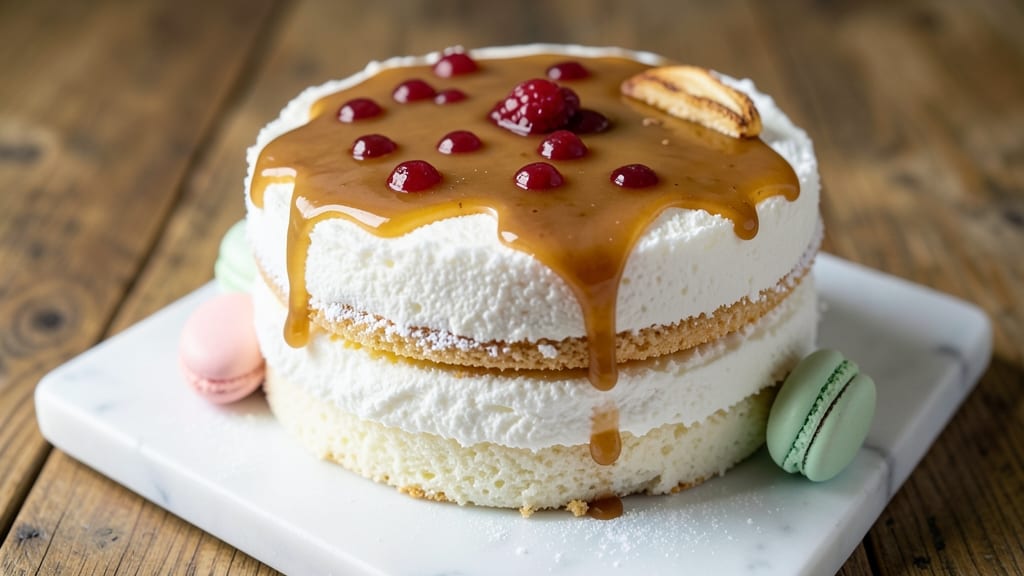
This angel food cake recipe with regular flour proves you don’t need cake flour for light, airy perfection. 💛 The secret lies in proper folding techniques and precise baking—no special ingredients required.
Most recipes demand cake flour for that signature texture, but this method delivers the same ethereal result using what you already have in your pantry.
What makes this recipe work is the careful incorporation of egg whites, which create the cake’s signature volume. Regular flour adds subtle richness without compromising the delicate crumb structure.
The key steps—folding dry ingredients gently and baking at the right temperature—ensure a cake that’s both tender and sturdy enough to slice cleanly.
By the time it emerges from the oven, you’ll have a golden, fluffy cake with a light-as-air texture that’s impossible to resist. The absence of heavy butter or oil keeps it moist without being dense, making it ideal for special occasions or everyday treats.
This version proves that great baking doesn’t require specialty ingredients—just technique.
Serve it with fresh berries, whipped cream, or a dusting of powdered sugar for a dessert that feels luxurious yet simple. Here’s how to achieve restaurant-quality results at home without the fuss.
Ingredients for angel food cake recipe with regular flour
Pantry staples and fresh egg whites transform into ethereal angel food cake without cake flour.
| Ingredient | Amount | Notes |
|---|---|---|
| Large Egg Whites 🥚 | 12 whole | Room temperature preferred |
| All-Purpose Flour 🌾 | 2 cups | Sifted for even texture |
| Granulated Sugar 🍚 | 1 ½ cups | Superfine preferred for smoothness |
| Cream of Tartar 🧂 | 1 ½ tsp | Stabilizes egg whites |
| Vanilla Extract 🌸 | 1 tsp | Pure vanilla preferred |
| Salt 🧂 | ½ tsp | Fine sea salt preferred |
| Unsalted Butter 🧈 | ¼ cup | Softened for folding |
| Fresh Berries 🍓 | 2 cups | For serving, optional |
| Powdered Sugar 🍚 | ¼ cup | For dusting, optional |
| Aluminum Cake Pan 🍰 | 1 whole | Ungreased, 10-inch |
The egg whites are non-negotiable here—room temperature is key for proper volume. Kirkland Signature or Vital Farms brands are reliable for consistent quality. Look for whites with minimal yolk residue, as even traces can prevent proper whipping. Cream of tartar is your secret weapon—it stabilizes the whites, preventing deflation. If you're short, lemon juice at half the amount works in a pinch, but cream of tartar gives cleaner results. The flour? Any all-purpose brand will do, but King Arthur or Gold Medal sift beautifully for that signature texture.
No cream of tartar? Lemon juice or white vinegar at half the amount mimics its acidity, though results may be slightly less stable. Superfine sugar isn't mandatory, but it dissolves faster—pulse regular granulated sugar in a food processor for 30 seconds if needed. The butter is purely for flavor and moisture; Earth Balance vegan butter works if avoiding dairy. For serving, fresh berries add brightness—strawberries or raspberries hold up best. Powdered sugar dusting is optional but traditional; Confectioners' sugar from Domino is finely milled and ideal. The aluminum pan must be ungreased—any fat prevents proper browning.
Egg whites lose volume quickly after whipping, so measure them last. Store dry ingredients in airtight containers for 6 months; refrigerate egg whites for up to 3 days in their shells. The cake keeps 2 days at room temperature, wrapped tightly. For longer storage, slice and freeze portions for 3 months. Always serve immediately after baking—angel food cake continues to rise slightly as it cools, so don't cut into it for at least 1 hour.
Why You'll Love This Recipe
- No Mixer Needed: I swear by this trick—whipping egg whites with cream of tartar until stiff peaks form (that’s the secret) doesn’t require a fancy stand mixer. My hand mixer does just fine, and honestly? The extra elbow grease means lighter, fluffier cake every time.
- Vanilla Kiss: That splash of vanilla extract? It’s the difference between "good cake" and "oh-my-gosh-I-need-more." The sugar and egg whites create this delicate sweetness that lets the vanilla shine—no artificial flavors, just pure, warm comfort.
- Birthday Party Ready: Slice it, layer it with berries or whipped cream, and suddenly you’ve got a showstopper dessert that’s still way easier than buying one. I’ve used this for everything from potlucks to my kid’s 8th birthday—no one ever guessed it was made with regular flour.
- Budget-Friendly Magic: All-purpose flour and granulated sugar are pantry staples, and you’re using egg whites instead of whole eggs. That means fewer grocery trips and more money left for frosting or extra vanilla. Plus, leftovers? Toast them for a crispy treat—no waste here.
Step-by-step instructions for angel food cake with regular flour
Mastering this method delivers a cake so light it practically disappears on your tongue.
👨🍳 Step 1: Separate and Whip Egg Whites to Stiff Peaks
Begin by separating the 12 whole large egg whites from yolks, ensuring no trace of yolk remains—even a speck will prevent proper whipping. Place them in a spotlessly clean bowl, as any grease inhibits volume. Using an electric mixer, whip on high speed until soft peaks form, then gradually add the 1.5 cups granulated sugar and 1.5 teaspoons cream of tartar while continuing to whip.
Here's the thing—whip until stiff, glossy peaks form when you lift the beaters. The mixture should hold its shape when you turn the bowl upside down. This typically takes 8-10 minutes of continuous whipping. I always check by lifting the beaters vertically—the peak should stand straight up without collapsing. The sugar dissolves completely during this process, creating a stable meringue base.
👨🍳 Step 2: Fold in Dry Ingredients Gently but Thoroughly
In a separate bowl, sift together the 2 cups all-purpose flour and 0.5 teaspoon salt. Gently fold one-third of this mixture into the egg white mixture using a spatula, cutting through the center to deflate slightly. Add the remaining flour mixture in two more additions, folding just until combined—overmixing develops gluten and makes the cake dense.
Then fold in the 1 teaspoon vanilla extract and the 0.25 cup softened unsalted butter. The butter adds richness without heaviness, and the vanilla infuses subtle sweetness. Work quickly but carefully—you want to maintain as much air as possible in the batter. The final batter should be thick but still pourable, with no visible streaks of flour. This ensures that air pockets remain intact during baking.
🥘 Step 3: Bake in an Ungreased Aluminum Pan
Preheat your oven to 350°F and place the aluminum cake pan upside down on the middle rack for 5 minutes to heat evenly. Remove the pan and quickly pour the batter into it, spreading evenly with a spatula. Tap the pan gently on the counter to release any large air bubbles.
Bake for 35-40 minutes until the top is golden brown and the cake springs back when gently pressed in the center. The edges should pull away slightly from the pan, and a toothpick inserted should come out clean. I always check at the 30-minute mark—every oven runs differently, and this cake doesn't tolerate overbaking. The key is timing: too short and it's underdone; too long and it dries out.
⏰ Step 4: Cool Inverted for Maximum Lightness
Immediately after removing from the oven, invert the cake onto a wire rack. Let it cool completely in this position for at least 2 hours—this prevents collapse and maintains that signature angel food cake lightness. The cake will naturally release from the pan as it cools, thanks to the aluminum's nonstick properties when properly heated.
Once fully cooled, you can serve the cake plain or with the 2 cups fresh berries and a dusting of 0.25 cup powdered sugar for a classic presentation. The berries add freshness that cuts through the cake's sweetness, while the powdered sugar gives a delicate finish. Store any leftovers wrapped in plastic at room temperature for up to 3 days, though it's rarely that good by then.
Pro Tips For Making Angel Food Cake Recipe With Regular Flour
- Whisk Egg Whites Cold: Start your egg whites straight from the fridge—room temperature whites lose volume faster. I used to pull them out early, and my cakes turned out dense. Keep them chilled until you’re ready to whisk, then add cream of tartar last to stabilize the peaks.
- Sift Flour Twice: Angel food cake relies on lightness, and lumps are the enemy. Sift the all-purpose flour before mixing, then sift it again through the bowl while folding it in. This isn’t optional—it’s what keeps the texture airy.
- Bake Until Cool: Pop it out of the oven when the top springs back and the sides pull away from the pan. Let it cool upside down for 10 minutes before flipping—this prevents collapse. I learned this after watching my first cake deflate like a sad balloon.
- Skip the Grease: No butter, no oil, not even a whisper of spray. Angel food cake needs to cling to the tube pan’s bare metal walls. Grease = dense cake. Wipe the pan with a damp cloth, then dry it thoroughly—this is non-negotiable.
Regional styles of this dish
Southern Classic
In the South, angel food cake is a staple for gatherings, often served with whipped cream and fresh berries. The regular flour version here adapts beautifully to this tradition, delivering the same tender crumb without cake flour.
I remember my grandmother always dusting hers with powdered sugar—she swore it kept the cake moist longer. The Southern touch? Adding a splash of 1 teaspoon lemon juice to the batter for brightness, which complements the vanilla perfectly. 🍓
Midwest Homestyle
Midwestern bakers often prefer a denser, slightly richer texture, and regular flour achieves this naturally. Here, you'll find variations where the cake is baked in a bundt pan instead of the traditional tube pan, creating a decorative center.
I like adding ½ teaspoon cinnamon to the dry ingredients for warmth, and serving slices with a scoop of vanilla ice cream. The Midwest twist? A drizzle of maple syrup before serving—it’s unexpected but balances the sweetness beautifully.
Pacific Northwest Fresh
The Pacific Northwest loves to incorporate local fruits, and this cake shines with raspberries or blackberries folded into the batter for a marbled effect. The regular flour holds up well to the fruit’s moisture, preventing a gummy texture.
I’ve also seen versions where the cake is brushed with raspberry jam glaze after baking. The region’s cool climate means these cakes stay fresh longer—perfect for potlucks or brunch spreads. 🌿
Florida Tropical Twist
Florida’s sunny climate calls for lighter, fruit-forward desserts, and this cake adapts effortlessly. Swap the vanilla for 1 teaspoon almond extract and fold in ½ cup diced mango or pineapple for a tropical vibe. The regular flour keeps the cake sturdy enough to hold up to the fruit’s juices.
Serve with a sprinkle of toasted coconut and a dollop of coconut whipped cream for a vacation-worthy treat. The humidity here means baking times might need a 2-3 minute adjustment—always check at 30 minutes.
New England Rustic
In New England, angel food cake often gets a rustic touch with crumbled graham crackers or oatmeal folded into the batter for texture. The regular flour’s slight heaviness pairs well with these additions, creating a cake that’s both light and hearty.
I love serving it with a side of warm apple compote—the tartness cuts through the sweetness. The region’s cooler ovens might require baking at 325°F instead of 350°F to prevent over-browning.
Modern Fusion
For a contemporary take, try adding 1 teaspoon matcha powder to the dry ingredients for a subtle earthy flavor. The regular flour balances the matcha’s intensity, creating a cake that’s still light but with a sophisticated twist.
Top with a layer of white chocolate ganache and crushed pistachios for a dessert that feels both classic and innovative. This version is perfect for foodies who love to experiment while keeping the angel food cake’s signature texture intact. ✨
Nutrition facts
Frequently asked questions
Why does this recipe use regular flour instead of cake flour?
Regular flour adds subtle richness and a slightly denser texture that works beautifully with angel food cake's signature lightness. The key is gentle folding and proper baking—this version delivers the same airy result without requiring specialty ingredients. The protein content in all-purpose flour creates a more substantial crumb that still stays tender.
Can I substitute cream of tartar with something else?
Yes! Use ½ teaspoon lemon juice or white vinegar instead of cream of tartar, though results may be slightly less stable. The acidity helps stabilize egg whites, but cream of tartar gives cleaner, more reliable stiff peaks. For best results, stick with cream of tartar if possible—it's the gold standard for angel food cake.
How do I know when the egg whites are properly whipped?
Stiff peaks should stand straight up when you lift the beaters and hold their shape when you turn the bowl upside down. The mixture should be glossy and hold its form—if it flattens immediately, keep whipping. This typically takes 8-10 minutes of continuous mixing at high speed.
Why does the cake need to cool upside down?
Cooling inverted prevents collapse by letting the cake set in its airy structure. The heat rises, and the cake naturally releases from the pan as it cools. If you don't invert it, the cake may sink in the center and lose its signature lightness—this step is non-negotiable for perfect results.
What if my cake turns out dense or dry?
Overmixing the batter or opening the oven too soon are common culprits. Always fold dry ingredients gently, and check for doneness at 30 minutes—overbaking dries out the cake. For extra moisture, brush warm slices with simple syrup (equal parts sugar and water, heated until dissolved).