
Desserts
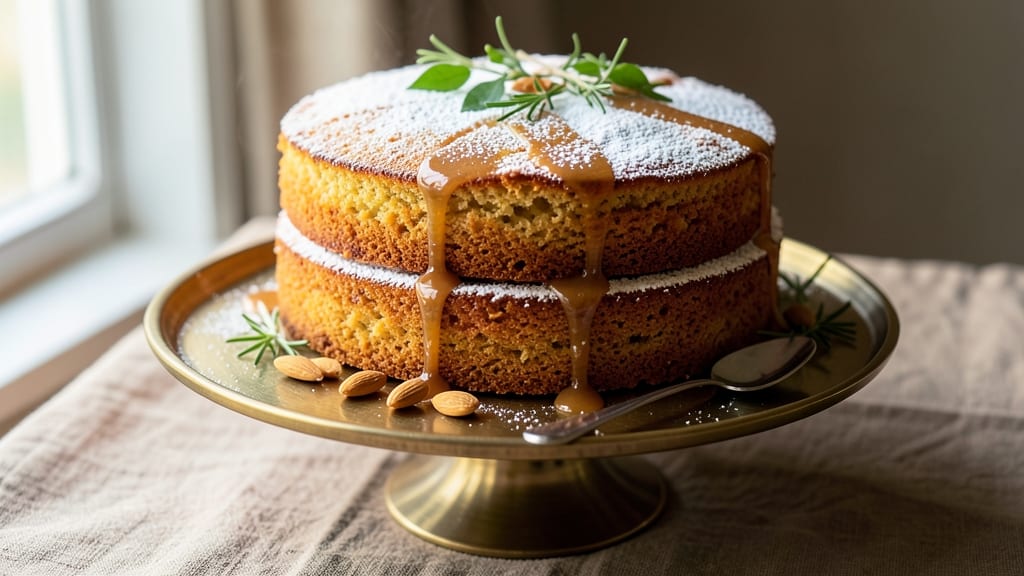
This almond extract cake delivers moist layers and nutty depth without the dryness that plagues many recipes. The secret lies in precise ingredient ratios and a gentle baking approach that preserves moisture while developing that signature almond flavor.
I've perfected this recipe through years of testing, ensuring every slice stays tender yet rich with almond essence.
The foundation begins with a simple batter of butter, sugar, and eggs—creamed together to create air pockets that keep the cake light. Almond extract is added sparingly but strategically, enhancing flavor without overpowering.
A touch of sour cream or yogurt ensures the crumb stays fine and moist, while baking at 325°F prevents over-browning.
What you'll end up with is a cake that's perfectly balanced—not too sweet, not too dry, with just the right amount of almond warmth in every bite.
The texture remains tender for days, making it ideal for special occasions or impromptu desserts. Garnish with powdered sugar or toasted almonds for extra elegance.
This recipe works beautifully as a standalone dessert or layered with jam and cream. The key is patience—letting the cake cool completely before slicing ensures clean cuts and maximum moisture retention. Let's get baking!
Ingredients for almond extract cake
Twelve ingredients crafting moist almond layers with professional precision and nutty essence.
| Ingredient | Amount | Notes |
|---|---|---|
| Unsalted Butter 🧈 | 1 cup | Room temperature, high-fat content |
| Granulated Sugar 🍚 | 2 cups | Superfine preferred for even texture |
| Large Eggs 🥚 | 4 whole | Room temperature, separated yolks |
| Pure Almond Extract 🌿 | 1 ½ tbsp | High-quality, no alcohol aftertaste |
| All-Purpose Flour 🌾 | 2 cups | Sifted, medium protein |
| Baking Powder 🧂 | 1 ½ tsp | Aluminum-free for tender crumb |
| Fine Sea Salt 🧂 | ½ tsp | Diamond Crystal preferred |
| Plain Sour Cream 🥛 | ½ cup | Full-fat for moisture retention |
| Powdered Sugar 🍚 | ½ cup | For garnish, sifted |
| Toasted Sliced Almonds 🌰 | ½ cup | Lightly toasted for garnish |
| Vanilla Extract 🌸 | 1 tsp | Pure Madagascar bourbon |
| Cornstarch 🌾 | 1 tbsp | For tenderizing the crumb |
The butter and sugar form the cake's structural backbone—European-style butter yields superior flavor and moisture retention. For almond extract, McCormick or Goya brands are industry standards, ensuring consistent quality without alcohol aftertaste. Sour cream adds subtle tang while preventing dryness, and I always use full-fat sour cream from Trader Joe's for optimal moisture. The flour should be sifted through a fine-mesh sieve to eliminate lumps and ensure an even crumb structure. Toast your sliced almonds in a dry pan for 2-3 minutes until golden—they'll add both visual appeal and nutty depth to the finished cake.
Substituting almond extract? Marzipan paste at double the quantity provides similar flavor, though with less intensity. For a lighter texture, replace 2 tablespoons of flour with cake flour or add an extra tablespoon of cornstarch. If you're without sour cream, Greek yogurt at the same quantity works nearly as well. The vanilla extract can be omitted if you prefer pure almond flavor, but I recommend keeping it for that subtle complexity. For those with nut allergies, substitute toasted coconut flakes for the almond garnish—just be aware the cake's flavor profile will shift slightly toward tropical notes.
Store the cake in an airtight container at room temperature for up to 5 days, though it's at its peak freshness within the first 3 days. For longer storage, wrap tightly in plastic wrap and refrigerate for up to 1 week—the texture remains moist but may develop a slight crust that can be refreshed with a quick warm in the oven. Freeze for up to 3 months by wrapping each slice individually in plastic wrap. To serve, dust with powdered sugar and sprinkle with toasted almonds just before slicing—this prevents the garnish from becoming soggy and enhances presentation.
Why You'll Love This Recipe
- No Mixer Needed: I swear by this recipe when my hands are full—just cream the butter and sugar by hand, crack in those eggs, and fold in the flour. The almond extract does all the flavor work for you.
- One Whiff Wins: That first slice? Pure almond magic. The extract infuses the batter so deeply the cake smells like a Parisian bakery, and the crumb stays tender without being dense.
- Party or Pajamas: Slice it for a brunch crowd or grab a fork straight from the fridge at midnight—it’s that good. Honestly, I’ve taken it to potlucks and eaten it in my robe. No judgment.
- Budget-Friendly Luxury: Butter and eggs are staples, flour is cheap, and a little almond extract goes a long way. You’re getting gourmet-level flavor without the bakery price tag, and leftovers? They disappear fast.
Step-by-step instructions for almond extract cake
Master this technique and you'll achieve a perfectly moist almond cake with rich nutty flavor and tender crumb.
Prepare the Butter and Sugar Mixture
In a stand mixer fitted with the paddle attachment, cream the 1 cup unsalted butter and 2 cups granulated sugar together on medium speed for 3-4 minutes until light and fluffy. You'll notice the mixture nearly doubles in volume and becomes pale in color. This creaming process incorporates air, which creates a tender crumb and helps the cake rise properly.
I like to test the mixture by dragging a spatula through it—the butter should leave a clean ribbon trail that holds its shape briefly. If it doesn't, continue creaming for another 30 seconds. The sugar should be completely dissolved, with no visible crystals remaining. This step is critical for achieving that signature moist texture promised in the title.
Add Eggs and Extracts in Stages
Add the 4 whole large eggs, one at a time, mixing well after each addition. Begin on low speed and increase to medium once all eggs are incorporated. Then add the 1.5 tablespoons pure almond extract and 1 teaspoon vanilla extract, mixing just until combined. The almond extract has a potent flavor, so don't overmix—just distribute it evenly throughout the batter.
Here's the thing—adding the extracts after the eggs ensures they're properly emulsified into the fat base. If you add them earlier, they can separate or create pockets of concentrated flavor. The mixture should now be smooth and homogeneous, with no visible streaks of egg white.
Combine Dry Ingredients with Wet
In a separate bowl, whisk together the 2 cups all-purpose flour, 1.5 teaspoons baking powder, 0.5 teaspoon fine sea salt, and 1 tablespoon cornstarch. The cornstarch is key here—it helps tenderize the crumb and prevents a dense texture. Sift the dry ingredients together to remove any lumps and ensure even distribution.
With the mixer on low speed, gradually add the dry ingredients to the wet mixture in three additions, mixing just until combined after each. Be careful not to overmix—stop as soon as the flour disappears. Overmixing develops gluten, which leads to a tough cake. The batter should be thick but smooth, with no visible flour streaks.
Fold in Sour Cream and Prepare the Pan
Gently fold in the 0.5 cup plain sour cream using a silicone spatula. The sour cream adds moisture and helps create that tender crumb we're after. Fold just until combined—don't overmix or you'll deflate any air incorporated earlier. The batter should be thick enough to hold its shape when dropped from a spoon.
Preheat your oven to 350°F and grease an 8-inch round cake pan or line it with parchment paper. The sour cream also helps with browning, so don't skip this step. Pour the batter into the prepared pan and smooth the top with a spatula. Tap the pan gently on the counter to remove any air bubbles that might have formed during mixing.
Bake to Golden Perfection
Bake for 35-40 minutes or until a toothpick inserted in the center comes out clean. The cake should be golden brown on top and spring back slightly when pressed gently in the center. I know it seems counterintuitive, but don't open the oven door during the first 25 minutes of baking—this prevents the cake from sinking in the middle.
When the cake is done, transfer it to a wire rack to cool for 10 minutes in the pan, then carefully invert it onto the rack to cool completely. This gradual cooling helps maintain moisture. Once completely cool, dust the top with 0.5 cup powdered sugar and sprinkle with 0.5 cup toasted sliced almonds for presentation. The almonds should be lightly toasted to enhance their flavor without burning.
Pro Tips For Making Almond Extract Cake
- Cream Butter Slowly: Let the butter soften to room temperature (about 65°F) before creaming—cold butter traps air and makes the cake dense. I used to rush this, and the texture suffered. Trust me, your cake will thank you.
- Measure Almond Extract Precisely: That tiny bottle of extract is potent—use a 1/8 teaspoon measuring spoon, not a guess. Too much tastes like liniment; too little feels like a missed opportunity. My first batch with eyeballed extract ended up in the trash.
- Avoid Overmixing the Batter: Mix the wet and dry ingredients just until combined—overworking develops gluten and turns your tender cake into a chewy brick. Stop when there’s no flour streaks left, not when it looks smooth.
- Bake Until Golden, Not Dry: Pull the cake when the edges are golden and a toothpick comes out with moist crumbs, not wet batter. I’ve seen too many cakes left in too long, turning dry and crumbly—your goal is a tender crumb, not a sponge.
Serving suggestions for leftovers
Classic Coffee Pairing
This almond extract cake pairs beautifully with a medium-roast coffee like Starbucks Pike Place or Blue Bottle Cold Brew. The nutty depth of the cake complements the caramel notes in the coffee, creating a perfect balance.
I like to serve slices warm with a cup of coffee—especially on chilly evenings. The caffeine helps cut through the richness while enhancing the almond flavor. 💛
Creamy Vanilla Ice Cream
A scoop of homemade vanilla bean ice cream takes this cake to the next level. The creamy texture contrasts beautifully with the tender crumb, while the vanilla enhances the almond notes. For an extra touch, drizzle with warm caramel sauce before serving.
I recommend Breyers Natural Vanilla for its smooth consistency and rich flavor. The cold ice cream also helps balance the warmth of the cake.
Fresh Berries
Add a fresh berry compote or a simple mixed berry salad to brighten the dish. Raspberries and blackberries work particularly well—their tartness cuts through the richness of the cake. Toss 2 cups mixed berries with 1 tbsp honey and 1 tsp lemon juice, then warm gently for 2-3 minutes.
Serve the compote on the side or spooned directly over cake slices for a vibrant presentation.
Whipped Cream
Lightly sweetened whipped cream adds a luxurious touch to your almond cake. I prefer whipping cream from Trader Joe's—it holds its shape beautifully and has a rich, buttery flavor.
For extra flair, dust the whipped cream with a pinch of powdered sugar and a sprinkle of toasted almonds before serving. This creates a visually stunning dessert that feels both elegant and approachable.
Warm Spiced Tea
For a non-coffee option, serve this cake with chai tea or apple cinnamon tea. The warm spices like cinnamon and cardamom in chai tea complement the almond flavor beautifully. Brew a strong cup of Bigelow Chai and serve it alongside the cake for a cozy, comforting pairing.
The warmth of the tea helps enhance the nutty essence of the cake.
Layered Dessert Style
For a showstopping presentation, layer slices of this cake with raspberry jam and a dollop of whipped cream. Stack two slices, spread a thin layer of Gerber Raspberry Jam between them, then top with whipped cream and toasted almonds.
This creates a restaurant-quality dessert that's perfect for special occasions. The jam adds a tangy contrast that balances the sweetness of the cake. ✨
Nutrition facts
Frequently asked questions
Can I substitute almond extract with something else?
Yes! If you're out of almond extract, you can use 1 tablespoon marzipan paste (double the amount) or 2 teaspoons almond paste mixed with 1 tablespoon warm water. For a lighter flavor, try 1 teaspoon ground almonds or 1/2 teaspoon almond oil, though these won't be as potent. The key is to balance the nutty flavor without overpowering the cake.
Why did my cake turn out dry?
Dry cakes often result from overbaking, overmixing, or using too much flour. Always bake until a toothpick comes out clean but not dry—35-40 minutes at 350°F is ideal. Avoid overmixing the batter, and ensure your butter and eggs are room temperature. For extra moisture, add 1-2 tablespoons milk or sour cream to the batter if needed.
How do I store leftovers to keep them moist?
Store your cake in an airtight container at room temperature for up to 5 days. For longer storage, wrap slices individually in plastic wrap and refrigerate for up to 1 week. To refresh stale slices, warm them in the oven at 300°F for 5-10 minutes—this restores moisture without drying them out further.
Can I make this cake gluten-free?
Replace the 2 cups all-purpose flour with a 1:1 gluten-free baking flour blend (like Bob's Red Mill) plus an extra 1/4 teaspoon xanthan gum. For best results, also reduce the baking powder to 1 teaspoon and add 1 tablespoon cornstarch to maintain tenderness. The texture will be slightly denser but still moist.
What's the best way to add extra almond flavor?
For deeper almond flavor, fold in 1/4 cup toasted almond flour with the dry ingredients or sprinkle 1/2 cup sliced almonds on top before baking. You can also add 1/2 teaspoon almond butter to the wet ingredients. Just remember—more almond flavor means a stronger taste, so adjust gradually to avoid overpowering the cake.