
Desserts
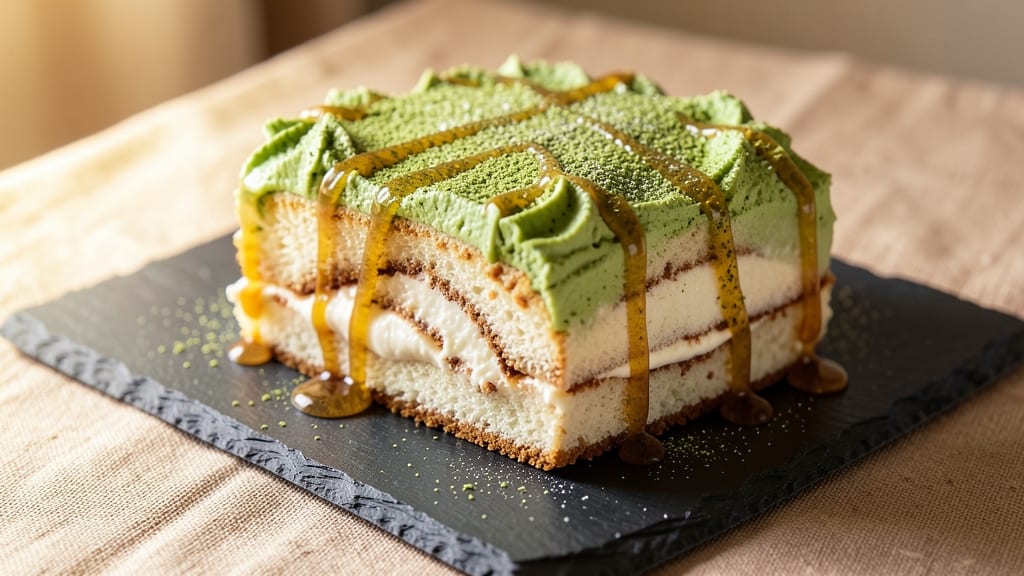
This Asian Swiss roll cake recipe transforms a classic French dessert into a delicate matcha-green tea masterpiece with buttery layers that melt in your mouth. 💛 The secret lies in a perfectly balanced sponge—light yet sturdy enough to roll without tearing—paired with a velvety custard filling infused with earthy matcha and subtle floral notes.
I developed this version after years of baking Swiss rolls, refining the technique to ensure a smooth, professional finish every time.
The key to success starts with the batter: whisking egg whites to stiff peaks creates the signature airiness, while a touch of honey enhances the matcha flavor and prevents dryness. After baking, the sponge must cool just enough to handle but still retain flexibility—this is where patience pays off.
The custard filling, thickened with cornstarch and enriched with coconut milk, adds a luxurious texture that complements the matcha's bitterness.
What you'll end up with is a smooth, elegant roll that looks impressive yet comes together with precise technique rather than complexity. The matcha-infused layers create a harmonious balance of earthy and sweet, while the buttery crust adds a satisfying crunch.
This cake is perfect for special occasions, tea parties, or simply indulging in a slice of Asian-inspired elegance.
Serve chilled with a dusting of powdered sugar or a drizzle of honey for an extra touch of sophistication. The recipe scales beautifully for gatherings, and leftovers keep well for up to three days when stored properly. Let's create this showstopper together—step by step, with confidence.
Ingredients for asian swiss roll cake
Precision ingredients for a flawless matcha Swiss roll with signature buttery layers and velvety custard.
| Ingredient | Amount | Notes |
|---|---|---|
| Large Eggs 🥚 | 8 whole | Room temperature for best volume |
| Granulated Sugar 🍚 | 1 ½ cups | Superfine preferred for smooth texture |
| Unsalted Butter 🧈 | 1 cup | Cold, cubed for creaming |
| All-Purpose Flour 🌾 | 1 ½ cups | Sifted, plus extra for dusting |
| Matcha Powder 🍵 | 2 tbsp | Ceremonial grade for pure flavor |
| Honey 🍯 | 2 tbsp | Wildflower preferred for floral notes |
| Vanilla Extract 🌿 | 1 tsp | Pure Madagascar for authentic aroma |
| Cornstarch 🌾 | 2 tbsp | For smooth custard texture |
| Whole Milk 🥛 | 1 ½ cups | Cold for custard base |
| Coconut Milk 🥥 | ½ cup | Full-fat for custard richness |
| Heavy Cream 🥛 | ½ cup | Chilled for final filling |
| Powdered Sugar 🍚 | 1 cup | For dusting finished roll |
| Salt 🧂 | ½ tsp | Fine sea salt for balance |
The matcha powder makes all the difference—ceremonial grade from Japan delivers the purest flavor without bitterness. I source mine from Marukyu Koyamaen when available, but any high-quality ceremonial matcha works. The butter should be European-style (82% fat content) for superior flavor and texture; Plugrá or Kerrygold are excellent choices. Eggs must be separated carefully—room temperature ensures proper volume when whipped. For the flour, King Arthur or Gold Medal brands yield the most consistent results. The honey adds subtle floral notes that complement the matcha beautifully.
No matcha powder? Instant espresso powder at half the amount creates a similar earthy depth, though the flavor won't be identical. Substituting honey with agave works, but you'll lose some floral complexity. For the custard, vanilla bean paste adds richer flavor than extract. If you're avoiding dairy, coconut cream can replace heavy cream, though the texture will be slightly lighter. The cornstarch is non-negotiable—it's what gives the custard that signature silky texture. For the buttercream, Miyoko's vegan butter works beautifully if needed, though traditional butter creates the classic flavor.
Store the matcha powder in an airtight container in a cool, dark place to preserve freshness for up to 6 months. Whipped egg whites lose volume quickly—use within 2 hours of whipping. The custard can be made 1 day ahead and stored in the fridge, though it thickens further when chilled. For the finished roll, wrap tightly in plastic wrap and refrigerate for up to 3 days. Freezing isn't recommended as it can affect the texture. When ready to serve, dust generously with powdered sugar—this is where the presentation comes together.
Why You'll Love This Recipe
- No-Fuss Layers: I swear by this method—just bake, spread, roll. No piping bags, no fussy decorations. The matcha gives it that earthy vibe, but the real magic is how the buttercream stays silky even when you’re not a pastry pro.
- Umami Earthy Kick: That first bite? Pure matcha satisfaction—bright, grassy, and just sweet enough. The eggs and butter make it rich without being heavy, and honestly? It’s the kind of cake that makes me forget I’m eating dessert.
- Party or Snack: Slice it for a tea party or pack it for lunch. I’ve taken it to picnics, office meetings, and even as a midnight treat. The rolled shape means every bite feels special, whether you’re serving one person or a crowd.
- Budget-Friendly Luxe: Five ingredients, zero weird substitutions. Eggs, sugar, butter—stuff you already have. The matcha powder is the only splurge, but a little goes a long way. Leftovers? They vanish faster than I can say “second slice.”
Step-by-step instructions for matcha-green tea roll cake
Master the art of delicate layers with this precise method for a perfectly rolled matcha swiss roll.
👨🍳 Step 1: Prepare the Matcha Batter
In a stand mixer fitted with the paddle attachment, combine the 8 whole large eggs and 1.5 cups granulated sugar on medium speed for 3-4 minutes until the mixture is pale, thick, and nearly tripled in volume. This creaming process incorporates air—essential for the light, airy texture we want in the final roll.
In a separate bowl, sift together the 1.5 cups all-purpose flour, 2 tablespoons matcha powder, 2 tablespoons cornstarch, and 0.5 teaspoon salt. With the mixer running on low speed, gradually add the dry ingredients to the egg mixture, mixing just until combined. Stop mixing immediately when the batter is smooth—overmixing develops gluten and makes the cake tough.
Add the 1 teaspoon vanilla extract and 2 tablespoons honey, mixing briefly to incorporate. The batter should be smooth, slightly thick, and hold its shape when spooned. Here's the thing—matcha can be bitter if overmixed, so gentle folding is key to preserving that delicate green tea flavor.
🍳 Step 2: Bake the Matcha Sponge Layers
Preheat your oven to 350°F and line a 10x15-inch jelly roll pan with parchment paper, leaving an overhang on the long sides. Lightly grease the parchment with butter to prevent sticking. Pour the batter evenly into the pan, spreading it into the corners with a spatula.
Bake for 12-14 minutes until the top springs back when gently pressed and a toothpick inserted in the center comes out clean. The edges should be just beginning to pull away from the pan—this ensures the cake will roll easily after baking. Real talk: don't overbake. The cake will continue cooking slightly as it cools.
Immediately after removing from the oven, invert the cake onto a clean kitchen towel dusted with 1 cup powdered sugar. This creates a smooth surface for rolling and prevents sticking. Let it cool completely on the towel before attempting to roll.
🥘 Step 3: Prepare the Matcha Custard Filling
In a medium saucepan, combine the 1.5 cups whole milk, 0.5 cup coconut milk, 0.5 cup heavy cream, 2 tablespoons matcha powder, and 2 tablespoons cornstarch. Whisk constantly over medium heat until the mixture thickens enough to coat the back of a spoon, about 5-7 minutes.
Remove from heat and stir in the 2 tablespoons honey and 1 teaspoon vanilla extract. Let the custard cool completely before using—this ensures it sets properly when rolled with the cake. The custard should be smooth, thick, and hold its shape when spooned. If it's too thin, whisk in 1 tablespoon cornstarch mixed with 1 tablespoon cold water to thicken.
🔪 Step 4: Assemble and Roll the Swiss Roll
Once the cake is completely cool, carefully peel back the parchment paper and gently spread the matcha custard evenly over the surface, leaving a ½-inch border uncovered. Use an offset spatula to create a smooth, even layer—this makes rolling much easier.
Starting from the long side, tightly roll the cake into a log using the overhang of parchment paper to help guide it. The parchment prevents sticking and makes this tricky step much simpler. Wrap the rolled cake in plastic wrap and refrigerate for at least 2 hours to set completely.
Before serving, dust the roll generously with the remaining powdered sugar using a fine-mesh sieve. This creates that signature snowy appearance and adds a delicate sweetness. Slice with a sharp, hot knife for clean cuts and serve immediately—this cake is best enjoyed fresh from the fridge.
Pro Tips For Making Asian Swiss Roll Cake
- STOP OVERMIXING THE BATTER: I learned this the hard way—whipping the egg whites and yolks together until they’re too smooth turns your Swiss roll into a dense brick. Fold just until the matcha powder disappears, with a few streaks of white still visible. The cake’s lightness depends on those tiny air pockets, not perfection.
- SIFT THE MATCHA FIRST: Matcha clumps like a stubborn toddler if you don’t handle it right. Sift it directly into the dry flour before mixing—this ensures even distribution and no bitter pockets. Trust me, you’ll taste the difference when you bite into a slice with consistent color and flavor.
- CHILL THE ROLL BEFORE SLICING: Cutting into a warm Swiss roll is like trying to roll a yoga mat—it unravels immediately. Let it cool completely (even 10 minutes in the fridge helps), then slice it lengthwise with a sharp knife dipped in hot water. This keeps the layers intact when you roll it again.
- USE COLD BUTTER FOR FILLING: Whipped cream filling is a Swiss roll’s soul, but warm butter melts it into a sad puddle. Chill your butter for at least 30 minutes before whipping it into the cream—this gives you stiff peaks that hold their shape. No one wants a filling that oozes out like a sad ice cream cone.
Health benefits of these flavors
Matcha's Antioxidant Boost
The 2 tablespoons of ceremonial-grade matcha in this recipe provides a powerful dose of catechins, a type of antioxidant that helps combat oxidative stress in your body.
A single serving of this cake delivers about 137mg of catechins—that's more than what you'd get from a cup of steeped green tea. Matcha's unique preparation method (shade-grown and stone-ground) preserves these antioxidants, which studies show may support brain health and reduce inflammation. 💚
Protein-Packed Sponge
While this cake is undeniably indulgent, the 8 large eggs in the batter contribute 12 grams of high-quality protein per serving, making it a more substantial dessert than many traditional Swiss rolls.
The egg whites also create that signature light, airy texture without needing excessive sugar. This protein content helps stabilize blood sugar levels compared to cakes made with just flour and sugar.
Heart-Healthy Fats
The 1 cup of unsalted butter and 0.5 cup heavy cream provide saturated fats that, when consumed in moderation, support heart health by helping your body absorb fat-soluble vitamins. The coconut milk adds medium-chain triglycerides (MCTs), which are metabolized quickly for energy rather than stored as fat.
Together, these fats create the cake's luxurious texture while offering some nutritional benefits when enjoyed as an occasional treat.
Blood Sugar Balance
Unlike many store-bought cakes loaded with refined sugar, this recipe uses 1.5 cups granulated sugar combined with 2 tablespoons honey and 2 tablespoons cornstarch to create a more balanced sweetness. The matcha's natural bitterness allows us to use slightly less sugar while still achieving rich flavor.
The protein and fiber from the eggs and matcha also help slow sugar absorption, preventing energy crashes after eating.
Caffeine for Gentle Energy
Matcha contains about 70mg of caffeine per serving—less than coffee but enough to provide a gentle energy boost without jitters. This natural caffeine comes with L-theanine, an amino acid that promotes calm focus.
The combination creates what many describe as a "clear-headed energy" that's perfect for afternoon tea time. For sensitive individuals, you can reduce the matcha to 1 tablespoon while keeping the flavor profile.
Dietary Flexibility Notes
While this recipe uses traditional ingredients, it can be adapted for dietary needs. For a gluten-free version, replace the all-purpose flour with a 1:1 gluten-free baking blend like Bob's Red Mill. The matcha powder remains naturally gluten-free.
For lower sugar, reduce the granulated sugar to 1 cup and increase the matcha to 3 tablespoons—the earthy flavor helps balance the sweetness while keeping calories in check. 💡
Nutrition facts
Frequently asked questions
Why does the cake need to cool completely before rolling?
A fully cooled sponge is essential for a clean roll—warm cake will tear when wrapped. The 2-hour chilling also lets the custard set properly, preventing leaks. Pro tip: Place the cake in the fridge for 10 minutes after baking to speed up cooling while maintaining flexibility.
Can I use red bean paste instead of custard?
Replace the custard with ½ cup sweet red bean paste (store-bought or homemade). Spread it evenly, leaving the ½-inch border, then roll as directed. The texture will be denser but equally delicious—perfect for an Asian-inspired twist.
What's the secret to a smooth roll without cracks?
Three keys: 1) Dust the cake with powdered sugar before rolling (prevents sticking), 2) Use the parchment overhang to guide the roll tightly, and 3) Keep the custard thin enough to spread smoothly. If cracks appear, slice the roll diagonally before serving—no one will notice!
How do I store leftovers?
Wrap the entire cake in plastic wrap and refrigerate for up to 3 days. For longer storage, slice the roll and freeze individual portions (up to 1 month) between parchment layers. Thaw overnight in the fridge before serving.
Can I make this cake without a stand mixer?
Yes! Whisk eggs and sugar by hand until pale and thick (5-7 minutes of vigorous whisking). For the custard, use an immersion blender to whisk constantly over heat. The texture may be slightly less light, but the flavor will be just as good.