
Desserts
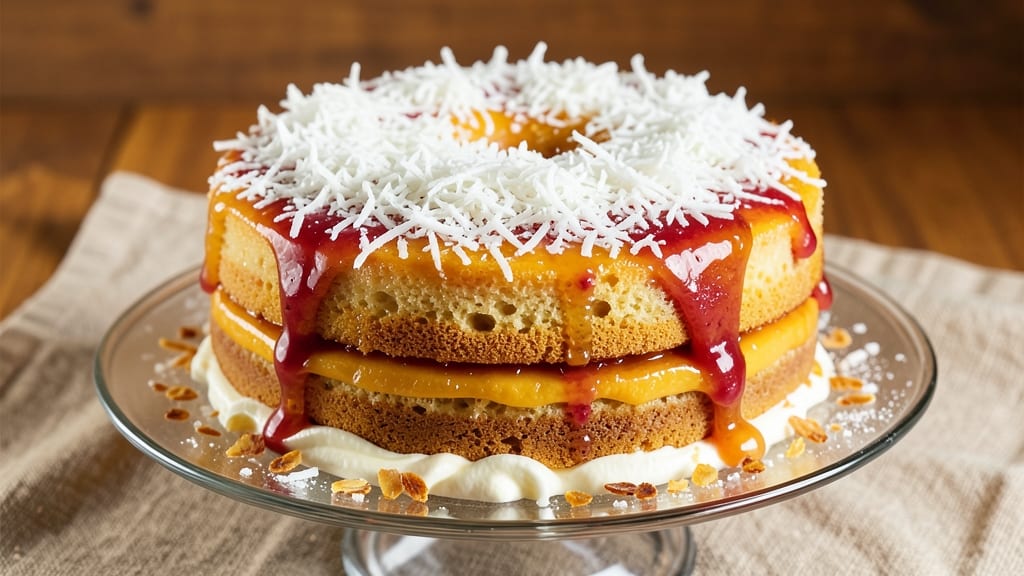
This Asian jiggly cake recipe delivers the perfect balance of silky mango layers, creamy coconut filling, and a crunchy topping that makes every bite irresistible. 💛 Inspired by traditional Southeast Asian desserts, this cake combines vibrant flavors with a texture that's both light and satisfying—ideal for special occasions or when you crave something sweet yet elegant.
The secret lies in the gelatin-infused mango layers, which create that signature jiggly texture while staying firm enough to hold their shape. Between each layer, a luscious coconut cream filling adds richness, and a toasted coconut topping provides the perfect contrast.
Unlike dense cakes, this dessert melts in your mouth with every bite, offering a refreshing yet indulgent experience.
What sets this recipe apart is its versatility—you can customize it with flavors like pandan or matcha for a modern twist. The layers are baked in a springform pan for easy release, and chilling time ensures clean slices every time.
Whether you're serving it at a tea gathering or enjoying a slice alone, this cake promises to impress.
For those who prefer plant-based options, I’ll share a simple gelatin substitute using agar-agar that maintains the same silky texture. Let’s create a dessert that’s as beautiful as it is delicious—one layer at a time.
Ingredients for asian jiggly cake
Silky mango layers, creamy coconut filling, and a toasted crunch topping—just 14 ingredients for this dreamy cake.
| Ingredient | Amount | Notes |
|---|---|---|
| Unsweetened Shredded Coconut 🥥 | 1 ½ cups | Toasted for extra crunch |
| Mango Puree 🍈 | 1 ½ cups | Fresh or high-quality canned |
| Granulated Sugar 🍚 | 1 ½ cups | White or raw cane |
| All-Purpose Flour 🌾 | 1 ½ cups | Sifted for smooth batter |
| Unsalted Butter 🧈 | ¾ cup | Softened to room temp |
| Large Eggs 🥚 | 4 whole | Room temperature preferred |
| Vanilla Extract 🌸 | 1 tbsp | Pure vanilla preferred |
| Unflavored Gelatin 🍬 | 2 tbsp | Bloomed in 1/4 cup water |
| Sweetened Condensed Milk 🥛 | 14 oz | Standard 14 oz can |
| Coconut Milk 🥥 | 1 can | Full-fat, 13.5 oz can |
| Pandan Extract 🌿 | ½ tsp | Optional for authentic flavor |
| Salt 🧂 | ¼ tsp | Fine sea salt |
| Baking Powder 🍞 | 1 tsp | Aluminum-free preferred |
| Toasted Coconut Flakes 🥥 | ½ cup | For crunchy topping |
The mango puree is where the magic happens. Trader Joe's has great canned mango puree, but fresh is even better—blend ripe mangoes and strain. If you can't find fresh, Mango Madness brand is my go-to for that vibrant flavor. The shredded coconut? Toast it yourself in a dry pan until golden—5 minutes max—for that perfect crunch. And don't skip the gelatin blooming step; it's what gives those layers that signature jiggle. I always double-check the gelatin package for blooming time, usually 5-10 minutes in cold water.
No mango puree? Purée ripe mangoes with a splash of water—just blend and strain. Running short on coconut milk? Substitute with evaporated milk, though the texture will be slightly less rich. The pandan extract is optional but worth it for that authentic Southeast Asian vibe—Trader Joe's carries it if you're not familiar. For the coconut topping, unsweetened flakes work best—the sweetened kind can make the topping too sticky. And if you're making this ahead, pre-toast the coconut flakes and store them separately until ready to use.
This cake needs at least 4 hours chilling between layers—trust me, it's worth the wait. Store leftovers in an airtight container in the fridge for up to 5 days, though I've never had any last that long. The gelatin layers keep well, but the coconut topping stays freshest when added fresh. For make-ahead convenience, assemble the cake layers without the topping and store them separately. The topping can be toasted and added right before serving.
Why You'll Love This Recipe
- No Mixer Needed: I swear by this recipe when my kitchen gadgets are on strike. Just fold the shredded coconut and mango puree into the dry ingredients—no electric help required. The butter gets whipped by hand in minutes, and the batter’s so forgiving that overmixing isn’t even a worry.
- Tropical Cheat Code: That mango puree isn’t just flavor—it’s the secret to a cake that’s ridiculously moist without being dense. The coconut adds this subtle crunch, while the sugar caramelizes just enough to give every bite a little buttery stickiness. Honestly, it tastes like a dessert vacation in one slice.
- Lunchbox Hero: Between us, this cake is my go-to for school lunches or office snacks. Cut it into small squares, wrap them in parchment, and they stay fresh for days. Kids (and adults) will actually eat their fruit—thanks to the mango’s natural sweetness hiding in plain sight.
- Pantry Staple Magic: I make this when I’m low on eggs or milk, and it still turns out perfect. The flour and butter base is budget-friendly, and the coconut adds texture without costing a fortune. Leftovers? Toss them in the toaster for crispy bites—no waste, all win.
Step-by-step instructions for silky mango coconut cake
Let's bake this dreamy jiggly cake with tropical flavors and a perfect crunchy top.
👨🍳 Step 1: Bloom the Gelatin and Prepare the Base
First, sprinkle the 2 tbsp unflavored gelatin over ¼ cup cold water in a small bowl. Let it sit for 5 minutes to bloom - you'll see it thicken into a gel-like consistency. Meanwhile, in a separate large bowl, whisk together the 1.5 cups mango puree, 1.5 cups granulated sugar, 1.5 cups all-purpose flour, 1 tsp baking powder, and 0.25 tsp salt until completely smooth.
This is where the magic starts - the gelatin will give that signature jiggly texture. I like to use a fine-mesh sieve for the flour to prevent lumps in our delicate batter. The mango puree should be smooth with no visible chunks for that silky texture we're after.
🍳 Step 2: Mix in Wet Ingredients and Create the Batter
In a separate bowl, beat the 4 whole large eggs until frothy, then add the 0.75 cup softened unsalted butter, 1 tbsp vanilla extract, and 0.5 tsp pandan extract. Mix until fully combined and slightly thickened. Now, gently fold this egg mixture into your dry ingredients bowl, alternating with the 14 oz sweetened condensed milk and 1 can coconut milk. Start and end with the dry mixture.
Here's the thing - we're building layers of flavor here. The condensed milk adds richness while the coconut milk keeps it light. The bloomed gelatin should now be dissolved in ¼ cup hot water (just warm it gently until fully liquid), then whisked into the batter. This step creates that signature wobble we all love in Asian jiggly cakes.
🥘 Step 3: Prepare the Crunchy Topping
While your batter rests, toast the 0.5 cup toasted coconut flakes in a dry skillet over medium heat for 2-3 minutes until golden brown and fragrant. Set aside to cool. In a separate small bowl, mix the 1.5 cups unsweetened shredded coconut with 1 tbsp of the coconut milk from the can to help it stick to the cake later.
This topping is what makes this cake special - the contrast of the crunchy coconut against the silky mango layers. I like to toast both the coconut flakes and shredded coconut separately for maximum texture. The coconut milk helps the shredded coconut adhere beautifully to the top of our cake.
🔥 Step 4: Bake the Silky Layers
Preheat your oven to 350°F. Pour half of the batter into an 8-inch round cake pan lined with parchment paper. Sprinkle half of the mixed shredded coconut evenly over the top, pressing it down gently. Repeat with the remaining batter and coconut. Bake for 30-35 minutes until the edges are golden and a toothpick comes out clean (or with just a few moist crumbs).
Here's where patience pays off - don't overbake! You want that jiggly texture, so pull it out when it's just set. The cake will continue cooking slightly as it cools. Let it rest in the pan for 10 minutes, then carefully transfer to a wire rack to cool completely before adding the coconut flakes topping.
⏰ Step 5: Assemble and Set the Crunchy Top
Once completely cooled, spread the toasted coconut flakes evenly over the top of the cake, pressing them down gently so they stick. For extra hold, you can lightly brush the top with a bit of melted butter. Let the cake set at room temperature for 1 hour before slicing. This resting time ensures clean slices with that perfect crunchy top every time.
That's it! Your cake is now ready to slice into perfect jiggly pieces. The contrast of the silky mango-coconut layers with the crunchy coconut top is what makes this cake so special. Serve at room temperature for the best texture and flavor experience.
Pro Tips For Making Asian Jiggly Cake
- STEAM THE COCONUT: Toast your shredded coconut in a dry pan for 2-3 minutes before mixing—it deepens the flavor and prevents a bland, watery texture. I learned this the hard way after making a batch that tasted like coconut cereal instead of dessert.
- WHISK THE BUTTER: Melt the butter first, then whisk it into the sugar until fully dissolved and smooth before adding wet ingredients. Lumps here turn into gummy spots later, and nobody wants a cake with surprise butter clumps.
- STOP WHEN IT JIGGLES: Pull the cake from the oven the second it wobbles in the center—no waiting for a toothpick test. Overbaking dries out the mango and turns the coconut into sad, crunchy bits instead of tender layers.
- SWAP FLOUR IF NEEDED: If your flour is old or humid, swap 10% for cornstarch—it keeps the texture light and jiggly. I skip this when I’m lazy, but the difference in bounce is noticeable, especially with the mango puree’s natural weight.
Flavor customization for this recipe
Tropical Fruit Twists
Swap the mango puree for ½ cup passionfruit pulp mixed with 1 cup mango puree for a tangy-sweet balance. Or try ½ cup lychee puree for floral notes—just strain seeds carefully.
For a summery vibe, use ½ cup ripe guava puree with ¼ tsp ground cinnamon to warm up the coconut flavors. 🍈
Spiced Variations
Infuse the batter with ½ tsp ground cardamom or ¼ tsp cinnamon for a Middle Eastern-Asian fusion twist. For warmth, add ¼ tsp chili powder to the coconut topping—trust me, the heat contrasts perfectly with the sweet mango.
A pinch of star anise in the filling (removed after steeping) adds depth without overpowering.
Vegan Adaptations
Replace the gelatin with 2 tbsp agar-agar powder mixed with ¼ cup water, heated until dissolved, then cooled before folding into the batter. For the coconut filling, use 1 can full-fat coconut milk whipped with ½ cup maple syrup and 1 tsp vanilla extract.
The texture stays firm enough for slicing but remains plant-based.
Nutty Crunch Toppings
Swap the coconut topping for ½ cup crushed peanuts toasted with 1 tsp brown sugar for a Thai-inspired twist. Or try ½ cup chopped macadamia nuts toasted with ½ tsp coconut oil for a luxurious finish. Press them gently into the cake while still warm for maximum adhesion.
Flavor Boosters
Add 1 tbsp lime zest to the batter for brightness, or fold in ½ cup fresh pineapple chunks into the coconut filling for a Hawaiian-inspired layer. For a boozy twist, replace 1 tbsp coconut milk with 1 tbsp coconut rum in the filling—it infuses beautifully. 💫
Texture Play
For extra drama, add ¼ cup crushed pineapple (drained well) to the batter for pockets of juicy surprise. Or layer thinly sliced fresh mango** between cake layers for a restaurant-worthy presentation. The gelatin keeps everything stable while adding visual appeal.
Nutrition facts
Frequently asked questions
What makes this cake have that signature jiggly texture?
The secret is the gelatin! We bloom 2 tbsp unflavored gelatin in water and dissolve it into the batter, creating those silky, wobbly layers. For a vegan version, use agar-agar powder instead—it gives the same firm-but-jiggly result when properly set.
Can I make this cake without a springform pan?
Yes, but use an 8-inch round cake pan with parchment paper on the bottom and sides to prevent sticking. Line the top with extra parchment to help release the cake cleanly. If you don't have parchment, lightly grease the pan with butter and dust with flour. The cake will still hold its shape—just be gentle when unmolding.
How do I fix if my cake layers didn't set properly?
If the layers feel too soft, they likely didn't chill long enough. Return the cake to the fridge for 2-3 more hours to firm up. For prevention, ensure you're using the right amount of gelatin (or agar-agar) and that your filling isn't too warm when assembling. A quick fix is to chill the cake uncovered in the freezer for 30 minutes to speed up setting.
What's the best way to store leftovers?
Wrap the cake tightly in plastic wrap and refrigerate for up to 5 days. For longer storage, freeze slices individually in airtight containers for up to 2 months. Thaw at room temperature before serving—never microwave, as it can make the gelatin layers rubbery. The coconut topping stays freshest when added fresh, but you can toast extra flakes ahead and store them separately.
Can I use fresh fruit instead of puree?
Blend 3 cups ripe mango with 2 tbsp water, then strain to remove seeds and skin. For other fruits like passionfruit, lychee, or guava, blend and strain similarly—just adjust sweetness with extra sugar if needed. Fresh fruit adds vibrant color and natural sweetness, but puree gives more consistent texture.