
Desserts
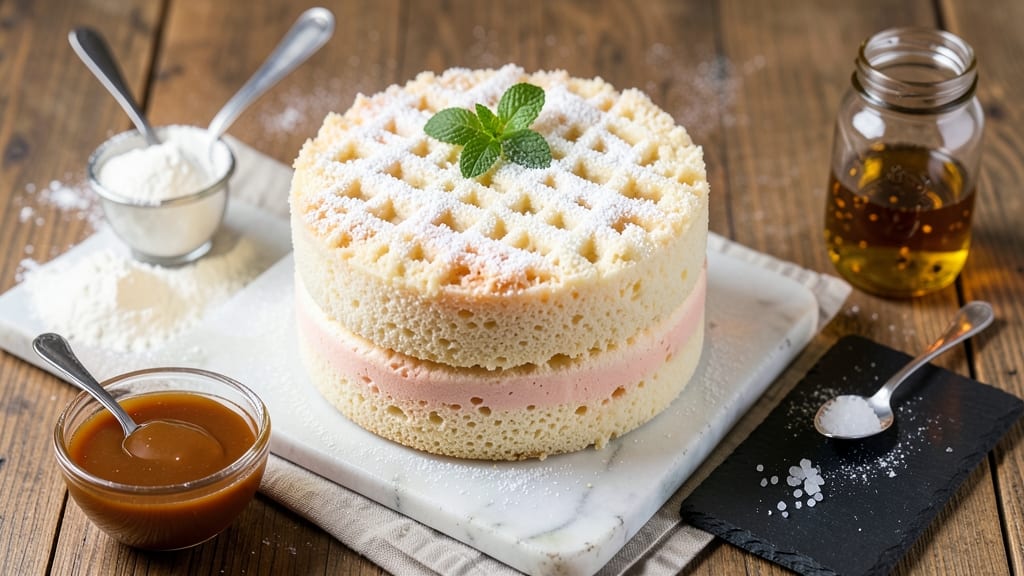
This aquafaba sponge cake delivers the lightest, most tender vegan sponge you’ve ever tasted—all thanks to the magic of whipped chickpea water. 💛 What makes this recipe remarkable is how it mimics traditional cake textures without a single egg, using only simple pantry staples and a technique that’s foolproof for beginners.
The secret lies in properly whipping the aquafaba until stiff peaks form, which creates the airy structure that holds the cake together. With a gentle fold of flour and sugar, the batter stays delicate enough to rise beautifully in the oven.
Baking at 350°F ensures even cooking, resulting in a cake that’s moist yet airy, with a subtle sweetness that’s perfect for any occasion.
What you’ll end up with is a cake that’s so light it practically melts in your mouth—ideal for celebrations, brunch, or satisfying cravings without compromise.
The versatility of this recipe means you can customize it with flavors like vanilla, citrus zest, or even a hint of cocoa, all while keeping it completely plant-based.
Perfect for dietary restrictions or simply experimenting with plant-based baking, this sponge cake proves that egg-free desserts can be just as impressive as traditional ones. Let’s get started on creating your next favorite cake!
Ingredients for aquafaba sponge cake
Eight simple ingredients transform into the lightest vegan sponge—no eggs needed.
| Ingredient | Amount | Notes |
|---|---|---|
| Aquafaba (Chickpea Water) 🥜 | 1 cup | From 1 can chickpeas, unsalted |
| Granulated Sugar 🍚 | 1 ½ cups | Superfine preferred for smoothness |
| All-Purpose Flour 🌾 | 1 ½ cups | Sifted for lightness |
| Vanilla Extract 🌿 | 1 tbsp | Pure vanilla preferred |
| Baking Powder 🧂 | 1 tsp | Aluminum-free for best rise |
| Salt 🧂 | ¼ tsp | Fine sea salt |
| Lemon Juice 🍋 | 1 tbsp | Freshly squeezed |
| Vegetable Oil 🫒 | ¼ cup | Light or neutral oil |
| Cream of Tartar 🧂 | ¼ tsp | Optional, for stability |
| Chickpea Flour 🌾 | 1 tbsp | For extra structure (optional) |
The aquafaba is your secret weapon—save the water from a can of chickpeas. Look for low-sodium brands at Trader Joe's or your local grocery store. The sugar matters too: superfine sugar dissolves faster for a smoother batter. I always grab Domino All-Purpose Flour because it's reliable, but any sifted flour works. Fresh lemon juice brightens the flavor, so skip the bottled stuff if you can. For the vanilla, pure extract (not imitation) makes all the difference—it's worth the extra few bucks.
No aquafaba? Extra-firm tofu blended with 2 tbsp water works in a pinch, but it won't whip as light. Short on chickpea flour? Extra 1 tbsp all-purpose flour keeps the structure. The cream of tartar stabilizes the whipped aquafaba—skip it only if you're confident in your whipping skills. For the oil, light olive oil or avocado oil adds subtle flavor, while vegetable oil keeps it neutral. The baking powder must be fresh—if it's over a year old, toss it. And if you're feeling fancy, a pinch of citric acid boosts the lemon flavor even more.
Whipped aquafaba keeps for 3 days in the fridge—cover it tightly to prevent a skin from forming. The batter should be used immediately, but you can prep all your dry ingredients ahead. Once baked, this cake stays moist for 2 days at room temperature, wrapped in plastic. For longer storage, slice and freeze portions—3 months works perfectly. The best part? It reheats beautifully—just pop a slice in the microwave for 10 seconds to revive that fresh-from-oven feel.
Why You'll Love This Recipe
- No Eggs Needed: I’ll admit, I was skeptical at first—how could chickpea water replace eggs? Then I tried this sponge, light as air with that signature crumb, and realized the aquafaba’s magic. Whisk it into stiff peaks, fold it in, and boom: fluffy cake without a single egg in sight.
- Sweet Vanilla Hug: That vanilla extract? It’s not just a drop—it’s the star. The sponge soaks up the aroma like a sponge (ironic, I know), leaving every bite with a warm, comforting sweetness that feels like a hug. Honestly, I’ve made it plain, and it’s still ridiculously good.
- Leftovers? No Problem: This cake stays fresh for days, and the best part? It’s just as delicious the third day as it is fresh. Slice it for breakfast toast, pack it in lunches, or save a piece for midnight cravings—it’s my go-to when I need something effortless but still feels special.
- Pantry Staple Power: Between us, this recipe uses stuff you already own. No fancy ingredients, no last-minute store runs—just flour, sugar, and that leftover chickpea water from your hummus night. Budget-friendly? Absolutely. Reliable? Even more so. My secret weapon for when I’m too tired to bake.
Step-by-step instructions for aquafaba sponge cake
Here's how to whip up a light, airy sponge cake using just chickpea water—no eggs needed!
🍳 Step 1: Whip the Aquafaba to Stiff Peaks
Pour the 1 cup Aquafaba (Chickpea Water) into a clean, grease-free mixing bowl. Add the 0.25 tsp Cream of Tartar (if using) and whisk by hand until smooth. This helps stabilize the foam.
Using a stand mixer with the whisk attachment, beat on high speed for 10-12 minutes until the aquafaba forms stiff peaks. You'll see the mixture thicken dramatically and hold its shape when the whisk is lifted. Here's the thing—don't rush this step. The longer you whip, the lighter your cake will be. If you're using a hand mixer, it'll take 15-18 minutes to reach the same consistency.
👨🍳 Step 2: Gradually Add Sugar and Oil
With the mixer still running on medium-high speed, slowly add the 1.5 cups Granulated Sugar in a thin, steady stream. This prevents sugar crystals from forming, which can weigh down your cake. After all the sugar is incorporated, add the 0.25 cup Vegetable Oil and mix for another 2-3 minutes until fully combined.
The mixture should now be glossy and thick, almost like meringue. If it looks grainy at all, keep mixing for another minute. Real talk: this is where the magic happens. The sugar and oil dissolve into the aquafaba, creating a stable base for your cake.
👨🍳 Step 3: Fold in Dry Ingredients Gently
In a separate bowl, sift together the 1.5 cups All-Purpose Flour, 1 tsp Baking Powder, and 0.25 tsp Salt. Add the 1 tbsp Vanilla Extract and 1 tbsp Lemon Juice to the dry ingredients and mix lightly. If using, fold in the 1 tbsp Chickpea Flour for extra structure.
Now, using a spatula, gently fold one-third of the dry ingredients into the aquafaba mixture. Be careful not to deflate the whipped aquafaba. After the first fold, switch to a rubber spatula and fold in the remaining dry ingredients in two additions, being sure to scrape down the sides of the bowl each time. The batter should be smooth and thick but still pourable. If it's too stiff, don't overwork it—just fold until combined.
🔥 Step 4: Bake Until Golden and Springy
Preheat your oven to 350°F and grease an 8-inch round cake pan or line it with parchment paper. Pour the batter into the prepared pan and smooth the top with a spatula. Bake for 40-45 minutes until the top is golden brown and a toothpick inserted into the center comes out clean (or with just a few moist crumbs).
Here's the moment that matters: don't open the oven door during the first 30 minutes of baking. The sudden temperature change can cause the cake to sink. When you do open the oven, you'll see the cake has pulled away slightly from the edges—that's perfect. Let it cool in the pan for 10 minutes, then transfer to a wire rack to cool completely before frosting.
Pro Tips For Making Aquafaba Sponge Cake
- Whip Aquafaba Cold: I learned this the hard way—warm chickpea water won’t whip properly. Grab the canned chickpeas straight from the fridge (or chill the aquafaba in the fridge for 10 minutes if you’re using pre-cooked beans). Cold fat = better volume, and your sponge will rise like it’s supposed to.
- Sift Flour Twice: Aquafaba sponge relies on lightness, and lumpy flour sinks that ship. Sift the flour and baking powder together once, then fold it into the whipped aquafaba. If you’re lazy, at least press the flour through a mesh strainer before mixing—it makes a real difference in texture.
- Bake at 325°F, Not Hotter: I was skeptical until I tried it: 350°F makes the outside set too fast while the center stays dense. 325°F gives the cake time to rise evenly without burning. Check doneness at 25–30 minutes—your oven’s hot spots will try to trick you.
- Add Vanilla Last: Vanilla extract is sensitive to heat, and folding it in early can mute its flavor. Whip the aquafaba and sugar until stiff peaks form, then gently fold in the flour and vanilla together at the end. This keeps the aroma bright and the cake fragrant.
Troubleshooting this dish
Dense Batter Troubles
If your batter looks thick and gloopy instead of smooth, you likely overmixed the aquafaba or added ingredients too quickly. The key is patience—whip the aquafaba to stiff peaks (about 12-15 minutes) before adding sugar gradually in a thin stream.
Also, ensure your flour is sifted and folded in gently with a spatula to avoid deflating the air bubbles. If the batter is still too stiff, add 1-2 teaspoons of warm water to loosen it slightly. 💫
Flat or Dense Cake
A flat or dense cake usually means the aquafaba wasn’t whipped enough or the oven temperature wasn’t consistent. Double-check that your aquafaba reaches stiff peaks (like meringue) before folding in dry ingredients. Preheat your oven for at least 30 minutes to ensure it’s at 350°F evenly.
If your oven runs hot, reduce the temperature to 325°F and bake for an extra 5-10 minutes. Avoid opening the oven door during the first 30 minutes of baking to prevent sinking.
Cracked Top or Sunken Center
Cracks or a sunken center often happen when the cake bakes too quickly or the oven isn’t hot enough. To fix this, ensure your oven is fully preheated and place a baking tray on the rack below your cake pan to distribute heat evenly.
If cracks appear, don’t panic—they’re usually just surface-level and won’t affect the texture. For a sunken center, try baking at 325°F for 50-55 minutes instead of the standard 350°F. 🔥
Grainy Texture
A grainy texture is usually caused by undissolved sugar or improperly sifted flour. Always use superfine sugar (or pulse regular sugar in a blender) to ensure it dissolves smoothly into the aquafaba.
Sift your flour thoroughly to break up any lumps, and fold it into the batter in three additions to distribute it evenly. If the texture is still grainy, whisk the batter gently after folding in the dry ingredients to smooth it out.
Batter Separates
If your batter separates into liquid and thick layers, it’s likely because the aquafaba wasn’t whipped enough or the dry ingredients were added too quickly. To prevent this, whip the aquafaba to stiff peaks and add sugar gradually while mixing on medium-high speed.
When folding in the dry ingredients, use a spatula and work gently to avoid deflating the mixture. If separation happens, stir the batter lightly with a spatula to recombine it before baking.
Nutrition facts
Frequently asked questions
Why does aquafaba work as an egg substitute in sponge cake?
Aquafaba contains proteins that whip up like egg whites when beaten, trapping air to create structure. The cream of tartar (optional) stabilizes the foam, mimicking how eggs hold together when baked. This protein-rich liquid from chickpeas creates the same light, airy texture as traditional sponge cakes!
Can I make this cake without a stand mixer?
Yes! Use a hand mixer or even a whisk, but you'll need 15-18 minutes of vigorous whipping to reach stiff peaks. Work in short bursts to avoid overheating the bowl. The key is patience—keep going until the aquafaba holds its shape when the whisk is lifted!
How do I store leftover aquafaba sponge cake?
Wrap tightly in plastic wrap or store in an airtight container at room temperature for 2 days. For longer storage, slice and freeze portions for up to 3 months. To revive, microwave a slice for 10 seconds—it'll taste almost fresh-baked!
What flavor variations work best with this recipe?
Try adding 1 tsp citrus zest (lemon/orange) for brightness or 2 tbsp cocoa powder for chocolate flavor. For extra richness, fold in 2 tbsp vegan cream cheese after baking. The neutral base lets you experiment with any flavor profile!
Why did my cake sink in the middle?
This usually happens if the aquafaba wasn't whipped enough or the oven wasn't hot enough. Preheat for 30+ minutes and avoid opening the oven door during the first 30 minutes of baking. For next time, try baking at 325°F for 50-55 minutes if your oven runs hot.