
Desserts
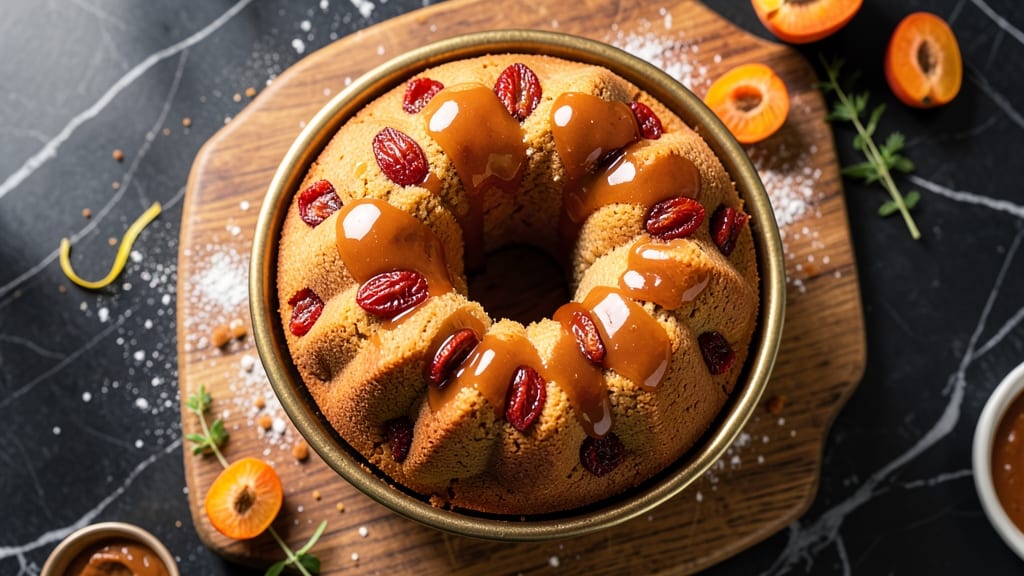
This apricot bundt cake recipe delivers a perfect balance of tender crumb, zesty citrus swirl, and a buttery crumb topping that becomes irresistibly crisp. The secret lies in folding dried apricots into the batter—no preserve needed—while the lemon zest brightens every bite.
After years of perfecting this recipe, I’ve nailed the texture: moist yet sturdy enough to hold its shape when inverted, with a golden crust that cracks beautifully.
The bundt pan’s signature ridges create an elegant presentation, but the real magic happens in the layers. A swirl of lemon curd cuts through the richness of the cake, while the crumb topping adds a delightful contrast in both texture and flavor.
What makes this recipe stand out is the simplicity—just 12 ingredients, 45 minutes of active prep, and 50 minutes in the oven. No fancy techniques, just reliable results that taste like a bakery’s finest.
By the time you’re done, you’ll have a cake that’s visually stunning and packed with apricot’s natural sweetness, balanced by the citrus’s tang. The aroma alone will have everyone gathering in the kitchen, and the first slice reveals layers of flavor that linger long after the last bite.
This is the kind of dessert that makes every occasion feel special, whether it’s a weekend brunch or a holiday celebration.
Serve warm with vanilla ice cream or a dollop of whipped cream to amplify the flavors. The bundt shape makes it perfect for gifting, and leftovers keep well for 3 days at room temperature or 2 weeks in the fridge.
Let’s get baking—this cake is worth every minute of the wait.
Ingredients for apricot bundt cake
Twelve ingredients transform into a showstopping apricot bundt cake with citrus brightness and buttery crumb contrast.
| Ingredient | Amount | Notes |
|---|---|---|
| All-Purpose Flour 🌾 | 3 cups | Sifted for even texture |
| Granulated Sugar 🍚 | 2 cups | White or light brown |
| Unsalted Butter 🧈 | 1 cup | Room temperature, full-fat |
| Large Eggs 🥚 | 4 whole | Room temperature for blending |
| Pure Vanilla Extract 🌿 | 2 tsp | High-quality, no alcohol |
| Baking Powder 🧂 | 2 tsp | Diamond Crystal preferred |
| Salt 🧂 | ½ tsp | Fine sea salt preferred |
| Dried Apricots 🍑 | 1 ½ cups | Chopped, unsulfured preferred |
| Lemon Zest 🍋 | 1 tbsp | From 2 large lemons |
| Lemon Juice 🍋 | ½ cup | Freshly squeezed |
| Lemon Curd 🍋 | 1 cup | Store-bought or homemade |
| Old-Fashioned Oats 🌾 | 1 cup | Blended into crumbs |
| Brown Sugar 🍚 | ½ cup | Packed, light or dark |
| Powdered Sugar 🍚 | ½ cup | For dusting |
The apricots make this cake special—unsulfured dried apricots taste fresher, but any dried variety works. Chop them yourself for even distribution in the batter (the food processor handles this in 10 seconds). For the best lemon flavor, zest two large lemons—the pith adds bitterness that balances the sweetness. If you're making your own lemon curd, use 1/2 cup sugar, 3 tbsp cornstarch, 1/2 cup butter, and 1/2 cup lemon juice—it's easier than you think. The oats for the crumb topping? Old-fashioned, not quick—they create a better texture when pulsed in the food processor.
No vanilla extract? Vanilla bean paste works beautifully, or use 1 tsp vanilla sugar if you're in a pinch. Running low on lemon juice? Substitute lime juice at half the amount, but the flavor will be slightly different. The baking powder is crucial here—Diamond Crystal rises better than generic brands. For the crumb topping, if you don't have a food processor, pulse the oats in a blender or crush them with a rolling pin. The powdered sugar is just for dusting—don't skip it, but use it sparingly so it doesn't make the cake soggy.
This cake keeps beautifully—3 days at room temperature covered loosely with plastic, or 2 weeks refrigerated in an airtight container. The crumb topping stays crisp for about 2 days before softening, so make it fresh if you're serving it soon. For gifting, wrap individual slices in parchment paper with a dusting of powdered sugar. The cake freezes well too—wrap tightly and freeze for up to 3 months. Just thaw at room temperature before serving.
Why You'll Love This Recipe
- No Fuss Mixing: I swear by this batter—just cream butter and sugar, crack eggs, fold in flour. No sifting, no extra steps, and the vanilla ties everything together so effortlessly. (Yes, even on a Tuesday night.)
- Apricot Magic: That jam swirled into the batter? It’s not just sweet—it’s bright, with just the right tartness cutting through the buttery richness. The butter and sugar give it a tender crumb, but the apricot keeps it from feeling heavy.
- Leftovers That Shine: Slice it up and freeze portions—perfect for breakfast toast or a quick snack. Honestly, I’ve had this cake last me a full week, and it tastes just as good the third day as it does fresh out of the oven.
- Budget-Friendly Luxury: You’re using pantry staples here: flour, sugar, butter, eggs. The apricot jam might be the only “special” ingredient, but it makes the whole thing feel like a treat without breaking the bank. (My daughter picks out the jam, but still asks for seconds.)
Step-by-step instructions for apricot bundt cake
Follow this precise method for a moist cake with vibrant citrus swirls and a perfect crumb topping.
Prepare the Dry Ingredients and Apricot Filling
In a medium bowl, whisk together the 3 cups All-Purpose Flour, 2 tsp Baking Powder, and 0.5 tsp Salt. Set aside. In a separate bowl, combine the 1.5 cups Dried Apricots with 0.5 cup Lemon Juice and let them soak for 15 minutes to soften. This step ensures the apricots stay moist and distribute flavor evenly throughout the cake.
For the crumb topping, pulse the 1 cup Old-Fashioned Oats in a food processor until you achieve fine crumbs. Transfer to a bowl and mix with the 0.5 cup Brown Sugar and 1 tbsp Lemon Zest. This creates a textured topping that adds contrast to the cake's tender crumb. Keep both mixtures ready for assembly.
Cream Butter and Sugars for Maximum Fluffiness
In a stand mixer fitted with the paddle attachment, beat the 1 cup Unsalted Butter (at room temperature) with the 2 cups Granulated Sugar on medium speed for 3-4 minutes. The mixture should become light and fluffy, nearly doubling in volume. This creaming process incorporates air, which creates that signature tender crumb in the final cake.
Add the 4 whole Large Eggs, one at a time, mixing well after each addition. Scrape down the sides of the bowl as needed. Stir in the 2 tsp Pure Vanilla Extract and 0.5 cup Lemon Juice. The batter should be smooth and pale yellow. This citrus-infused base sets the stage for the vibrant flavor profile we're building.
Combine Wet and Dry Ingredients for Perfect Texture
With the mixer on low speed, gradually add the flour mixture to the wet ingredients. Mix just until combined—no more than 30 seconds—to avoid developing gluten, which would make the cake dense. The batter should be thick but pourable. Fold in the soaked apricots and their juices using a spatula, being careful not to overmix.
In a separate bowl, combine the 1 cup Lemon Curd with 0.5 cup Powdered Sugar, mixing until smooth. This creates the vibrant swirl that will run through the cake. For the best results, use a piping bag fitted with a star tip to pipe swirls into the batter before baking.
Assemble and Bake for Even Cooking
Preheat your oven to 350°F. Generously grease a 10-12 cup Bundt pan with butter and dust with flour, tapping out any excess. Spread half of the crumb topping mixture into the bottom of the pan, pressing lightly to create an even layer.
Pour half of the cake batter into the prepared pan, then pipe swirls of the lemon curd mixture throughout. Add the remaining batter, then top with the remaining crumb mixture. Bake for 50-60 minutes, or until a toothpick inserted into the center comes out clean. The cake is done when the top springs back when gently pressed.
Cool and Serve for Optimal Texture
Allow the cake to cool in the pan for 15 minutes, then invert onto a wire rack to cool completely. This gradual cooling prevents cracking and helps the cake set properly. Once completely cooled, dust the top with an additional sprinkle of powdered sugar for a decorative finish.
The finished cake should have a moist, tender crumb with pockets of vibrant lemon curd swirled throughout. Each bite should offer a perfect balance of sweet dried apricots, bright citrus notes, and a crunchy oat topping. Serve at room temperature for the best texture and flavor experience.
Pro Tips For Making Apricot Bundt Cake
- Grease with Butter, Dust with Flour: DESCRIPTION: I learned this the hard way—using nonstick spray alone leaves crumbs stuck to the Bundt pan like a bad hair day. Melt 2 tablespoons of that unsalted butter you’re already using, brush it generously into every crevice, then dust with a full 2 tablespoons of flour (tapped out, not dumped). The extra effort guarantees clean slices—no one wants to fight their cake.
- Whip Butter and Sugar Foamy: DESCRIPTION: Skip the food processor for this one—your arms will thank you later. Cream the butter and sugar until the mixture is light and airy, not just pale. Press your finger into the bowl: if it springs back slowly, keep going. This isn’t about time; it’s about trapping air. A fluffy batter means a tender cake, not a dense brick.
- Fold in Apricots Gently: DESCRIPTION: Dump those apricots in rough, and you’ll deflate the batter faster than a sad balloon. Toss them in flour first (1 tablespoon), then fold in with a spatula—just until distributed. Overmixing turns your cake into a sad, flat pancake. The fruit should peek through in spots, not get beaten into submission.
- Bake Until Toothpick Comes Out Mostly Clean: DESCRIPTION: Your toothpick might have a few crumbs—ignore them. Overbaking dries out the cake faster than a summer in Arizona. Check at 55–60 minutes (depending on your oven), then tent with foil if the top browns too quickly. The center should be set but still slightly springy. Let it cool 15 minutes before unmolding, or you’ll end up with a collapsed mess.
Essential equipment for this recipe
Bundt Pan Essentials
A 10-12 cup nonstick bundt pan is your best investment for this recipe. I recommend the Wilton Perfect Results Bundt Pan—its durable construction and even heat distribution ensure perfect results every time.
For a budget-friendly option, the USA Pan Nonstick Bundt Pan works well too. Always grease your pan generously with butter or baking spray and dust with flour to prevent sticking. 🧈
Stand Mixer Must-Have
While you can mix by hand, a stand mixer like the KitchenAid Artisan Series makes creaming butter and sugar effortless. The paddle attachment ensures smooth, fluffy batter without overworking. If you don’t own one, a hand mixer works fine—just mix for 5-7 minutes instead of 3-4.
For the crumb topping, a food processor is ideal, but a blender or rolling pin works in a pinch. 🔥
Measuring Tools
Precision matters in baking! Use a digital kitchen scale for dry ingredients like flour and sugar for accuracy. For liquids, a liquid measuring cup with clear markings ensures you get the right amounts. A microplane for lemon zest and a sharp chef’s knife for chopping apricots complete your essential toolkit.
I also keep a piping bag with a star tip handy for the lemon curd swirls. ✨
Oven Thermometer
Ovens run hot or cold, and baking relies on exact temperatures. A thermometer like the OXO Good Grips helps you verify your oven’s accuracy. Preheat for at least 20 minutes before baking to ensure even cooking. This small tool prevents under- or over-baked cakes, saving you time and frustration. 🌡️
Cooling Rack
Never cool your bundt cake on a plate or countertop—it traps heat and causes sogginess. A wire cooling rack allows air to circulate, keeping the cake moist and preventing cracks.
I use a large round rack that fits my bundt pan perfectly. After inverting, let the cake cool completely before slicing to maintain its structure. 💫
Nutrition facts
Frequently asked questions
Can I substitute dried apricots with fresh ones in this recipe?
Fresh apricots won't work the same way—this recipe relies on the concentrated sweetness and texture of dried apricots. If you must use fresh, chop 2 cups finely and bake them at 300°F for 10 minutes to remove excess moisture first. Replace the 0.5 cup lemon juice with 0.25 cup apricot juice to balance flavors.
Why does my bundt cake crack on top?
Cracking usually happens from rapid cooling or overbaking. Let the cake cool in the pan for 15 minutes before inverting, and avoid opening the oven door early. If it cracks slightly, dust with extra powdered sugar to disguise it. A wire cooling rack helps prevent this too.
How do I make this cake gluten-free?
Replace the 3 cups all-purpose flour with a 1:1 gluten-free baking flour blend (like Bob's Red Mill) plus 1 tsp xanthan gum. Add 0.25 cup extra sour cream or Greek yogurt to improve moisture. The crumb topping will still work with gluten-free oats. Test for doneness with a toothpick—GF cakes often need 5-10 extra minutes in the oven.
Can I bake this cake in a regular round pan?
Yes, but the shape and texture will differ. Use a 9-inch springform pan and bake for 40-45 minutes at 350°F. The layers won't be as dramatic, and the crumb topping may not adhere as well. For best results, stick with the bundt pan—its ridges create the signature texture and presentation.
How do I store leftovers to keep the crumb topping crisp?
Store the cake in an airtight container at room temperature for up to 3 days. To refresh the crumb topping, sprinkle with 1 tbsp powdered sugar and reheat slices at 300°F for 5 minutes. For longer storage (2 weeks), refrigerate and bring to room temperature before serving.