
Desserts
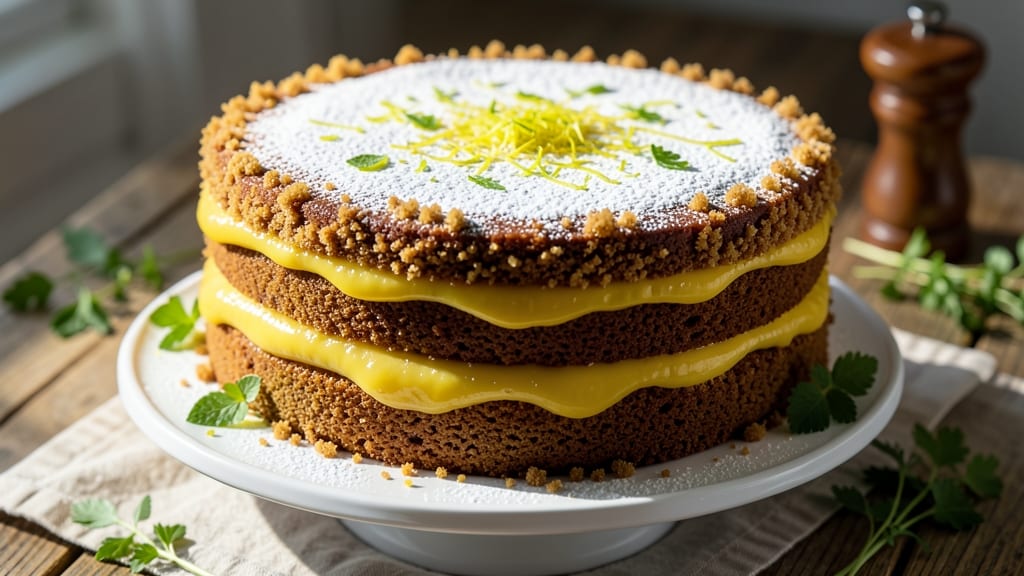
Anna Olson's signature lemon cake delivers that perfect balance of bright citrus and tender crumb—every slice is a burst of sunshine. The secret lies in a light, airy batter infused with fresh lemon zest and juice, topped with a velvety glaze that crackles with each bite.
I've baked this recipe dozens of times, and it never fails to impress, whether for a celebration or a simple dessert craving.
What makes this cake special is the foolproof technique that ensures a moist interior and crisp edges without drying out. The glaze, made with powdered sugar and lemon juice, sets beautifully for a professional finish that looks as good as it tastes.
Anna Olson's signature touch is in the layering—each slice reveals that perfect contrast of tender cake and tangy glaze.
Baking takes just 35 minutes at 350°F, and the result is a cake that's light enough to feel refreshing yet rich enough to satisfy.
The aroma of fresh lemon fills your kitchen as it bakes, and the bright yellow layers are a feast for the eyes before you even take a bite. This is the kind of dessert that makes you feel like you're serving something truly special.
Perfect for birthdays, brunch gatherings, or whenever you crave a little brightness in your day. The recipe scales easily, so you can adjust the size to fit any occasion. Let's get started on this crowd-pleasing lemon cake that's as easy to make as it is delicious to eat.
Ingredients for anna olson lemon cake
Bright citrus and tender crumb—just these ingredients transform your kitchen into sunshine.
| Ingredient | Amount | Notes |
|---|---|---|
| All-Purpose Flour 🌾 | 2 ½ cups | Sifted for lightness |
| Granulated Sugar 🍚 | 1 ½ cups | White or light brown |
| Unsalted Butter 🧈 | 1 cup | Room temperature, full-fat |
| Large Eggs 🥚 | 3 whole | Room temperature preferred |
| Fresh Lemon Juice 🍋 | ¾ cup | From 3-4 lemons |
| Lemon Zest 🍋 | 2 tbsp | Finely grated, no pith |
| Baking Powder 🧂 | 2 tsp | Aluminum-free preferred |
| Salt 🧂 | ½ tsp | Fine sea salt |
| Vanilla Extract 🌸 | 1 tsp | Pure, high-quality |
| Powdered Sugar 🍚 | 1 ½ cups | For glaze |
| Heavy Cream 🥛 | ¼ cup | Cold for glaze |
The lemons make or break this cake. Freshly squeezed juice from 3-4 lemons gives that signature tang—bottled lemon juice just won't cut it. I always grab Navel or Meyer lemons from the grocery store, but if you can find them at a farmers market, even better. The zest? Only the yellow part—no white pith, or it'll turn bitter. For the butter, Land O'Lakes or Plugrá work perfectly, but make sure it's fully softened. Room temperature butter mixes better and gives that signature tender crumb. And trust me on the vanilla—Nielsen-Massey is my go-to, but any pure extract will do.
No fresh lemons? Bottled lemon juice works in a pinch, but you'll lose that bright, fresh flavor. Running out of powdered sugar for the glaze? Granulated sugar blended into a powder with a pinch of cornstarch works, though it won't be as smooth. The heavy cream for the glaze can be swapped for whipped cream or even Greek yogurt if you're in a bind, but the texture will be slightly different. And if you're worried about the cake being too dry, add 1 tbsp of milk or lemon juice to the batter—it helps keep everything moist. The baking powder is non-negotiable though; it's what gives that light, airy texture.
This cake tastes even better the next day—cover it tightly and let it sit at room temperature. For the glaze, mix it up just before serving so it stays shiny. Store leftovers in the fridge for up to 5 days, but bring to room temperature before serving. Freezing isn't ideal for this cake, as the glaze can get grainy. If you're making this ahead, bake it a day in advance and store it wrapped at room temperature. The glaze can be made up to 2 days ahead too—just whisk it again before serving.
Why You'll Love This Recipe
- No Fuss Mixing: I swear by this recipe because it’s basically foolproof—just cream butter and sugar, crack eggs, fold in flour, and boom. No sifting, no weird ratios, no stress. Even when I’m distracted (hello, kids asking for snacks), the batter comes together smoothly.
- Zesty Magic: That fresh lemon juice? It’s the star. The cake stays tender but bright, with just enough tang to cut through the sweetness. Honestly, I’ve tried boxed lemon cakes before, and this one actually tastes like real lemon—no artificial aftertaste.
- Brunch or Dessert: Serve it warm with a drizzle of honey for breakfast, or chill it overnight for a no-fuss dessert. My sister-in-law took a slice to her potluck last week, and everyone asked for the recipe. (She’s not even a baker.)
- Budget Bright Spot: Uses pantry staples—flour, sugar, butter—and stretches far. A single batch feeds six, and leftovers? They disappear in my freezer for weeks. Plus, lemons are cheap this time of year, so it’s a win-win.
Step-by-step instructions for anna Olson's lemon cake
Here's how to bake this bright, citrusy masterpiece that's light as air yet packed with zesty flavor.
Cream Butter and Sugars for Maximum Fluffiness
In a stand mixer fitted with the paddle attachment, beat the 1 cup unsalted butter and 1.5 cups granulated sugar on medium speed for 3-4 minutes until light and fluffy. You'll know it's ready when the mixture nearly doubles in volume and leaves clean ribbons when the beaters are lifted. This step is crucial—it incorporates air that creates that signature tender crumb.
I like to press down on the butter mixture with a spatula halfway through to ensure everything is fully combined. Room temperature butter is key here—if it's too cold, it won't cream properly, and if it's too soft, it'll turn greasy. You want it to hold its shape when pressed but still be soft enough to beat smoothly.
Add Eggs and Citrus for Bright Flavor
Add the 3 whole large eggs, one at a time, mixing well after each addition. Then stir in the 0.75 cup fresh lemon juice and 2 tablespoons lemon zest, along with the 1 teaspoon vanilla extract. The mixture should be smooth and slightly thickened, with a vibrant lemon scent that fills your kitchen. This is where the magic happens—the citrus really starts to infuse the batter.
I always use fresh lemon juice for maximum brightness. If you're using bottled, make sure it's 100% pure with no additives. The zest adds that extra pop of flavor and beautiful color. Mix on low speed just until combined—overmixing can develop gluten and make the cake dense.
Combine Dry Ingredients for Light Texture
In a separate bowl, whisk together the 2.5 cups all-purpose flour, 2 teaspoons baking powder, and 0.5 teaspoon salt. Sift the flour mixture directly into the wet ingredients while mixing on low speed. This prevents lumps and ensures an even distribution of leavening. Mix just until combined—you should still see some streaks of flour.
Don't overmix here. The moment you see the batter come together smoothly is when to stop. Overmixing develops gluten, which can make your cake tough instead of tender. The batter should be thick but pourable—like a slightly runny cake batter. If it's too thick, you can add a tablespoon or two of lemon juice to loosen it up.
Bake Until Golden and Springy
Preheat your oven to 350°F and grease two 8-inch round cake pans (or line with parchment paper). Divide the batter evenly between the pans and smooth the tops. Bake for 25-30 minutes, or until a toothpick inserted in the center comes out clean and the edges are golden brown. The cake should spring back slightly when gently pressed in the center.
I like to rotate the pans halfway through baking for even browning. The cake is done when it pulls away from the edges of the pan and has a slight dome in the center. Don't overbake—this can make the cake dry. As soon as it passes the toothpick test, remove it from the oven and let it cool in the pans for 10 minutes before transferring to a wire rack to cool completely.
Make the Creamy Lemon Glaze
While the cakes cool, whisk together the 1.5 cups powdered sugar and 0.25 cup cold heavy cream until smooth and glossy. The glaze should be thick enough to coat the back of a spoon but still drizzle easily. This is where the cake gets its signature shine and that extra lemony punch.
For the best results, make sure your powdered sugar is sifted before measuring to avoid lumps. The cold heavy cream helps create a thicker, more stable glaze that won't pool at the bottom. If the glaze is too thick, add a drop or two of lemon juice to thin it out. Once the cakes are completely cool, spread the glaze evenly over the top of one cake layer.
Pro Tips For Making Anna Olson Lemon Cake
- Bake at 325°F—Not Higher: The recipe calls for this lower temp for a reason: rushing it to 350°F guarantees a dense, dry cake. I learned this the hard way—my first batch turned out like a brick. Let it bake slowly; the center should jiggle slightly when done, not bounce back like Jell-O.
- Zest Before Juicing: Grating the lemon zest first (about 2 tablespoons) adds bright, aromatic layers that the juice alone can’t match. Skip this, and you’ll end up with a cake that’s just sweet and tart—missing that signature citrus punch. Do it while the butter’s still cold to save cleanup.
- Don’t Overmix the Batter: After folding in the flour, stop when just combined—lumps are fine. I used to beat it like I was trying to win a baking contest, and the cake turned out tough. This recipe relies on a tender crumb, so treat it like you’re folding in a delicate omelet, not kneading dough.
- Use Room-Temp Eggs: Cold eggs from the fridge won’t emulsify as well with the butter, leading to a cake that’s more cakey than light. Pop them in a bowl of warm water for 10 minutes—yes, even if you’re impatient like me. The difference in texture is noticeable, especially when you slice into it.
Serving suggestions for this anna olson lemon cake
Layered Presentation
Anna Olson's signature style shines with a perfectly stacked two-layer cake. Assemble the layers with a thin layer of lemon curd or cream cheese frosting between them for extra moisture.
I like to use a 3-inch offset spatula to spread the glaze evenly over the top layer, creating a glossy finish that makes every slice look professional. 🍋
For an elegant touch, dust the sides of the cake with powdered sugar using a fine-mesh sieve. This adds a delicate contrast to the vibrant yellow layers.
If you're feeling fancy, add a few edible lemon slices or fresh berries as garnish—they’ll pop against the glaze and add a pop of color.
Serving Sizes
This recipe serves 8-10 people, perfect for a small gathering or family dessert. For larger crowds, bake an extra pan or two—just scale the glaze proportionally. I’ve doubled the recipe for parties and found that 2.5 cups of glaze covers three 8-inch layers beautifully.
Use a serrated knife to cut clean slices, and serve on a wooden board or cake stand for an inviting presentation.
If you're serving this at a brunch, cut into 12 wedges for easy sharing. For a single-serving treat, wrap individual slices in parchment paper and tie with twine—it’s a charming way to package leftovers or gifts.
Pairing Ideas
This lemon cake pairs beautifully with vanilla bean ice cream or whipped cream for a classic combo. I love serving it with a side of freshly brewed Earl Grey tea, as the bergamot notes complement the citrus.
For a boozy twist, drizzle the cake with lemon-infused vodka syrup—just mix 2 tbsp vodka with 1 tbsp lemon juice and 1 tbsp simple syrup.
For a non-alcoholic option, try a sparkling lemonade on the side. The effervescence cuts through the richness of the cake and enhances the citrus flavors. A small pitcher of homemade lemonade with mint garnish is a refreshing match.
Make-Ahead Tips
This cake tastes even better the next day, so bake it 1-2 days ahead of serving. Store it at room temperature in an airtight container to keep it moist.
If you're prepping for a party, assemble the cake (without glaze) and refrigerate it overnight. Add the glaze just before serving so it stays shiny and fresh. 💫
For long-term storage, freeze the cake (without glaze) for up to 1 month. Thaw it at room temperature and add the glaze once it’s fully defrosted. If the glaze thickens in the fridge, whisk in a drop of lemon juice to restore its smooth consistency.
Nutrition facts
Frequently asked questions
Can I substitute bottled lemon juice for fresh in this recipe?
Fresh lemon juice gives the best bright, tangy flavor, but you can use bottled in a pinch. For maximum impact, use 100% pure lemon juice with no additives. If you're short on time, add an extra ½ teaspoon of lemon zest to compensate for the slightly muted flavor. Just remember—fresh is always better!
Why does my lemon cake turn out dense instead of light and fluffy?
Overmixing the batter is the #1 culprit! Mix dry ingredients just until combined—stop when you see a few flour streaks remain. Also ensure your butter is room temperature (not melted or cold) and don't overbake. A toothpick should come out with moist crumbs, not dry powder. For extra lightness, fold in 1 tbsp whipped egg whites at the end.
How do I make this cake gluten-free?
Replace the all-purpose flour with a 1:1 gluten-free baking flour blend (like Bob's Red Mill) plus ½ teaspoon xanthan gum. For best results, add 1 extra tablespoon of lemon juice to the batter—gluten-free flours absorb more liquid. The texture will be slightly denser but still delicious. Test with a small batch first to adjust consistency.
Can I use this glaze recipe for other cakes?
This powdered sugar glaze works beautifully on vanilla, carrot, or even chocolate cakes. For a citrus twist, add 1 teaspoon of vanilla extract or ½ teaspoon of almond extract. For a richer glaze, replace the heavy cream with 2 tablespoons of melted butter or 1 tablespoon of lemon curd. The ratio stays the same: 6:1 powdered sugar to liquid.
How do I store leftovers to keep them moist?
Wrap individual slices tightly in plastic wrap or store the whole cake in an airtight container at room temperature for 2-3 days. For longer storage (up to 5 days), refrigerate but bring to room temperature before serving. The glaze may firm up slightly—rewarm it for 10 seconds in the microwave and whisk smooth. Freezing isn't recommended as it can make the glaze grainy.