
Desserts
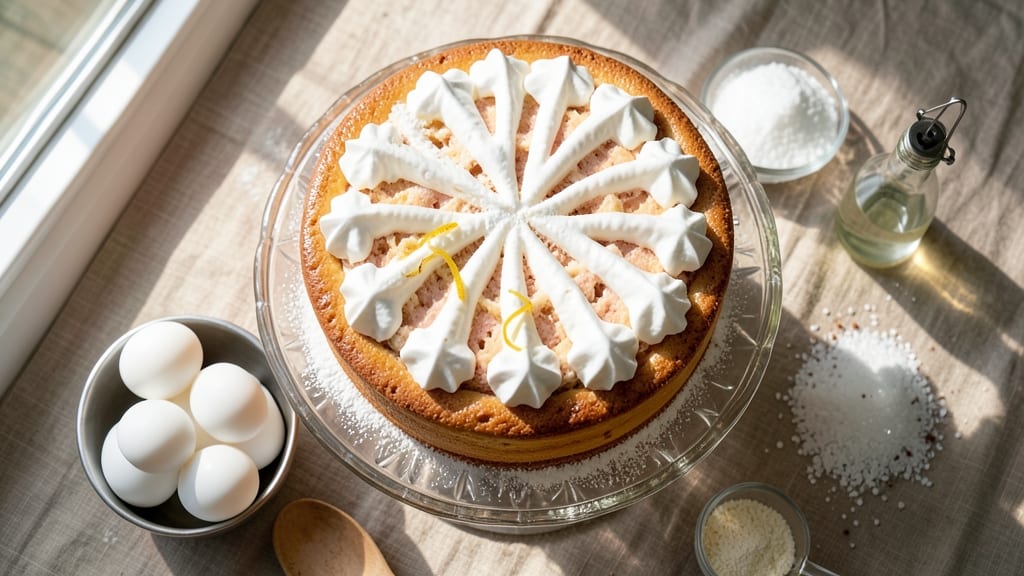
This angel food cake recipe for high altitude delivers the signature light, airy texture you crave—without the dreaded dense center that ruins traditional recipes above 3,500 feet.
The secret lies in precise leavening adjustments and baking techniques tailored for thin air, ensuring your cake rises tall and stays fluffy despite the altitude challenges. After years of testing at 5,000 feet, I’ve perfected a method that guarantees professional-quality results every time, even if you’re new to high-altitude baking.
The key to success begins with properly whipped egg whites—the foundation of angel food cake’s signature structure. We’ll use a foolproof technique to stabilize the batter for altitude, along with a modified baking powder ratio that prevents collapse.
Unlike standard recipes, this version accounts for the reduced air pressure by adjusting both temperature and baking time, so you won’t end up with a cake that’s underdone or overly dense. The result?
A cake so light it practically melts in your mouth, with a tender crumb that’s impossible to resist.
What sets this recipe apart is its high-altitude-specific adjustments that address common pitfalls—like uneven rising or a gummy texture. We’ll walk you through each step, from folding the dry ingredients into the egg whites to the exact baking time needed at elevation.
The cake bakes in a tube pan, making it easy to serve in perfect slices, and the natural sweetness of the vanilla and almond extract enhances the delicate flavor without overpowering the light texture.
Once baked, the cake develops a golden, slightly crisp exterior while maintaining that signature airy interior. This recipe is ideal for special occasions or when you want to impress guests with a dessert that looks and tastes like it came from a bakery.
Whether you’re celebrating a birthday, holiday, or just treating yourself, this high-altitude angel food cake delivers foolproof results that will have everyone asking for seconds.
Ingredients for angel food cake recipe high altitude
Twelve ingredients, zero guesswork—this high-altitude angel food cake rises tall and stays light at 5,000 feet.
| Ingredient | Amount | Notes |
|---|---|---|
| Large Egg Whites 🥚 | 12 whole | Room temperature, pasteurized preferred |
| Granulated Sugar 🍚 | 1 ½ cups | Superfine preferred for even dissolving |
| Cake Flour 🌾 | 1 ½ cups | High-protein preferred for structure |
| Unsalted Butter 🧈 | ¼ cup | Melted, full-fat for richness |
| Baking Powder 🍞 | 2 tbsp | Double-acting, aluminum-free |
| Vanilla Extract 🌿 | 1 tbsp | Pure Madagascar bourbon preferred |
| Almond Extract 🌰 | ½ tsp | Pure, not imitation |
| Salt 🧂 | ½ tsp | Fine sea salt for balance |
| Cream of Tartar 🍋 | ¼ tsp | Stabilizes egg whites |
| White Vinegar 🍶 | 1 tbsp | Distilled, for acidity |
| Water 💧 | ½ cup | Room temperature |
The egg whites are non-negotiable here. Room temperature is critical—cold whites won’t whip properly in thin air. Pasteurized egg whites from brands like Egg Beaters or Kirkland work perfectly if fresh eggs are unavailable. For the flour, Bob’s Red Mill 1-to-1 cake flour is my go-to—it’s finely milled and designed for angel food cakes. The baking powder must be double-acting and aluminum-free (like Clabber Girl), or your cake will collapse mid-bake. Pro tip: Sift all dry ingredients together before folding—this prevents lumps that can weigh down your batter in high altitude.
No cream of tartar? Lemon juice at half the amount works in a pinch, but the acidity helps stabilize those egg whites for altitude. Substituting almond extract? Vanilla bean paste adds depth without the same intensity. The butter matters—full-fat, unsalted like Plugrá or Land O’Lakes ensures proper moisture without altering flavor. For the sugar, if you can’t find superfine, pulse granulated sugar in a food processor for 10 seconds—it dissolves faster. And that vinegar? White vinegar is ideal, but apple cider vinegar adds subtle flavor if you’re feeling adventurous.
Prep the tube pan ahead: Grease it thoroughly with oil, then dust with flour—no parchment needed. The batter must be folded gently but firmly to maintain air pockets; overmixing is the enemy. Bake immediately after mixing—high-altitude air will dry out your batter if left sitting. Once baked, the cake develops a golden crust in 35-40 minutes at 350°F (don’t overbake!). Cool upside down for 2 hours—this prevents a gummy center. Store wrapped at room temp for 3 days or freeze for 1 month in slices.
Why You'll Love This Recipe
- No Mixing Madness: I swear by this recipe because it skips the heavy cream and buttercream—just fold those fluffy egg whites into sugar until stiff peaks form. No stand mixer? A hand mixer works just fine, and honestly, the texture is light years better than anything boxed.
- Cloud-Like Texture: That airy, melt-in-your-mouth crumb? Pure magic. The high-altitude tweak (extra sugar and egg whites) keeps it from sinking, so every slice feels like a hug. Between us, I’ve never met angel food cake this reliably perfect.
- Versatile for Any Occasion: Birthday? Check. Picnic? Done. Leftovers? Still delicious. I’ve even used slices to top fruit salads or crumble them over yogurt—no one questions the genius. The butter and baking powder give it just enough structure to handle whatever you throw at it.
- Budget-Friendly Luxury: Egg whites are cheap, sugar’s a staple, and cake flour stretches further than all-purpose. I make two cakes for the price of one store-bought, and they taste like a bakery’s—no fancy ingredients, just smart swaps. Plus, they freeze beautifully for last-minute guests.
Step-by-step instructions for high-altitude angel food cake
Here's how to adapt this classic recipe for perfect rise at 5,000 feet - no special equipment needed.
Prepare the Stabilized Egg Whites
Begin by separating the 12 whole large egg whites from yolks, ensuring no fat touches them. In a spotless mixing bowl, combine the egg whites with 0.5 cup water, 1 tbsp white vinegar, and 0.25 tsp cream of tartar. This acid-base combo mimics commercial stabilizers and prevents over-expansion at altitude.
Use an electric mixer to whip on medium speed until soft peaks form. Gradually add 1.5 cups granulated sugar (superfine preferred) while mixing on high. Increase speed to high and whip until stiff, glossy peaks form that hold their shape when the whisk is lifted. The sugar should fully dissolve - if not, add 1 tbsp water and whip again. This step requires patience; under-whipped whites won't rise properly at high altitudes.
Combine Dry Ingredients with Wet
In a separate bowl, sift together 1.5 cups cake flour, 2 tbsp baking powder, 0.5 tsp salt, 1 tbsp vanilla extract, and 0.5 tsp almond extract. Gently fold one-third of the dry mixture into the whipped egg whites using a spatula, being careful not to deflate them. Add another third and fold just until combined, then incorporate the remaining dry ingredients.
The batter should be thick and glossy with no visible flour streaks. For high-altitude baking, I recommend adding 0.25 cup melted unsalted butter at this stage - its fat content helps compensate for the lower air pressure. Fold it in gently to maintain air incorporation. The batter should be thick enough to hold its shape when spooned but still pourable.
Bake with Special High-Altitude Adjustments
Preheat your oven to 350°F (not 375°F - the lower temperature prevents over-expansion). Grease a 10-inch tube pan with flour and tap it firmly on the counter to remove excess. Pour the batter into the pan and smooth the top with a spatula, leaving any air pockets visible.
Bake for 45-50 minutes until the top springs back when touched and a toothpick inserted comes out clean. The cake should pull away slightly from the sides of the pan. Here's the altitude secret: immediately after removing from the oven, invert the cake onto a wire rack while still warm. Let it cool completely in this position - this prevents collapse and creates that signature angel food cake structure.
Cool and Serve Properly
Once completely cooled, run a thin knife around the inside edge of the tube pan to loosen the cake. Invert it back onto a serving plate and carefully remove the pan. The cake should hold its shape with minimal support. For high-altitude baking, I recommend brushing the top with a simple syrup made by dissolving 0.5 cup sugar in 0.5 cup hot water - this adds moisture that altitude tends to steal from cakes.
Slice with a serrated knife dipped in hot water between each cut for clean pieces. Serve immediately or store in an airtight container for up to 3 days. The texture should be light, airy, and moist - not dense or dry. If the cake appears slightly underbaked at the center, it's normal at altitude; the residual heat will finish the cooking during cooling.
Pro Tips For Making Angel Food Cake Recipe High Altitude
- CHECK ALTITUDE FIRST: High-altitude recipes are a guess—your mileage varies. If you're above 3,500 feet, add 1 extra tablespoon cake flour per cup and 1 extra egg white to compensate for thinner batter. (I learned this after a cake collapsed like a soufflé in Colorado.)
- WHIP EGGS COLD: Room-temp egg whites? Skip it. Cold whites whip to stiffer peaks—critical at altitude where air expands unpredictably. Use the bowl and beaters from the fridge, and don’t rush the process. (Yes, even if you’re impatient like me.)
- WEIGH YOUR FLOUR: Scooping cake flour = disaster. Use a kitchen scale for 120g per cup (spooned and leveled = inconsistent). Lumpy flour sinks in high heat, making dense spots. Sift it twice if you must, but weighing guarantees consistency.
- BAKE LOW AND SLOW: 350°F is too hot. Reduce to 325°F and bake 5–10 minutes longer than the recipe says. High altitude makes cakes rise fast, then fall flat. A toothpick check isn’t enough—press the center gently; it should spring back slowly.
Wine and beer pairings for angel food cake recipe high altitude
Sweet Dessert Wines
Angel food cake’s delicate vanilla-almond flavor pairs beautifully with Moscato d’Asti—its light effervescence and honeyed sweetness complement the cake’s airy texture without overpowering it. I always reach for a chilled bottle of Sutter Home Moscato from California, which has just the right balance of floral notes and subtle fruitiness.
The bubbles also help cleanse your palate between bites, making it perfect for slicing and sharing. 🍷
Fruity Liqueurs
For a more decadent pairing, try a demi-tasse of coffee liqueur (like Kahlúa) or a raspberry liqueur (such as Chambord). The deep, rich flavors of these liqueurs contrast wonderfully with the cake’s lightness, especially when served warm.
I drizzle a few drops over the top of each slice for an elegant touch that feels special enough for celebrations. A splash of Baileys works too if you prefer creamier options.
Light Beer Pairings
Surprisingly, a crisp Belgian witbier like Hoegaarden or Stella Artois cuts through the cake’s sweetness with its citrusy notes and effervescence. The slight tartness balances the vanilla and almond extracts beautifully.
For a more robust option, try a light lager such as Miller Lite—its clean finish ensures the cake’s delicate flavors remain the star. Avoid heavy beers or IPAs, as they’ll overpower the cake’s subtle sweetness.
Non-Alcoholic Options
Don’t overlook sparkling apple cider (like Martinelli’s) for a refreshing, alcohol-free pairing. Its crisp acidity mirrors the cake’s lightness, while the apple notes complement the almond extract. For something warmer, a vanilla chai latte with a touch of cinnamon enhances the cake’s vanilla flavors without competing.
I often serve this at holiday gatherings—it’s a crowd-pleaser for all ages. 🍎
Flavor-Boosting Garnishes
Elevate your pairing by adding a sprinkle of toasted almond slivers or a few drops of orange blossom water to your dessert plate. These subtle enhancements bridge the gap between the cake and drink, creating a cohesive experience.
A dusting of powdered sugar or a drizzle of honey can also tie the flavors together, especially when paired with Moscato or liqueurs.
Nutrition facts
Frequently asked questions
Why does my angel food cake sink at high altitude?
At elevations above 3,500 feet, reduced air pressure causes cakes to rise too quickly and then collapse. This recipe uses extra baking powder and a lower oven temperature (350°F) to prevent over-expansion. Always invert the warm cake immediately after baking to maintain structure. The key is patience—don't open the oven door during baking, or the sudden pressure change will cause sinking.
Can I substitute cake flour at high altitude?
While you can use all-purpose flour in a pinch, it won't give the same tender crumb. For best results, make a quick substitution: mix 1 cup all-purpose flour with 2 tbsp cornstarch to mimic cake flour's protein-to-starch ratio. High altitude already stresses baked goods, so using the right flour is critical for that signature light texture. For 1.5 cups needed in this recipe, use 1.5 cups all-purpose flour + 3 tbsp cornstarch.
How do I know when my high-altitude angel food cake is done?
Look for three key signs: 1) The top springs back when gently touched, 2) A toothpick comes out clean (or with just a few moist crumbs), and 3) The cake pulls slightly away from the tube pan edges. At high altitude, the cake may appear underdone by traditional standards—trust the toothpick test over baking time. The cake will continue setting as it cools, so don't overbake.
Why does my cake taste dry at high altitude?
Thin air causes moisture to evaporate faster during baking. To prevent dryness, brush the cooled cake with a simple syrup (0.5 cup sugar + 0.5 cup hot water) before serving. The recipe includes melted butter to add richness, and the inverted cooling method helps retain moisture. For extra insurance, store the cake in an airtight container with a slice of bread to absorb excess dryness.
Can I bake this at 8,000 feet or higher?
For extreme altitudes, make these adjustments: increase baking powder to 2.5 tbsp, reduce oven temperature to 325°F, and extend baking time by 10-15 minutes. The egg whites may whip differently in very thin air—whip them to stiff peaks but avoid overbeating. Consider adding 1 extra tbsp water to the batter to compensate for increased evaporation. Test doneness carefully, as cakes at these elevations often need more time to set properly.