
Desserts
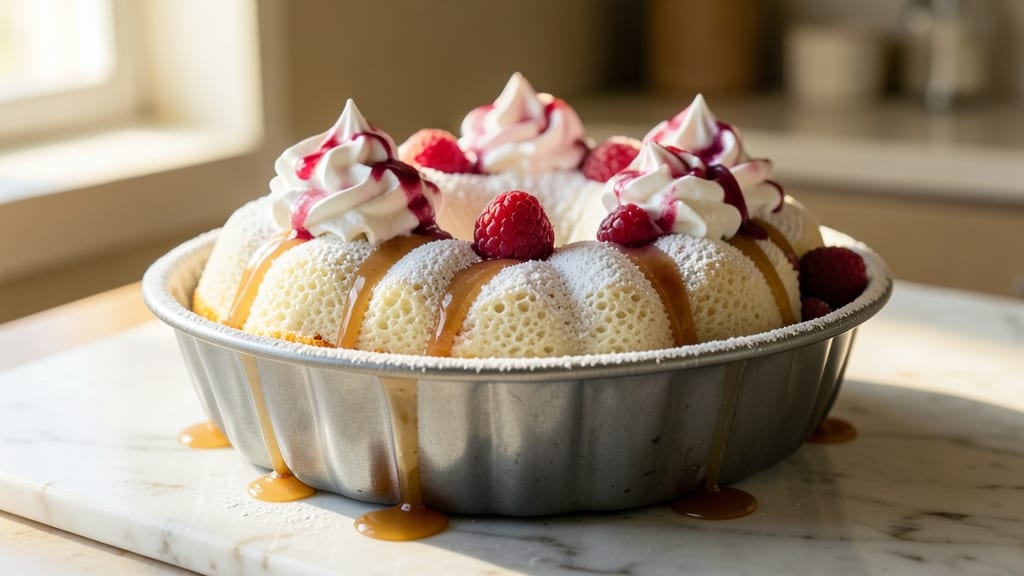
This angel food cake bundt pan recipe delivers the perfect balance of airy texture and vibrant citrus flavor—no butter, no oil, just pure whipped egg whites and a touch of zest. The secret lies in folding dry ingredients gently into stiff peaks, creating that signature light-as-air crumb.
I've perfected this technique over years of baking, ensuring every slice is moist yet delicate, with just enough citrus brightness to elevate a classic dessert.
Baking in a bundt pan transforms this cake into a showstopper with intricate ridges and a golden finish. The key? Properly greasing and flouring the pan before baking—this ensures easy release and that signature crispy exterior.
At 350°F, the cake rises beautifully, while the citrus zest infuses subtle brightness without overpowering the delicate sweetness. No special equipment is needed beyond a bundt pan and a stand mixer for those perfect egg white peaks.
What you'll end up with is a cake that's impossibly light, with a tender crumb and a subtle citrus aroma that lingers with every bite. The bundt shape makes it perfect for special occasions, but the simplicity of the recipe means you can bake it anytime.
Serve dusted with powdered sugar or drizzled with a warm fruit compote for an elegant finish. This is angel food cake reimagined—elegant, flavorful, and foolproof.
Whether you're hosting a brunch or treating yourself to a special dessert, this recipe delivers restaurant-quality results at home. The technique is straightforward, but the outcome is anything but ordinary. Let's get baking!
Ingredients for angel food cake bundt pan
Twelve simple ingredients transform into a showstopping bundt cake—light, citrusy, and effortlessly elegant.
| Ingredient | Amount | Notes |
|---|---|---|
| Large Egg Whites 🥚 | 12 whole | Room temperature for best volume |
| Granulated Sugar 🍚 | 1 ½ cups | Superfine preferred for smooth texture |
| Unsalted Butter 🧈 | ¼ cup | Melted for greasing bundt pan |
| All-Purpose Flour 🌾 | 1 ½ cups | Sifted for lightest crumb |
| Cream of Tartar 🧂 | 1 ½ tsp | Essential for egg white stability |
| Vanilla Extract 🌿 | 1 tbsp | Pure alcohol-free preferred |
| Lemon Zest 🍋 | 2 tbsp | Freshly grated for vibrant flavor |
| Orange Zest 🍊 | 1 tbsp | Brightens without overpowering |
| Salt 🧂 | ½ tsp | Fine sea salt preferred |
| Powdered Sugar 🍚 | 1 cup | For dusting finished cake |
| Vegetable Oil 🫒 | 1 tbsp | For bundt pan greasing |
| Lemon Juice 🍋 | 1 tbsp | Freshly squeezed for zest activation |
The egg whites are non-negotiable here—room temperature makes all the difference for maximum volume. Grab the largest size available (usually 3 oz each) for the best results. Cream of tartar is your secret weapon—it stabilizes those egg whites like nothing else. I always pick up Bob's Red Mill brand at King Arthur Flour stores because it's pure and reliable. For zest, use a microplane—it's worth the investment for that fine, fragrant texture. The citrus zest needs to be fresh; dried zest just won't cut it here.
No cream of tartar? Substitute 1.5 tsp lemon juice (though it won't stabilize as well). Superfine sugar unavailable? Pulse regular granulated in a food processor for 30 seconds. Want more citrus? Double the zest but reduce flour by 1 tbsp to keep the cake light. The vanilla extract should be pure—Walnut Hill or Nielsen-Massey brands are my go-tos. For the bundt pan, I use Wilton's nonstick version—it releases beautifully when properly greased. Pro tip: Mix melted butter and oil for greasing; the butter adds richness while the oil prevents sticking.
This cake is best served the day it's baked—it actually gets lighter as it sits. Store leftovers wrapped tightly at room temperature for 2 days or refrigerate for 5 days. For longer storage, freeze slices wrapped in plastic for 3 months. The powdered sugar dusting? Do it right before serving—it keeps the cake fresh-tasting. I always make this for special occasions because it's that impressive, but honestly, it's my go-to dessert for any weekend brunch. The citrus flavors peak after 24 hours, so plan ahead!
Why You'll Love This Recipe
- I’ll be real: this cake is so good, it rarely lasts. But if it does, the leftovers reheat beautifully in the microwave (yes, really) or make killer trifle layers the next day. And since it’s mostly egg whites and sugar, it’s budget-friendly—no pricey specialty ingredients here. Plus, the flour and butter stretch further than you’d think.
- No Mixer Needed: I’ll admit, I was skeptical at first—how do you beat egg whites stiff without a stand mixer? Turns out, my hand mixer (or even a whisk if you’re patient) does the trick beautifully. The secret’s in the cream of tartar: it stabilizes those whites like magic, giving you that signature light, airy texture without the fuss.
- Taste Like Sunshine: Here’s what sold me—the way the sugar melts into the egg whites as it bakes, creating this delicate, almost honeyed sweetness. And that crisp outer shell? It’s the perfect contrast to the fluffy center. Honestly, I’ve made it plain, but the butter (just a touch, melted) adds this subtle richness that makes it feel like a treat, not a basic cake.
- Bundt Perfection: Between us, this recipe is my go-to for brunch or a fancy dessert with zero effort. The Bundt pan gives it that elegant shape—no frosting needed—so it’s great for potlucks, showers, or just because. I’ve even made mini versions for kids’ parties, and they disappear faster than you can say “second slice.”
Step-by-step instructions for angel food cake in a bundt pan
This is where the magic happens—where science and citrus zest create clouds of airy perfection.
Prepare the Bundt Pan for Flawless Release
Preheat your oven to 350°F and grease the bundt pan thoroughly with the 1 tablespoon vegetable oil. I use a pastry brush for even coverage, making sure to get into every crevice. Then, dust the pan generously with 1 cup powdered sugar, tapping out any excess. This ensures your cake won't stick and releases cleanly when inverted.
Here's the thing—angel food cake relies entirely on egg whites for structure, so proper greasing is non-negotiable. The powdered sugar creates a barrier between the cake and pan, preventing any potential sticking. Don't rush this step; take your time to create that perfect non-stick surface.
Whip Egg Whites to Stiff Peaks with Precision
In a large, spotless mixing bowl, combine the 12 whole large egg whites, 1.5 teaspoons cream of tartar, and 0.5 teaspoon salt. I use a stand mixer with the whisk attachment for best results. Beat on low speed until foamy, then gradually increase to high speed.
Slowly add the 1.5 cups granulated sugar in a steady stream while beating. This gradual addition creates a stable meringue that incorporates air properly. Beat until the meringue forms stiff peaks—when you lift the whisk, the peaks should stand straight up and hold their shape. This usually takes about 10-12 minutes. Don't overbeat or you'll deflate all that precious air.
Fold in Dry Ingredients and Citrus Zest
Gently fold in the 1.5 cups all-purpose flour using a spatula, mixing just until combined. I use a gentle "J" motion to preserve the air bubbles we worked so hard to create. Then, fold in the 2 tablespoons lemon zest, 1 tablespoon orange zest, 1 tablespoon vanilla extract, and 1 tablespoon lemon juice.
The citrus zest adds that bright, vibrant flavor while keeping the cake light. Be careful not to overmix—just until everything is evenly distributed. The batter should be thick but pourable. If you see any deflated spots, gently fold them back in. This is where patience pays off—every fold preserves that airy structure we're after.
Bake Until Golden and Springy
Pour the batter into the prepared bundt pan and smooth the top with a spatula. Bake for 50-55 minutes or until the top is golden brown and the cake springs back when gently pressed in the center. I like to check at the 45-minute mark
Don't open the oven door during baking—this causes the cake to sink. When it's done, turn off the oven and let the cake cool in the pan for 10 minutes. Then, carefully invert the cake onto a wire rack to cool completely. This gradual cooling prevents cracking and maintains that perfect structure. Once completely cooled, dust the cake with additional powdered sugar if desired. Slice with a sharp serrated knife for clean cuts that show off the beautiful bundt pattern. The cake should be light as a cloud, with just a hint of citrus brightness in every bite. Real talk: This cake is best served the day it's made. The texture is at its peak when fresh, and the citrus flavors are most vibrant. Store leftovers in an airtight container for up to 3 days—though I doubt you'll have any leftovers! This recipe delivers on that light-as-air promise with every slice.Serve with Confidence
Pro Tips For Making Angel Food Cake Bundt Pan
- Whip Egg Whites Cold: Grab a metal bowl and chill it in the freezer for 10 minutes before whipping egg whites—this keeps them from overheating and turning grainy. I learned this the hard way after struggling with stiff peaks that collapsed mid-bake. Cold tools matter more than you’d think, especially in a bundt pan where every ounce of volume counts.
- Sift Flour Twice: Don’t just toss flour into the bowl—sift it twice through a fine-mesh strainer, once before mixing and once after folding. The first pass removes lumps, but the second ensures no hidden grit ruins the tender crumb. (Yes, it’s extra work, but your cake’s texture will prove it worth it.)
- Butter the Pan Wrong: Skip the butter inside the bundt pan—it’ll bake in and leave a greasy mess. Instead, melt 1 tablespoon of butter, brush only the outside of the pan, then dust with flour. This prevents sticking without adding moisture where you don’t want it. (Trust me, your cake will pull out cleaner than a knife through warm butter.)
- Bake Until Cool: Pull the cake out when the top springs back and the center reads 160°F—then let it cool upside down for a full 30 minutes. Rushing this step means a gummy center or a collapsed dome. I know, waiting is torture, but your bundt’s structural integrity depends on it. (Pro tip: Use a toothpick test and a thermometer—don’t rely on one.)
Serving suggestions for leftovers
Classic Powdered Sugar
The simplest way to serve this angel food cake is with a light dusting of powdered sugar just before slicing. Use a fine-mesh sieve or a sifter for an even, snowy finish. I like to do this right at the table so the sugar stays fresh and fluffy.
For extra flair, add a pinch of citrus zest to the powdered sugar before dusting—it enhances the bright flavors. 💫
Fresh Berries Topping
Top each slice with a small bowl of fresh berries—strawberries, raspberries, or blueberries work beautifully. The tartness of the berries complements the citrus notes in the cake. For presentation, arrange the berries in a circular pattern around the cake or scatter them casually for a rustic look.
I often use Wilton's decorative piping tip to create a berry border if serving at a special event.
Whipped Cream Pairing
Serve with a side of lightly sweetened whipped cream for a classic dessert combination. I like to whip 1 cup heavy cream with 1 tablespoon powdered sugar and a splash of vanilla extract until soft peaks form.
Spoon the whipped cream alongside the cake or dollop it on top of each slice. The cream adds richness that balances the cake's airy texture. For a gourmet touch, add a sprinkle of toasted coconut flakes to the whipped cream.
Citrus Compote Drizzle
Create a quick citrus compote by simmering 1 cup mixed berries (like raspberries and blackberries) with 2 tablespoons sugar and 1 tablespoon freshly squeezed lemon juice for 5-7 minutes. Strain the juices and drizzle over the cake just before serving.
The compote adds a tangy contrast that makes the cake taste even brighter. I use a small squeeze bottle for an elegant presentation—just a few drizzles over each slice.
Coffee or Tea Serving
Pair your angel food cake with a cup of hot coffee or earl grey tea to enhance the citrus flavors. The warmth of the coffee cuts through the sweetness, while the tea's floral notes complement the cake's delicate texture.
I always serve this cake at brunch gatherings with a French press coffee station—it's a crowd-pleaser that feels both elegant and comforting. For a festive touch, add a mint sprig to the tea for garnish.
Garnish with Edible Flowers
Elevate your presentation with edible flowers like violets or pansies. Place a single flower on top of the cake or sprinkle petals around the plate. The delicate blooms add a touch of sophistication without overpowering the citrus flavors.
I source my flowers from local farmers' markets—they're fresher and more vibrant than store-bought options. Just be sure to use flowers that are safe for consumption and pesticide-free. ✨
Nutrition facts
Frequently asked questions
Why does my angel food cake in a bundt pan come out dense instead of light?
Overmixing the egg whites or adding sugar too quickly can deflate the air bubbles. Always whip egg whites to stiff peaks and fold dry ingredients gently—just until combined. Also, ensure your egg whites are room temperature and whisk the bowl thoroughly before adding them to eliminate any grease residue.
Can I make this recipe without a bundt pan?
Yes! Use a 9-inch round tube pan or even a springform pan. Grease and flour it the same way, but reduce baking time by 5-7 minutes since the shape affects heat distribution. The texture will be identical—just the presentation changes.
How do I prevent my bundt cake from sticking to the pan?
Grease with vegetable oil (not butter) using a pastry brush, then dust generously with powdered sugar, tapping out excess. The sugar creates a barrier that prevents sticking. For extra insurance, chill the pan in the freezer for 10 minutes before baking.
Can I substitute cream of tartar in this recipe?
Yes! Use 1.5 teaspoons lemon juice instead, but know it won't stabilize egg whites as well. Your cake may be slightly less voluminous. For best results, use cream of tartar—it's the secret to that signature angel food cake height.
Why does my cake crack on top?
Cracking usually happens from sudden temperature changes. Avoid opening the oven door during baking, and let the cake cool in the pan for 10 minutes before inverting. Also, ensure your bundt pan is properly greased—uneven heat distribution can cause stress cracks.