
Desserts
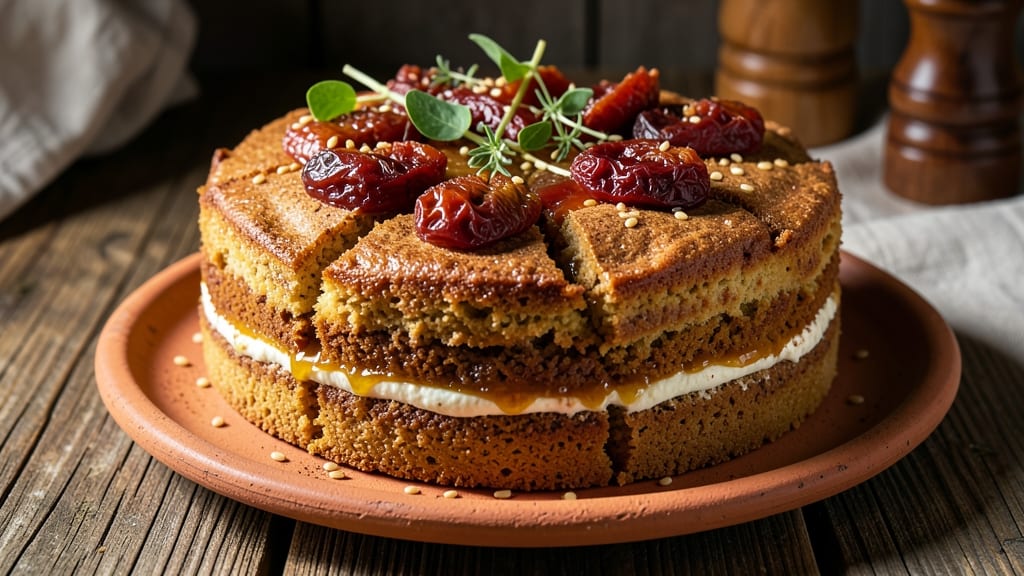
This ancient Greek honey cake brings a taste of antiquity to your kitchen, where golden syrup and figs create a dessert steeped in history. 🌟 The original melitini artopoleia was a sacred offering in ancient Greece, made with simple ingredients like honey, flour, and olive oil—a testament to the power of natural sweetness.
Today, this recipe honors tradition while adapting for modern baking techniques.
The beauty of this cake lies in its simplicity and rich, caramelized flavors. Honey, the heart of this dessert, was a prized commodity in ancient Greece, used not only for sweetening but also as a natural preservative.
Combined with warm spices like cinnamon and toasted sesame seeds, it creates a harmonious balance of sweetness and earthiness that transports you to the Mediterranean.
What you’ll achieve is a moist, fragrant cake with a tender crumb and a subtle crunch from the figs and sesame. The aroma alone—warm honey, cinnamon, and caramelized edges—will fill your kitchen with the essence of ancient traditions.
Perfect for special occasions or as a delightful treat, this cake is both a culinary journey and a nod to history.
Whether you're baking for a feast or simply craving a taste of the past, this recipe delivers authenticity without compromise. The steps are straightforward, ensuring you can recreate this ancient delight in your own kitchen. Let’s bring this piece of history to life!
Ingredients for ancient greek honey cake
Honey, flour, and figs—simple ingredients for an ancient dessert that still feels magical today.
| Ingredient | Amount | Notes |
|---|---|---|
| All-Purpose Flour 🌾 | 3 cups | Sifted for even texture |
| Raw Honey 🍯 | 1 ½ cups | Thick, golden variety preferred |
| Extra-Virgin Olive Oil 🫒 | ¾ cup | Fruity, not bitter |
| Dried Figs 🍇 | 1 ½ cups | Chopped, stems removed |
| Ground Cinnamon 🌿 | 1 ½ tsp | Freshly ground preferred |
| Toasted Sesame Seeds 🌰 | ¼ cup | Lightly browned in oil |
| Baking Soda 🧂 | 1 tsp | Pure, no aluminum |
| Salt 🧂 | ½ tsp | Fine sea salt |
| Vanilla Extract 🌸 | 1 tsp | Pure vanilla preferred |
| Warm Water 💧 | 1 ½ cups | Not boiling |
| Orange Zest 🍊 | 1 tbsp | Freshly grated peel |
| Fresh Figs 🍇 | 4 whole | Halved for topping |
Honey is the soul of this cake, so don't skimp. Look for thick, golden varieties at specialty stores like Whole Foods or Trader Joe's—the ones that pour slowly. Figs should be plump and slightly soft, not rock-hard. Fresh figs are ideal for topping, but dried work perfectly in the batter. The olive oil? Kalamata if you can find it, but any fruity extra-virgin will do. Toast your sesame seeds in a dry pan for 2-3 minutes until golden—worth the extra minute for that nutty depth.
No honey? Maple syrup works in a pinch, but it’ll be slightly less authentic. Substitute dried apricots for figs if needed—they’re sweeter, so cut the amount by half. Running low on vanilla? Almond extract at half the amount gives a similar warmth. The baking soda is crucial—don’t confuse it with baking powder. If your flour’s been sitting forever, sift it to avoid lumps. And if you’re feeling fancy, add a pinch of cardamom—ancient Greeks loved it.
This cake keeps beautifully for 5 days wrapped in parchment, but it’s best enjoyed within 3 days for maximum moisture. Store leftovers in an airtight container, and if you’ve got extra, freeze slices for up to 3 months. The aroma alone will have your kitchen smelling like a Mediterranean bakery. Double the recipe if you’re feeding a crowd—it disappears fast. Serve warm with a drizzle of honey or a dusting of powdered sugar for that extra touch.
Why You'll Love This Recipe
- No-Fuss Mixing: I swear by this recipe’s simplicity—just whisk the flour, honey, and olive oil together, then fold in those plump dried figs and a pinch of cinnamon. No eggs, no butter, no fussing with measurements beyond "a handful of figs." It’s the kind of cake where the ingredients do all the work.
- Honey-Cinnamon Magic: That raw honey isn’t just sweet—it’s rich and floral, cutting through the earthy depth of olive oil like a Greek summer breeze. Add the cinnamon, and suddenly you’ve got warmth and spice that makes every bite feel like a little celebration.
- Weekday to Weekend: Slice it thick for breakfast with Greek yogurt, pack it in lunchboxes for school snacks, or serve it at a potluck—it’s equal parts humble and impressive. Honestly, I’ve even reheated cold slices in the oven for a quick dessert, and no one’s ever complained.
- Pantry Staple Power: You’re already using things you have: flour, honey, olive oil. The dried figs add luxury without breaking the bank, and the cinnamon? A teaspoon lasts forever. It’s the kind of recipe that turns grocery lists into "oh, I can make that" moments.
Step-by-step instructions for ancient Greek honey cake
Here's how to create this fragrant, moist cake inspired by ancient Greek traditions.
👨🍳 Step 1: Prepare the Wet Ingredients
In a large mixing bowl, combine the 1.5 cups raw honey with the 0.75 cup extra-virgin olive oil. You'll notice the honey is thick—this is perfect for our rich texture. Add the 1.5 cups warm water and whisk until everything is fully blended. The mixture should be smooth with no lumps.
Next, stir in the 1 tbsp orange zest and 1 tsp vanilla extract. Give it a good mix to distribute those bright citrus and vanilla notes. I like to press the orange zest against the side of the bowl with a spoon to release all that aromatic oil. This step builds the cake's signature flavor profile inspired by ancient Greek sweet pastries.
👨🍳 Step 2: Combine Dry Ingredients
In a separate bowl, sift together the 3 cups all-purpose flour, 1.5 tsp ground cinnamon, 1 tsp baking soda, and 0.5 tsp salt. Sifting prevents lumps and ensures even distribution of the cinnamon. Gently whisk these dry ingredients until thoroughly combined—you should see a uniform cloud of flour in the air.
Create a well in the center of your dry ingredients and pour in the wet mixture. Using a wooden spoon or spatula, gently fold everything together until just combined. Here's the thing—don't overmix. You want to preserve those tiny air pockets that will make your cake light and tender. The batter should be thick but pourable, similar to pancake batter.
🍳 Step 3: Fold in Figs and Sesame Seeds
Add the 1.5 cups chopped dried figs to your batter and gently fold them in using a spatula. You want to distribute them evenly throughout the mixture. Next, sprinkle in the 0.25 cup toasted sesame seeds and fold them in as well. The figs will add natural sweetness and texture, while the sesame seeds provide that nutty crunch inspired by ancient Greek sweet breads.
Here's a pro tip: If your dried figs are particularly dry, you can briefly soak them in warm water for 5-10 minutes before adding to the batter. This prevents them from absorbing too much moisture from the cake during baking, keeping them soft and chewy.
🔥 Step 4: Bake to Golden Perfection
Preheat your oven to 350°F and grease an 8-inch round cake pan or line it with parchment paper. Pour the batter into your prepared pan and smooth the top with a spatula. The batter will be quite thick, so don't worry if it doesn't fill the pan completely—it will rise nicely.
Bake for 40-45 minutes or until a toothpick inserted into the center comes out clean. You'll know it's ready when the top is golden brown and the edges are pulling away slightly from the pan. The cake should have a beautiful caramelized aroma that fills your kitchen—this is where the honey really shines.
🍽️ Step 5: Top and Serve Warm
While the cake is still warm, arrange the 4 halved fresh figs on top in a circular pattern. The contrast of warm cake with the fresh figs adds a beautiful presentation inspired by ancient Greek dessert traditions. Let the cake cool in the pan for 10 minutes before transferring it to a wire rack to cool completely.
This cake is best served warm or at room temperature. The honey and fig combination creates a perfect balance of sweetness and earthiness. I like to dust the top with a little extra ground cinnamon before serving—it enhances the warm spices and makes the cake look even more inviting.
Pro Tips For Making Ancient Greek Honey Cake
- Soak Figs Properly: Toss dried figs in warm water for 10 minutes—just enough to plump them up, not turn them mushy. I learned this the hard way after biting into a chewy, rubbery fig in my first batch. Drain well before chopping so they don’t make the batter soggy.
- Whisk Honey First: Warm the honey slightly (30 seconds in the microwave) before mixing it into the wet ingredients. This makes it flow smoother into the flour, creating a lighter crumb instead of a dense, sticky mess. Trust me, your cake will thank you.
- Don’t Overmix: Stir the batter just until the flour disappears—overmixing turns the cake tough. I used to beat it like I was kneading dough, and the result was a brick. Fold in the figs gently at the end to keep them intact.
- Olive Oil Matters: Use extra-virgin olive oil—it’s richer and adds depth, but it’s also more likely to separate. If it does, whisk it back into a smooth emulsion before combining with other liquids. Skimping on quality here makes the cake taste flat.
Essential equipment for great ancient greek honey cake
Essential Mixing Tools
Start with a large mixing bowl (at least 5-quart capacity) for combining wet ingredients. I recommend a stainless steel bowl from OXO—it’s durable and won’t retain flavors. For whisking the honey mixture, use a balloon whisk (like the West Bend brand) to incorporate air smoothly.
The whisk’s flexible loops create light, airy texture perfect for this cake’s tender crumb. 🌟
Measuring Precision
Accurate measurements are crucial for this recipe’s balance. Invest in a digital kitchen scale (I use the OXO Good Grips) for honey and flour—it eliminates guesswork. For liquids like olive oil and water, a liquid measuring cup with clear markings ensures precision.
The honey’s thickness means volume measurements matter more than weight here. Pro tip: Tap your measuring cup gently to settle ingredients before reading the level.
Baking Essentials
Your oven needs to hit 350°F consistently, so calibrate it with an oven thermometer (like the Thermoworks model). For baking, use an 8-inch round cake pan—I prefer carbon steel (like Nordic Ware) for even heat distribution.
Line the pan with parchment paper to prevent sticking, especially since this cake’s honey-rich batter can be clingy. A lightweight aluminum pan works too if you don’t have carbon steel.
Sesame Seed Prep
Toast your sesame seeds in a small dry skillet over medium heat for 2-3 minutes until golden. Use a fine-mesh strainer (like the OXO brand) to catch any burnt bits—this keeps your cake’s texture perfect.
For chopping dried figs, a sharp chef’s knife works, but a food processor (like the MiniChopper) gives more even pieces. Prep all your add-ins ahead of time to streamline mixing.
Cooling and Serving
After baking, transfer the cake to a wire cooling rack (I love the OXO Good Grips design) to cool evenly. For garnishing, use a small fine-mesh sieve to dust with cinnamon. Store leftovers in an airtight container (like Rubbermaid glass jars) to maintain moisture.
A serrated knife (like Mercer Culinary) makes clean slices—heat the blade by running it under hot water for 10 seconds first to get perfect cuts.
Nutrition facts
Frequently asked questions
Can I substitute honey with another sweetener?
While honey is essential for authenticity, you can use maple syrup or agave nectar in a 1:1 ratio—but expect a slightly different texture. For a closer match, combine equal parts brown sugar and warm water to mimic honey's moisture. Avoid granulated sugar, as it won't dissolve properly in the batter.
Why is my cake dense instead of light?
Overmixing or underbaking are the most common culprits. Gently fold dry ingredients into wet ones (don't stir vigorously), and bake until a toothpick comes out clean. Also ensure your baking soda is fresh—old leavening can cause dense results. For extra lift, whisk egg whites separately and fold them in at the end.
How did ancient Greeks use honey cakes?
These cakes were sacred offerings to gods like Zeus and Demeter, often placed on altars during festivals. They were also everyday treats—simple, nourishing, and preserved well due to honey's natural properties. The figs symbolized fertility, making them perfect for harvest celebrations.
Can I make this cake gluten-free?
Yes! Replace the all-purpose flour with a 1:1 gluten-free baking blend (like Bob's Red Mill) plus 1 tsp xanthan gum. Add 2 extra tbsp extra-virgin olive oil to improve moisture. For best results, use a gluten-free flour with added xanthan gum already included.
How long will this cake keep?
The cake stays moist for 5 days when wrapped in parchment and stored in an airtight container. For longer storage, freeze slices for up to 3 months—thaw at room temperature before serving. The honey acts as a natural preservative, but freshness is best within 3 days** for optimal texture.