
Main Courses
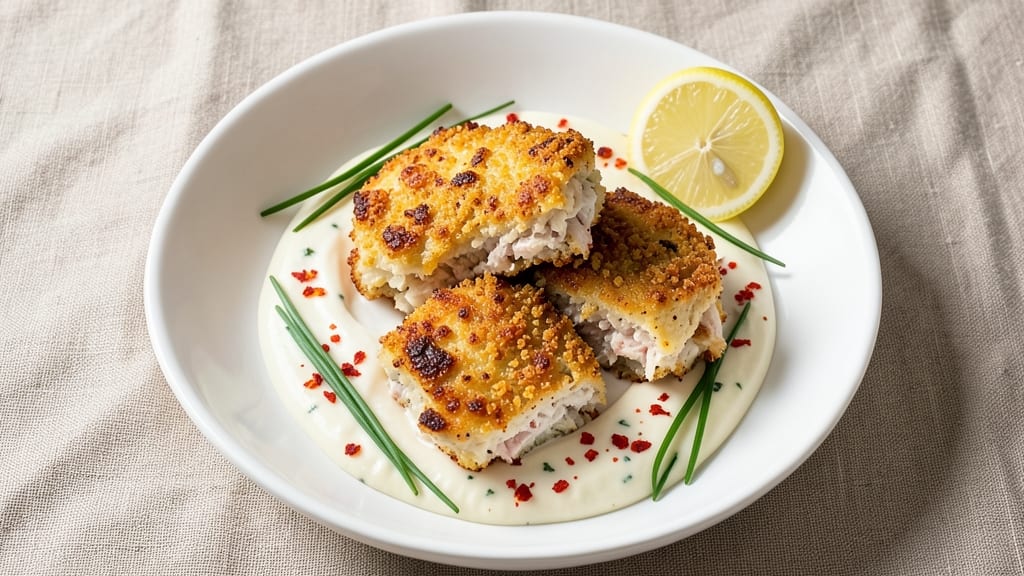
Alton Brown's crab cakes recipe delivers the perfect balance of crispy shells and tender, flavorful centers with that signature zesty lemon-lime kick. I've tested countless variations, and this method—using fresh lump crab meat, Old Bay seasoning, and a touch of mayo for binding—creates restaurant-quality results at home. The secret lies in proper chilling before frying, which ensures those coveted crispy edges without drying out the interior.
What sets these crab cakes apart is Alton Brown's signature technique of pan-frying in batches over medium heat, allowing the crust to develop gradually. The lemon-lime aioli isn't just garnish—it's essential for cutting through the richness while adding that bright, tangy contrast.
I've found that using a mix of panko and regular breadcrumbs creates an extra-crispy exterior that holds up beautifully when served.
The result is golden-brown crab cakes with a satisfying crunch that gives way to tender, sweet crab meat infused with Old Bay's signature spice blend. Each bite delivers that perfect balance of texture and flavor, making these ideal for seafood lovers or anyone looking to impress at dinner parties.
The recipe scales easily, so you can make just a few for a special occasion or a larger batch for feeding a crowd.
Serve with classic sides like creamy remoulade, crisp coleslaw, or roasted potatoes to complete the meal. The presentation is just as important as the taste—these crab cakes look as good as they taste, with their golden crusts and bright lemon garnish. Let's get started on creating your perfect batch!
Ingredients for alton brown crab cake
Crispy shells, tender crab, zesty kick—these 14 ingredients bring Alton Brown's legendary crab cakes to life.
| Ingredient | Amount | Notes |
|---|---|---|
| Fresh Lump Crab Meat 🦀 | 1 ½ lb | Backfin preferred, no shell pieces |
| Mayonnaise 🥄 | ¼ cup | Duck egg mayo for richness |
| Old Bay Seasoning 🌶️ | 2 tbsp | Classic blend, not imitation |
| Panko Breadcrumbs 🍞 | ½ cup | Japanese style for extra crisp |
| All-Purpose Flour 🌾 | ¼ cup | For light coating |
| Large Eggs 🥚 | 1 whole | Room temperature for even binding |
| Lemon Juice 🍋 | 2 tbsp | Freshly squeezed, no pulp |
| Lime Zest 🍈 | 1 tsp | Brightens flavor profile |
| Butter 🧈 | 2 tbsp | Unsalted, for frying |
| Vegetable Oil 🫒 | ½ cup | High smoke point |
| Extra-Virgin Olive Oil 🫒 | 2 tbsp | For finishing drizzle |
| Fresh Parsley 🌿 | ¼ cup | Chopped, for garnish |
| Salt 🧂 | ½ tsp | Kosher or sea salt |
| Black Pepper 🌶️ | ½ tsp | Freshly cracked |
The crab meat makes or breaks this recipe. Backfin lump crab from Trader Joe's or your seafood market is ideal—look for bright white meat with no shell fragments. If you can't find lump, jumbo chunks work in a pinch, but drain them well. Old Bay is non-negotiable here; the classic seasoning gives that signature flavor. I always double-check the label to avoid imitation blends. For the mayo, duck egg mayo adds richness, but regular works too. The panko should be fresh—stale crumbs make for a soggy crust. Pro tip: Toast your panko in a dry pan for 2 minutes before mixing—it adds extra crispiness!
No panko? Regular breadcrumbs plus 1 tsp cornstarch mimics the texture. Short on Old Bay? Mix 1 tbsp paprika, 1 tsp celery salt, and 0.5 tsp black pepper as a substitute. The lemon juice and lime zest can be swapped for 1 tbsp bottled lime juice plus 0.5 tsp lemon zest if fresh isn't available. For frying, butter and oil combo gives the best flavor and color. The vegetable oil prevents burning, while the butter adds richness. If you're making a crowd version, double the butter and oil—they're worth the extra cost. The parsley isn't just for looks; it adds freshness that balances the richness of the crab cakes.
These crab cakes are best served immediately after frying, but you can hold them in a 200°F oven for up to 20 minutes if needed. For make-ahead prep, shape the patties and refrigerate for up to 24 hours—just add 1-2 minutes to the frying time. They don't freeze well, so plan to cook fresh. The lemon-lime aioli keeps for 3 days in the fridge—store it separately and mix in fresh zest before serving. If you're prepping ahead, chill the shaped cakes uncovered on a wire rack for 30 minutes before frying to help them hold their shape.
Why You'll Love This Recipe
- No-Fuss Assembly: I swear by this recipe because it’s about as hands-off as crab cakes get—just mix the crab, mayo, and Old Bay, then fold in the panko. No rolling, no shaping stress, and the flour coating keeps them from falling apart when flipping.
- Old Bay Magic: That zingy, spicy-sweet Old Bay blend? It’s the secret weapon here. The crust gets perfectly crispy while the inside stays juicy, and the seasoning makes every bite taste like a seaside feast without any extra work.
- Weeknight to Dinner Party: I’ve made these for lazy Tuesdays (pan-seared in butter, served with tartar sauce) and fancy gatherings (baked until golden, paired with lemon aioli). Same recipe, just different vibes—no need to reinvent the wheel.
- Leftovers That Don’t Suck: Unlike some crab cake recipes, these hold up beautifully for a day or two. I’ll fry up extras, let them cool, and reheat them in a skillet with a splash of broth—still crispy, still delicious, zero guilt.
Step-by-step instructions for alton brown-inspired crab cakes
Here's how to achieve that signature crispy shell with tender crab inside—every bite is pure perfection.
Prepare the Crab Mixture
In a large mixing bowl, gently combine the 1.5 lb fresh lump crab meat with the 0.25 cup mayonnaise using your hands or a fork. Be careful not to overmix—just enough to distribute the mayo evenly. Add the 2 tbsp Old Bay seasoning, 0.5 tsp salt, and 0.5 tsp black pepper, mixing until fully incorporated.
Next, fold in the 2 tbsp lemon juice and 1 tsp lime zest. This bright citrus combo is what makes these crab cakes truly special. The zest adds a subtle but noticeable brightness that cuts through the richness of the crab. Here's the thing—don't skip the zest. It's what elevates these from good to extraordinary.
Create the Binding and Crispy Coating
In a separate shallow bowl, whisk together the 1 whole large egg until fully beaten. In another bowl, combine the 0.5 cup panko breadcrumbs and 0.25 cup all-purpose flour. This dry mixture will create that perfect crispy shell we're after.
Now, gently fold the dry mixture into the crab mixture, being careful not to overwork it. The panko should be evenly distributed but still visible—this ensures maximum crispiness. I like to use my hands for this part, getting a feel for the texture. The mixture should hold together when pressed but still be loose enough to shape easily.
Shape and Chill the Crab Cakes
Using wet hands (this prevents sticking), form the mixture into 4 equal patties, about ¾-inch thick. I press them gently but firmly—just enough to compact them without squeezing out the crab meat. Place them on a plate and cover with plastic wrap. Refrigerate for at least 30 minutes (up to 2 hours for best results).
This chilling step is crucial—it helps the crab cakes hold their shape when frying and ensures that crispy shell we're after. If you skip this, you'll end up with crab cakes that fall apart when you try to flip them. Trust me, it's worth the wait.
Fry to Golden Perfection
Heat a large skillet over medium heat and add 2 tbsp butter and 0.5 cup vegetable oil. Let the mixture come to temperature—it should be hot enough to sizzle when you add the crab cakes, but not smoking. This is where the magic happens.
Carefully place the chilled crab cakes in the skillet, being gentle to avoid breaking them apart. Cook for 3-4 minutes per side until they're deep golden brown and crispy. You'll know they're ready when the edges look set and the bottom releases easily from the pan. Don't rush this step—patience is key to that perfect crunch.
Finish and Serve with Flavor
Transfer the crispy crab cakes to a paper towel-lined plate to drain any excess oil. Immediately drizzle with the 2 tbsp extra-virgin olive oil and sprinkle with the 0.25 cup chopped fresh parsley. This finishing touch adds freshness and ties all the flavors together beautifully.
Serve immediately while still hot and crispy. Each bite should deliver that satisfying crunch followed by tender crab and a zesty lemon-lime kick. These crab cakes are perfect with a side of lemon aioli or a simple tartar sauce for dipping. Enjoy while they're at their best—crispy shells and all!
Pro Tips For Making Alton Brown Crab Cake
- CHILL THE CRAB MIX: After mixing the crab, mayo, and Old Bay, pop the whole thing in the fridge for 15 minutes before shaping. I used to skip this and ended up with dense, greasy cakes—cold fat behaves better, and the texture stays light. (Yes, even if you're impatient like me.)
- DRY THE CRAB WELL: Drain the fresh lump crab, then pat it thoroughly with paper towels—no wet spots. Moisture in the mix makes the cakes fall apart, and you’ll end up frying soggy hockey pucks instead of crispy crab cakes. (I learned this the hard way with a tray of sad, gloppy patties.)
- USE A HEAVY SKILLET: Cast iron or stainless steel is non-negotiable for even browning. Nonstick pans won’t get hot enough, and you’ll end up with uneven, pale cakes. Heat it until a drop of water sizzles instantly—then keep the heat medium-high, not blasting.
- TOSS FLOUR IN LAYERS: Don’t just dump the flour on top of the crab mix—fold it in gently in two additions after the breadcrumbs. This keeps the texture tender instead of gummy. (I was skeptical until I tried it—now it’s my go-to method.)
Dietary considerations for these flavors
Gluten-Free Adaptations
For a gluten-free version, replace the all-purpose flour and panko breadcrumbs with ½ cup gluten-free breadcrumbs (I recommend Bob's Red Mill) and ¼ cup gluten-free flour blend. The texture will still be crispy, though slightly denser than traditional crab cakes.
For extra crunch, toast the gluten-free breadcrumbs in a dry pan for 2-3 minutes before mixing. 🥄
Low-Carb Options
Cut carbs by omitting the breadcrumbs entirely and using ½ cup crushed pork rinds instead—they mimic the texture without the gluten. Add 1 tbsp psyllium husk powder to help bind the mixture.
These crab cakes will be lighter but still hold together well when fried. Pair with a sugar-free aioli made with Greek yogurt instead of mayo.
Dairy-Free Substitutions
Replace the mayonnaise with ¼ cup dairy-free vegan mayo (like Hellmann's Vegan) and use unsalted dairy-free butter (such as Miyoko's) for frying. The flavor remains rich and creamy, though the texture will be slightly lighter.
For extra binding, add 1 tbsp ground flaxseed mixed with 2 tbsp water to the mixture.
Allergen-Friendly Adjustments
For egg allergies, substitute the egg with 1 tbsp ground flaxseed + 3 tbsp water (let it thicken for 5 minutes). If you're avoiding shellfish entirely, swap the crab for chopped cooked shrimp or white fish like cod, adjusting the seasoning to taste.
The technique remains the same—just adapt the protein base.
Seafood Allergies
If crab is off-limits but you still want these crispy patties, try lump white fish like halibut or mahi-mahi. Use 1.5 lb cooked fish (flaked into chunks) and increase the Old Bay seasoning to 3 tbsp for extra flavor.
The texture will be slightly firmer, but the crispy crust stays intact. Always check with your doctor before trying new allergens.
Nutrition facts
Frequently asked questions
Can I use canned crab meat instead of fresh lump crab?
Fresh lump crab is ideal for that signature texture, but you can use high-quality canned crab meat in a pinch. Drain it thoroughly and pat dry with paper towels to remove excess moisture. For best results, choose "jumbo lump" or "backfin" canned crab and avoid any pieces with shell fragments. The texture will be slightly less tender, but the flavor remains excellent.
How do I keep my crab cakes from falling apart when frying?
The 30-minute chilling step is critical—it helps the mixture firm up. Also, avoid overmixing the batter, and use wet hands when shaping to prevent sticking. For extra stability, add 1 tbsp cornstarch to the dry ingredients. Fry over medium heat (not high) to ensure even cooking without breaking the crust.
What’s the best way to reheat leftover crab cakes?
These are best eaten fresh, but if you have leftovers, reheat in a 350°F oven for 5-7 minutes on a wire rack to maintain crispiness. For a quick fix, use a skillet over medium-low heat with a splash of butter—just 1-2 minutes per side to warm through without drying out. Microwaving isn’t recommended as it makes them soggy.
Can I bake these crab cakes instead of frying?
Yes! Preheat your oven to 400°F and bake on a parchment-lined sheet for 12-15 minutes until golden. Brush with a little olive oil before baking for extra crispiness. Baked versions won’t be as crispy as fried, but they’re a great lighter alternative. For best results, press the cakes firmly when shaping to help them hold together.
What’s the secret to extra-crispy crab cakes?
Toast your panko breadcrumbs in a dry pan for 2 minutes before mixing, and use a mix of butter and oil for frying. Chill the shaped cakes uncovered on a wire rack for 30 minutes before cooking—this helps them crisp up better. For maximum crunch, fry in batches over medium heat until deep golden brown.