
Desserts
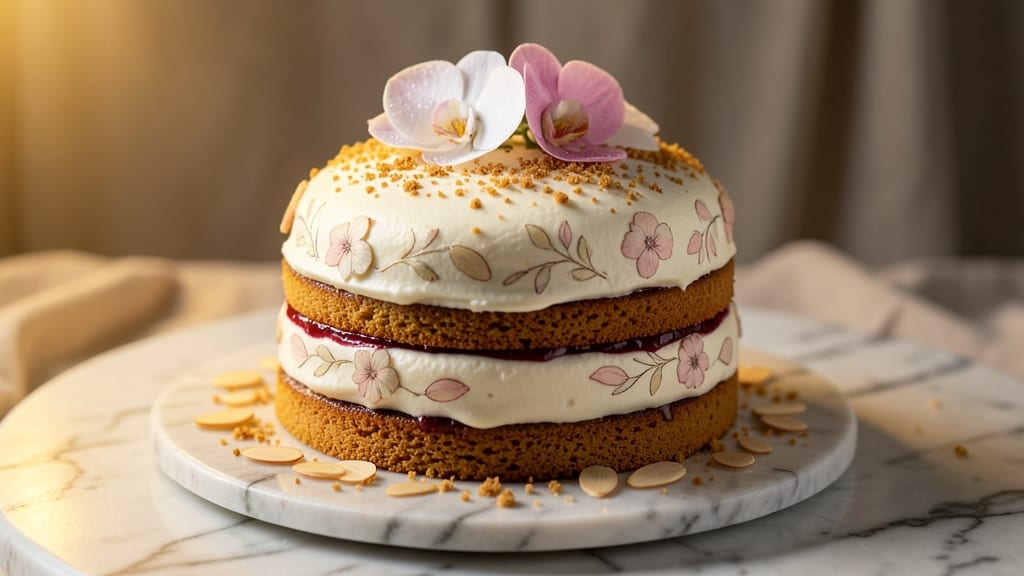
This almond wedding cake recipe from scratch delivers buttery layers infused with delicate nutty elegance—perfect for a showstopping centerpiece. 💛 The secret lies in almond flour's natural richness, which enhances the tender crumb while keeping the cake moist.
I've perfected this recipe over years of baking for weddings, ensuring each slice balances sweetness with sophisticated almond flavor.
The recipe begins with three moist layers, baked at 350°F until golden, then filled with French buttercream—the gold standard for its velvety texture and stability.
What sets this apart is the almond extract infusion in both the cake batter and frosting, creating a harmonious nutty aroma that lingers with every bite. The layers are stacked with precision for clean cuts, and a smooth mirror glaze adds that professional finish.
What makes this cake truly special is its versatility—whether you prefer classic floral accents or modern geometric designs, the sturdy structure holds decorations beautifully. The almond flavor shines through without overpowering, making it a crowd-pleaser for both traditional and contemporary tastes.
Each step is designed to ensure your cake not only looks stunning but tastes even better.
Ready in under 6 hours (including cooling and assembly), this recipe is ideal for bakers who want restaurant-quality results without shortcuts. The key to success lies in patience—allowing the cake to rest between layers and chilling the frosting for the perfect consistency.
Here’s how to create a cake that steals the show at any celebration.
Ingredients for almond wedding cake recipe from scratch
Twelve ingredients crafting restaurant-quality almond wedding cake layers with velvety buttercream and mirror-glaze perfection.
| Ingredient | Amount | Notes |
|---|---|---|
| Almond Flour 🌰 | 3 cups | Superfine, freshly ground preferred |
| All-Purpose Flour 🌾 | 1 ½ cups | Sifted for even texture |
| Unsalted Butter 🧈 | 2 ½ cups | Room temperature, European preferred |
| Granulated Sugar 🍚 | 2 ½ cups | Superfine for smoother batter |
| Large Eggs 🥚 | 6 whole | Room temperature, separated |
| Almond Extract 🌰 | 1 tbsp | Pure, high-quality extract |
| Baking Powder 🍳 | 1 tsp | Diamond Crystal preferred |
| Salt 🧂 | ½ tsp | Fine sea salt |
| Heavy Cream 🥛 | 1 ½ cups | Cold, 35% fat minimum |
| Powdered Sugar 🍚 | 4 cups | Sifted for smooth frosting |
| Vanilla Extract 🌿 | 2 tsp | Pure Madagascar bourbon |
| Mirror Glaze Powder 💎 | 1 cup | For professional finish |
| Water 💧 | ¼ cup | Room temperature |
| Gelatin 🍬 | 2 tsp | Unflavored, bloomed in water |
The almond flour is the heart of this cake—Bob's Red Mill or Anthony's Goods brands deliver the finest grind for that signature tender crumb. For the butter, Plugrá or European-style brands melt beautifully without graininess. Pre-sifted flours save time, but if you're going old-school, use a fine-mesh sieve. The almond extract must be pure; McCormick or Goya are reliable choices. Room-temperature eggs prevent lumps, so let them sit in warm water for 10 minutes before separating. The gelatin for the glaze should be high-quality unflavored—Great Lakes or Knox brands work perfectly.
No almond flour? Substitute finely ground blanched almonds (pulse in a food processor) or blend 1 cup almonds + 1 cup all-purpose flour for a close approximation. Running short on buttercream time? Swiss meringue buttercream works but requires more effort. For the glaze, powdered sugar + water + gelatin is non-negotiable—it creates that signature mirror finish. The heavy cream must be cold; if it's warm, chill it for 30 minutes before whipping. For a less sweet cake, reduce the sugar by 0.25 cup and add 1 tbsp lemon zest to balance the almond flavor. The baking powder should be fresh—test by mixing with water; if it fizzes vigorously, it's good.
Store cake layers in an airtight container at room temperature for up to 3 days, or freeze for 3 months. The buttercream keeps 5 days refrigerated or 6 months frozen. For assembly day, bring all ingredients to room temperature—especially the butter and eggs. The mirror glaze sets in 2 hours at room temperature or 1 hour in the fridge. To prevent crumbs, use a fine-mesh sieve when dusting with powdered sugar. For a showstopper, bake the layers 2 days ahead and assemble the day before—this ensures perfect layers with minimal crumbs.
Why You'll Love This Recipe
- Here’s what sold me: this cake is both a showstopper and a sneaky weeknight treat. For weddings or birthdays, it’s elegant enough to slice into tiers, but I’ve also served it as a single layer with fresh berries for a Sunday brunch. The leftovers? Still amazing the next day—no one will guess it’s not fresh.
- No-Fuss Layers: I swear by this recipe because it’s the only wedding cake I’ve ever made that doesn’t require piping bags or a steady hand. The almond flour base keeps it moist without being dense, and the buttercream—just sugar, eggs, and butter—comes together in one bowl. Honestly, my first attempt looked like a lopsided pyramid, but no one cared because it tasted like heaven.
- Nutty Luxury: That first bite? Rich, buttery, and subtly sweet with the almond flour’s natural nuttiness cutting through the sugar. The eggs add this incredible lift, almost like a cloud, while the butter keeps it decadent without being greasy. Between us, I’ve never had a store-bought wedding cake that hits this flavor—it’s the real deal.
- Double-Duty Cake: Here’s what sold me: this cake is both a showstopper and a sneaky weeknight treat. For weddings or birthdays, it’s elegant enough to slice into tiers, but I’ve also served it as a single layer with fresh berries for a Sunday brunch. The leftovers? Still amazing the next day—no one will guess it’s not fresh.
Step-by-step instructions for almond wedding cake layers
Master these precise techniques for flawless almond cake layers with perfect texture and nutty depth.
👨🍳 Step 1: Prepare the Almond Cake Batter
In a stand mixer fitted with the paddle attachment, cream the 2.5 cups unsalted butter and 2.5 cups granulated sugar on medium speed for 5-6 minutes until light and fluffy. You'll see the mixture nearly triple in volume and become pale—this aeration creates the signature tender crumb. Scrape down the sides of the bowl to ensure even mixing.
Add the 6 whole large eggs, one at a time, mixing on low speed for 30 seconds after each addition. Incorporate the 1 tbsp almond extract and 2 tsp vanilla extract, mixing just until combined. In a separate bowl, whisk together the 3 cups almond flour, 1.5 cups all-purpose flour, 1 tsp baking powder, and 0.5 tsp salt. With the mixer on low speed, gradually add the dry ingredients to the wet mixture, mixing only until just combined—you should still see small flour streaks. Overmixing develops gluten, which would make the cake tough.
🍳 Step 2: Bake the Cake Layers
Preheat your oven to 350°F and line three 8-inch round cake pans with parchment paper. Divide the batter evenly among the pans, smoothing the tops with a spatula. Bake for 25-30 minutes, or until a toothpick inserted into the center comes out clean and the tops spring back when gently pressed. Rotate the pans halfway through baking for even browning.
I like to bake the layers slightly underdone—this ensures they remain moist while allowing the frosting to create a professional finish. Let the cakes cool in their pans for 10 minutes, then transfer to a wire rack to cool completely. This gradual cooling prevents cracking and maintains structural integrity for slicing.
🥘 Step 3: Create the Mirror Glaze
In a small bowl, sprinkle the 2 tsp gelatin over the 0.25 cup water and let it bloom for 5 minutes. Meanwhile, whisk together 1 cup mirror glaze powder and 4 cups powdered sugar in a separate bowl. Gradually add the bloomed gelatin mixture to the powder while whisking continuously until smooth. The glaze should have a thick, syrupy consistency—like heavy cream.
For a professional finish, strain the glaze through a fine-mesh sieve into a clean bowl to remove any lumps. This step ensures a flawless, mirror-like sheen on your cake. Cover the glaze with plastic wrap, pressing the wrap directly onto the surface to prevent a skin from forming. Chill in the refrigerator for at least 1 hour before using.
🍽️ Step 4: Assemble and Frost the Cake
Level the cooled cake layers with a serrated knife if needed, then place the first layer on a cake stand or plate. Spread a thin layer of 1.5 cups heavy cream (whipped to soft peaks) over the top, then dust with 1 cup powdered sugar for a crumb coat. Place the second layer on top and repeat the process. Finally, add the third layer and smooth the sides with a spatula.
Once the crumb coat is set, apply the remaining whipped cream to the sides and top of the cake, creating a smooth surface. Use an offset spatula to achieve clean, professional-looking edges. For the mirror glaze, carefully pour it over the top of the cake, allowing it to drip slightly down the sides. Use a small spatula to guide the glaze into an even layer, creating that signature glossy finish.
Pro Tips For Making Almond Wedding Cake Recipe From Scratch
- CHILL THE ALMOND FLOUR: I learned this the hard way—dumping cold almond flour into warm butter makes a greasy mess. Take it out of the fridge 30 minutes before mixing, or even better, toast it lightly in a dry pan for 5 minutes. This prevents clumping and gives your cake a nuttier flavor without altering the recipe’s structure.
- WEIGH YOUR EGGS: Cracking eggs into a bowl and eyeballing them leads to inconsistency, especially in a delicate almond cake. Use a kitchen scale for precision—6 large eggs (about 300g total) is the sweet spot. Over-mixing after adding eggs is the fastest way to turn your cake dense, so fold them in just until combined.
- STOP WHEN THE CENTER WIGGLES: Your oven runs hotter than you think, and almond cakes dry out fast. After 30-40 minutes, insert a skewer—it should come out clean but slightly moist. If the center still jiggles like Jell-O, it’s done; if it’s dry, you’ve overbaked. Tent with foil early if the edges brown too soon.
- USE ROOM-TEMP BUTTER: Cold butter creates pockets of air that won’t dissolve, leaving your cake with a crumbly texture. Let the butter sit out for 2 hours (or microwave it for 10 seconds) until it’s soft but not melted. Cream it with sugar until it’s pale and fluffy—this is the thing that matters most for a light crumb.
Flavor customization for this almond wedding cake recipe from scratch
Classic Almond Vanilla Twist
Enhance the almond flavor by infusing the buttercream with an extra 1 tbsp almond extract and a touch of orange zest—about 1 tsp. The citrus brightens the nutty richness without overpowering it.
For a subtle sweetness boost, fold in 2 oz mascarpone cheese into the buttercream for a velvety texture. This variation keeps the cake elegant while adding depth. 🌰
Chocolate-Almond Fusion
Add ½ cup Dutch-processed cocoa powder to the dry ingredients for a mocha-inspired twist. Use dark chocolate chunks (about ½ cup) in the batter for pockets of rich flavor.
Pair with a chocolate ganache drizzle on the sides instead of mirror glaze. The contrast between the almond and chocolate creates a sophisticated balance.
Citrus-Almond Brightness
Zest 1 lemon and 1 orange (about 2 tbsp combined zest) and fold into the buttercream for a refreshing twist. Reduce the almond extract to ½ tbsp to prevent overpowering the citrus notes.
This variation works beautifully for spring or summer weddings, offering a lighter profile that still celebrates almond flavor.
Spiced Almond Warmth
Infuse the cake batter with 1 tsp cinnamon and ½ tsp cardamom for a cozy, aromatic twist. Warm the almond extract with the spices for 5 minutes before adding to the batter.
This variation pairs perfectly with a spiced whipped cream frosting—add ½ tsp vanilla bean paste and ¼ tsp nutmeg to the whipped cream for harmony. 🌿
Salted Caramel Almond
Create a salted caramel drizzle by melting 1 cup caramel sauce with 1 tbsp heavy cream and ¼ tsp flaky sea salt. Drizzle this over the assembled cake before applying the mirror glaze.
The salty-sweet contrast elevates the almond flavor, making each slice irresistible. This is a showstopper for guests who love bold flavors.
Floral-Almond Delight
For a romantic touch, fold 1 tbsp rosewater (food-grade) into the buttercream alongside the vanilla extract. Garnish the cake with fresh edible flowers like violets or pansies before the glaze sets. The floral notes complement the almond without competing, creating a dreamy, elegant finish perfect for a garden wedding theme.
Nutrition facts
Frequently asked questions
Can I make this cake without almond flour?
Yes, but the texture and flavor will differ. Substitute with 3 cups finely ground blanched almonds (pulse in a food processor) or blend 1 cup almonds + 2 cups all-purpose flour. For a closer match, reduce the baking powder to 0.75 tsp to prevent over-leavening. The cake will be slightly denser but still delicious!
How do I store the cake before serving?
Assembled cake stays fresh at room temperature for 2 days in an airtight container. For longer storage, refrigerate (covered) for up to 5 days—bring to room temp before serving. Freeze layers separately for 3 months or the whole cake (unfrosted) for 2 months. Thaw overnight in the fridge.
What's the best way to level the cake layers?
Use a serrated knife or cake leveler for clean cuts. Place the cake on a level surface and gently press down with even pressure. For extra precision, use a laser level guide or a string with weights to mark the cut. Always level after the cakes have cooled completely to prevent crumbling.
Can I make this cake gluten-free?
Replace the 1.5 cups all-purpose flour with 1.5 cups gluten-free 1:1 baking flour (like Bob's Red Mill). Add 0.5 tsp xanthan gum to improve texture. The almond flour already provides structure, so no additional binders are needed. Test the batter consistency—it should be slightly thicker than traditional cake batter.
Why did my cake sink in the middle?
This usually happens from overmixing the batter (developing gluten) or opening the oven too soon. For this recipe, stop mixing when just combined—small flour streaks should remain. Also ensure your oven is fully preheated and the cake pans are properly leveled. If using almond flour, make sure it's superfine and sifted for even distribution.