
Desserts
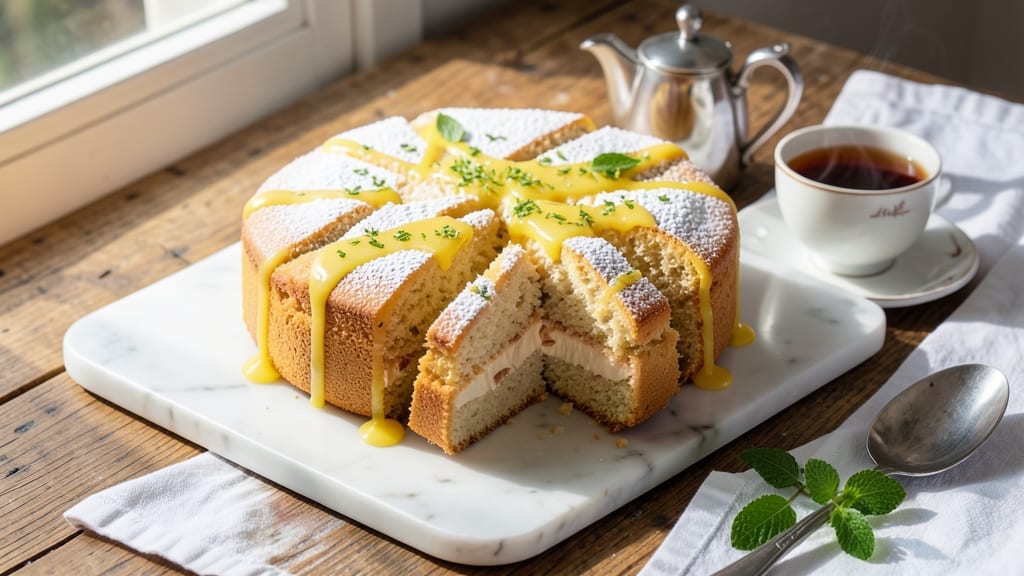
This almond flour tea cake recipe delivers a delicate, lightly sweetened dessert that's perfect for afternoon tea or a simple treat. The combination of almond flour, vanilla, and citrus zest creates a tender crumb with subtle floral notes that balance beautifully against the natural sweetness.
I developed this recipe after years of experimenting with gluten-free baking, and it's become a favorite for its elegant simplicity and moist texture.
The secret to this tea cake lies in the almond flour, which provides a naturally sweet, nutty flavor while creating a tender crumb structure. Unlike traditional flour-based cakes, this version stays moist without becoming dense, thanks to a careful balance of eggs, butter, and citrus zest.
The recipe also includes optional adaptations for dietary preferences, making it versatile for various needs.
What you'll end up with is a lightly golden cake with a delicate crumb that's neither too sweet nor too heavy. The vanilla and citrus zest infuse every bite with bright, aromatic flavors that make this perfect for serving with a cup of tea or coffee.
It's the kind of dessert that feels special but requires minimal effort—ideal for both casual gatherings and more formal occasions.
Baking at 350°F for about 30-35 minutes ensures a perfectly set cake with a tender interior. The recipe yields a single 8-inch cake, but it can easily be scaled for larger gatherings.
Whether you're baking for a tea party or simply craving a light dessert, this almond flour tea cake delivers restaurant-quality results with a homemade touch.
Ingredients for almond flour tea cake
Eight simple ingredients transform into a delicate, citrus-kissed tea cake perfect for afternoon gatherings.
| Ingredient | Amount | Notes |
|---|---|---|
| Almond Flour 🌰 | 2 ½ cups | Finely ground, unsweetened preferred |
| Unsalted Butter 🧈 | 1 cup | Room temperature, full-fat preferred |
| Granulated Sugar 🍚 | ¾ cup | Light brown sugar for depth |
| Large Eggs 🥚 | 3 whole | Room temperature, separated if preferred |
| Pure Vanilla Extract 🌸 | 1 tbsp | High-quality, Madagascar bourbon |
| Lemon Zest 🍋 | 1 tbsp | Fresh, organic preferred |
| Orange Zest 🍊 | 1 tbsp | Fresh, bright orange preferred |
| All-Purpose Flour 🌾 | ¼ cup | For binding, optional for texture |
| Baking Powder 🍞 | ½ tsp | Aluminum-free preferred |
| Salt 🧂 | ¼ tsp | Fine sea salt preferred |
| Powdered Sugar 🍚 | ½ cup | For dusting, optional |
| Unflavored Almond Milk 🥛 | ¼ cup | For moisture, optional |
The almond flour is the heart of this recipe—Bob's Red Mill or Anthony's Goods are my go-tos for consistent texture. Look for finely ground, unsweetened varieties to avoid gritty bites. If you can't find almond flour, a blend of blanched almond flour and a little all-purpose flour works in a pinch, but the texture won't be identical. The butter should be room temperature when creamed—press a finger into it; if it leaves a slight indent, it's ready. For the citrus zest, organic lemons and oranges yield the brightest flavor, but conventional works fine if you're careful to remove only the outer layer.
No vanilla extract? Seeds from a vanilla bean steeped in warm water for 20 minutes make a wonderful substitute. The powdered sugar is optional but adds that delicate finish—Domino brand is my go-to for smooth texture. If you're watching sugar, reduce the granulated sugar to 0.5 cups and omit the powdered sugar entirely. The almond milk is a secret weapon for moisture; Silk brand works perfectly, but any unsweetened plant milk will do. For a more intense citrus flavor, double the zest but reduce the sugar slightly to balance the brightness. The baking powder is non-negotiable—it's what gives this cake its tender crumb.
Store the cake in an airtight container at room temperature for up to 3 days, or refrigerate for 1 week if you're prepping ahead. For longer storage, wrap tightly in plastic and freeze for up to 3 months. Bring to room temperature before serving—this cake is best enjoyed slightly warm with a cup of Earl Grey or chamomile tea. I always make a double batch; the extra slices keep perfectly for impromptu tea parties. If you're scaling for larger gatherings, increase all ingredients by 50%—this recipe holds beautifully when doubled.
Why You'll Love This Recipe
- No-Mess Mixing: This recipe lives in the "dump-and-stir" league—just cream butter and sugar, toss in eggs and vanilla, then fold in almond flour. No sifting, no measuring cups out the wazoo, just a bowl and a spatula. Honestly, I’ve made it while scrolling through emails.
- Vanilla Butter Bliss: That first bite of warm, buttery cake with vanilla so rich it tastes like you stole it from a bakery? The almond flour gives it a delicate crumb, while the butter keeps it moist without being heavy. (Yes, even on a Tuesday night.)
- Crowd-Pleasing Flex: Bring it to brunch, pack slices for lunch, or serve with coffee—this cake handles it all. The neutral almond flavor means it pairs with jam, whipped cream, or even a drizzle of honey, so you’re never stuck guessing what to serve with it.
- Lasts Without Lamenting: Unlike flour-heavy cakes that dry out in a day, these stay tender for days if stored right. I’ve had leftovers for five mornings running, and they’re still begging for seconds. Plus, almond flour stretches further than all-purpose, so you’re not breaking the bank for a batch.
Step-by-step instructions for almond flour tea cake
Here's how to create a tender, fragrant cake with perfect texture and bright citrus notes.
Cream Butter and Sugar Together
In a stand mixer fitted with the paddle attachment, beat the 1 cup unsalted butter and 0.75 cup granulated sugar on medium speed for 3-4 minutes. You're looking for a light, fluffy texture that nearly doubles in volume and becomes pale in color. This creaming process incorporates air, which creates that signature tender crumb in almond flour cakes.
I like to use room temperature butter here—it should be soft enough to leave a slight indent when pressed. If your butter is too cold, the mixture will take longer to come together. Scrape down the sides of the bowl with a spatula every minute to ensure even mixing.
Add Eggs and Zests Gradually
Add the 3 whole large eggs, one at a time, mixing on low speed for 30 seconds after each addition until fully incorporated. Then add the 1 tablespoon pure vanilla extract, 1 tablespoon lemon zest, and 1 tablespoon orange zest, mixing just until combined. The zest should be finely grated—no visible pieces should remain.
Here's the thing—almond flour absorbs moisture differently than regular flour. The citrus zest adds brightness but also helps with moisture balance. Don't overmix at this stage; you want to maintain airiness in the batter. The mixture should look smooth but still slightly ribbed.
Combine Dry Ingredients
In a separate bowl, whisk together the 2.5 cups almond flour, 0.25 cup all-purpose flour, 0.5 teaspoon baking powder, and 0.25 teaspoon salt. Sift the dry ingredients if possible to prevent lumps. Gradually add this mixture to the wet ingredients, mixing on low speed just until combined—about 30-45 seconds.
You'll notice the batter is thicker than traditional cake batter, which is normal with almond flour. The all-purpose flour acts as a binder here. Stop mixing as soon as all the dry ingredients are incorporated; overmixing develops gluten and can make the cake dense.
Incorporate Almond Milk and Final Mixing
Add the 0.25 cup unflavored almond milk and mix on low speed for another 30 seconds until just combined. The batter should be thick but smooth, with no visible streaks of flour. If it seems too thick, you can add 1-2 teaspoons more almond milk to achieve the right consistency.
This is where the cake's moisture balance comes together. The almond milk adds just enough hydration without making the cake gummy. The batter should hold its shape when dropped from a spoon but still be pourable. If it's too stiff, the cake may be dense; if too thin, it might spread too much in the oven.
Bake to Golden Perfection
Preheat your oven to 350°F and grease an 8-inch round cake pan or line it with parchment paper. Pour the batter into the prepared pan and smooth the top with a spatula. Bake for 25-30 minutes, until a toothpick inserted into the center comes out clean and the edges are golden brown.
Almond flour cakes can dry out quickly, so I recommend checking at the 20-minute mark. The center should spring back slowly when touched. Let the cake cool in the pan for 10 minutes, then transfer to a wire rack to cool completely. Once cooled, dust the top with 0.5 cup powdered sugar for that classic tea cake finish.
Serve Warm or at Room Temperature
This cake is best served slightly warm or at room temperature. The citrus notes and vanilla will be most pronounced when the cake is fresh from the oven. For extra elegance, serve with a dusting of powdered sugar and a cup of Earl Grey tea. The cake keeps well for 3 days at room temperature or can be refrigerated for up to 5 days.
If you prefer a moister cake, you can increase the almond milk by 1 tablespoon. For a more tender crumb, ensure your almond flour is finely ground. The key to success is patience—don't overbake, and let the cake cool completely before slicing for clean cuts.
Pro Tips For Making Almond Flour Tea Cake
- Weigh the Butter: Almond flour is dense, and measuring butter by volume in cups leads to dry cakes. Use a kitchen scale for 225g—this ensures the right fat-to-flour ratio for a tender crumb. (Yes, even if your recipe says "½ cup," trust the scale.)
- Mix Eggs and Sugar First: Skip the dry ingredients until the eggs and sugar are pale and thickened—about 2-3 minutes with a mixer. This step dissolves the sugar fully and traps air, giving you a lighter cake. (I used to skip it and got a dense, sad result.)
- Don’t Overbake: Almond flour cakes dry out fast. Pull them out when the center is set but still slightly springy—about 2-3 minutes before the recipe’s suggested time. A toothpick should come out clean but not bone-dry.
- Toast the Almond Flour: Spread the almond flour on a baking sheet and toast at 325°F for 8-10 minutes until it smells nutty. This removes moisture and deepens the flavor—no need for fancy equipment, just a sheet pan and a timer. (Your cake will taste like it came from a bakery.)
Creative variations of these flavors
Citrus Twist Variations
Swap the lemon and orange zest for 1 tablespoon each of lime and grapefruit zest to create a tropical twist. The lime adds a sharper tang while grapefruit brings a floral sweetness that pairs beautifully with vanilla.
For a more intense flavor, add ½ teaspoon of lime juice to the batter. This variation works especially well with sparkling water or coconut milk tea for a refreshing afternoon treat. 🍋
Spiced Chai Version
Infuse the batter with 1 teaspoon ground cardamom and ½ teaspoon cinnamon for a warm, aromatic chai-inspired tea cake. Reduce the vanilla to ½ tablespoon to balance the spices.
Serve with chai tea or spiced apple cider for a cozy fall or winter dessert. The cardamom adds a subtle complexity that complements the almond flour's natural nuttiness. 🌶️
Chocolate-Dipped Layers
Divide the batter into two 8-inch pans and bake as directed. Once cooled, slice each cake horizontally into two layers. Spread ½ cup of melted dark chocolate (about 60% cocoa) between the layers, then dust the top layer with powdered sugar.
For extra decadence, drizzle melted white chocolate over the top. This version feels indulgent but keeps the light, airy texture of the original. 🍫
Coconut-Almond Fusion
Replace ½ cup of almond flour with ½ cup finely ground toasted coconut flour for a tropical fusion. Add 1 teaspoon coconut extract and reduce the almond milk to ¼ cup.
The coconut enhances the natural sweetness while keeping the cake tender. Serve with coconut milk tea or passionfruit-infused iced tea for a vacation-worthy flavor combination. 🥥
Elderflower-Infused
Steep 1 tablespoon dried elderflowers in 2 tablespoons hot water for 10 minutes, then strain and add the liquid to the batter along with ½ teaspoon elderflower syrup.
This floral variation adds a delicate, perfumed note that pairs perfectly with the vanilla. Serve with elderflower tea or chamomile to enhance the floral experience. ✨
Nut-Free Adaptation
For a nut-free version, replace the almond flour with 2.5 cups oat flour (blend rolled oats into a fine powder). Add 1 extra egg to bind the batter and reduce the almond milk to ¼ cup.
The texture will be slightly denser but still tender. This adaptation works well for guests with nut allergies while keeping the tea cake's elegant simplicity. 🌾
Nutrition facts
Frequently asked questions
Why does this almond flour cake turn out denser than regular flour cakes?
Almond flour is packed with healthy fats and protein, which creates a naturally denser texture compared to wheat flour. The key is to avoid overmixing and use the almond milk to maintain moisture. The recipe includes all-purpose flour as a binder to help achieve that tender crumb while keeping the nutty flavor intact.
Can I make this recipe without eggs?
Yes! For a vegan version, replace the 3 eggs with 3 tablespoons ground flaxseed mixed with 9 tablespoons water (let sit for 5 minutes to thicken). Alternatively, use ½ cup unsweetened applesauce or ½ cup mashed banana for moisture. The texture will be slightly different but still delicious.
How do I prevent the cake from cracking on top?
Cracking usually happens from rapid heat changes. Ensure your oven is fully preheated to 350°F before baking, and avoid opening the oven door during the first 20 minutes. For extra insurance, place a small dish of water on the lower oven rack to add moisture to the air. Let the cake cool completely in the pan before removing.
What's the best way to store leftover tea cake?
Wrap individual slices tightly in plastic wrap or store the whole cake in an airtight container at room temperature for up to 3 days. For longer storage, refrigerate for 1 week or freeze for 3 months. Bring to room temperature before serving—this cake tastes best slightly warm with tea.
Can I use this recipe for cupcakes instead of a cake?
Divide the batter evenly among 12 lined cupcake molds (about ¼ cup each) and bake at 350°F for 18-20 minutes, until a toothpick comes out clean. The smaller size ensures even baking and a perfect tender crumb. Top with powdered sugar or a light glaze for a festive touch.